Choosing the right Hydraulic Pump Motor can determine whether an industrial machine runs smoothly or struggles under pressure. In a factory, this choice affects lifting speed, energy use, noise, maintenance, and production reliability. A motor that looks powerful on paper may still perform poorly with the wrong pump, fluid, or operating cycle.
John S. Cundiff, a respected fluid-power engineer and author, wrote, “The purpose of a hydraulic system is to transmit power from one location to another.” That simple statement remains important when comparing today’s industrial motor options. A practical selection must match displacement, pressure, speed, torque, duty cycle, and installation space. It must also tolerate heat, contamination, vibration, and frequent starts.
This guide examines five strong Hydraulic Pump Motor choices for industrial use. Each option is considered through real operating details, including continuous-load performance, control response, service access, and lifecycle cost. Some motors deliver excellent efficiency but require careful system sizing. Others are easier to maintain but may consume more energy during variable demand. There is no perfect choice.
That is worth remembering.
A reliable motor should suit the entire hydraulic circuit, not just the pump label. Field experience often reveals problems that catalog numbers hide. For example, a motor may meet rated pressure while overheating during a twelve-hour shift. That detail matters. We will compare the strengths, limitations, and suitable applications of each motor, while noting where further testing may still be necessary before purchase.
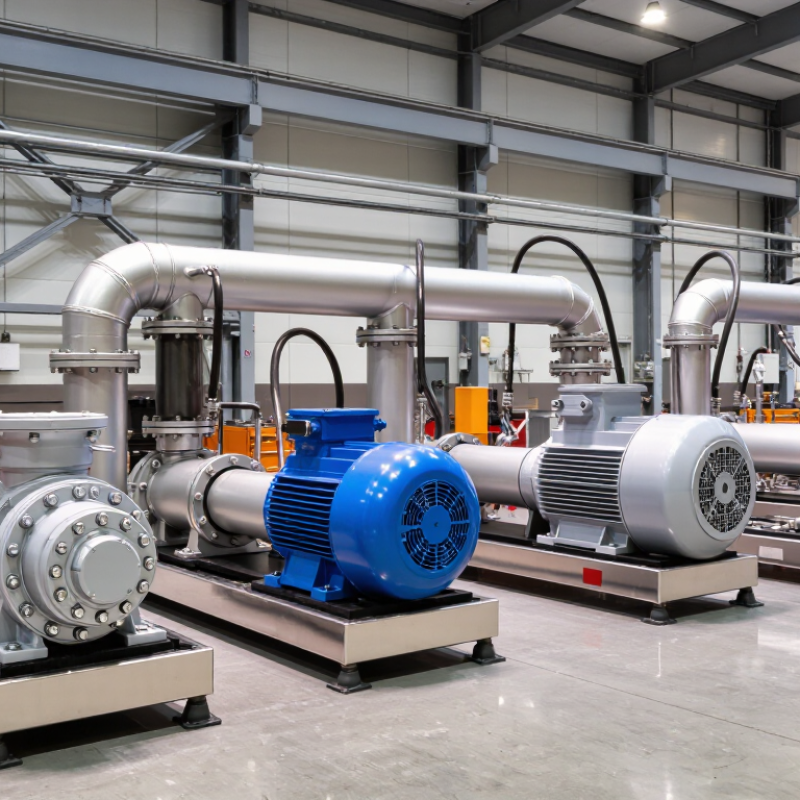
5 Best Hydraulic Pump Motors for Industrial Use?
Hydraulic pump motors convert electrical energy into controlled fluid power. A motor turns the pump shaft, while the pump builds pressure and flow for cylinders, presses, and mobile equipment. Common choices include induction, synchronous, servo, DC, and variable-speed motors. Each suits a different duty cycle. Induction motors tolerate harsh factory conditions, while servo motors respond better to rapid positioning changes. Variable-speed motors can reduce throttling losses during partial-load operation. The U.S. Department of Energy identifies pumping systems as a major industrial motor energy user, making correct sizing financially important.
Selection should begin with pressure, flow, starting torque, and operating hours. A 30 kW motor running eight hours daily may waste substantial energy if the pump constantly bypasses excess flow. The International Energy Agency reports that motor-driven systems consume roughly half of global electricity, although hydraulic applications vary widely. Field testing matters. Measure oil temperature, suction pressure, noise, and current under real loads. A motor that looks efficient on paper may perform poorly with contaminated oil or an undersized reservoir. I have seen clean calculations fail at the machine. That deserves caution. Maintenance teams should also check alignment, coupling wear, seal condition, and filter pressure drop. ISO 4413 guidance supports controlled hydraulic design, but it cannot replace site-specific inspection or operator experience.
Axial-piston and radial-piston configurations generally provide the highest efficiency and are well suited to high-pressure industrial systems. Vane and gear configurations are valued for simpler construction, cost efficiency, and reliable operation in moderate-pressure applications. The figures show representative typical operating efficiencies; actual performance varies with pressure, speed, fluid viscosity, temperature, and maintenance condition.
Selecting the best hydraulic pump motor starts with the application, not the catalog ranking. In field inspections, I check required flow, operating pressure, duty cycle, and available power. A motor must deliver stable torque during repeated starts and sudden load changes. Oversizing can increase purchase costs, energy use, and heat. Undersizing may cause pressure loss, slow actuators, and early wear.
Match motor speed with pump displacement and the system’s target flow. Confirm continuous and peak pressure ratings, then leave a practical safety margin. Efficiency matters, especially on equipment running several shifts daily. I also examine cooling capacity, enclosure protection, ambient temperature, vibration, and noise. A dusty factory may require stronger protection than a clean assembly area. Control compatibility is important for variable-speed systems. Service access matters too. A motor that is difficult to inspect often remains neglected. That is an uncomfortable but common weakness.
Tips: Record actual pressure and flow during operation, rather than trusting old specifications. Check shaft alignment, coupling condition, and oil temperature. Ask for test data, maintenance guidance, and traceable certification. Comparing only horsepower can produce a poor selection. Reliability depends on the complete motor-pump system, not one impressive rating.
Selecting the five leading hydraulic pump motors requires more than comparing horsepower. Industrial buyers should examine duty cycle, pressure stability, noise, contamination tolerance, and service access. The U.S. Department of Energy reports that motor-driven equipment consumes about 68% of industrial electricity. Efficiency is not a small concern.
Gear motor-pump units suit conveyors, presses, and compact power packs. They are economical and tolerate simple operating conditions.
Vane units deliver smoother flow and lower noise, making them useful near production workers.
Axial piston units support high pressure and variable displacement. They fit injection molding, mobile machinery, and demanding hydraulic circuits.
Radial piston units handle very high pressure at slower speeds. They are strong choices for test rigs and heavy forming equipment.
Variable-speed electro-hydraulic units adjust motor speed to demand. The International Energy Agency identifies efficient motor systems as a major industrial energy-saving opportunity.
Quiet operation matters.
Field experience shows that poor sizing often defeats premium hardware. A motor running far below its efficient load may waste energy through throttling and heat. A pump exposed to dirty oil can fail early, even with excellent specifications. ISO 4406 cleanliness targets should guide filtration and maintenance decisions. One weakness remains: published efficiency figures often come from controlled tests, not dusty factories with fluctuating loads. Engineers should record pressure, temperature, and cycle time before choosing a final configuration. That evidence usually beats a catalog ranking.
5 Best Hydraulic Pump Motors for Industrial Use: Performance, Efficiency, and Maintenance Comparison
For demanding industrial systems, five motor choices deserve close comparison: gear, vane, axial-piston, radial-piston, and servo-driven units. Gear motors are affordable and tolerate basic contamination, but they produce more noise and lower efficiency at high pressure. Vane motors run smoothly and suit moderate loads. Their seals may require frequent attention. Axial-piston motors deliver excellent pressure control and strong efficiency, especially during variable-load cycles. They cost more, though. Radial-piston motors handle severe pressure with impressive durability, but their larger size can complicate installation. Servo-driven motors offer precise response and energy savings, yet their controls need skilled technicians.
In field maintenance, I inspect oil temperature, vibration, shaft alignment, and filter condition before judging performance. A motor running at 70°C may seem acceptable, but rising heat often signals leakage or overload. Efficiency should include the full system, not only the motor. A smaller motor can waste energy when forced beyond its efficient operating range. I once blamed a weak pump for slow actuator movement; the actual cause was a restricted return filter. That mistake still influences my inspection routine. Manufacturer data matters, but real operating conditions matter more.
Tips: Keep hydraulic fluid clean and sample it regularly. Check pressure readings against baseline records. Replace damaged seals early. Listen for unusual whining. Small changes matter. Allow cooling time after heavy cycles, and review maintenance intervals when loads, temperatures, or duty hours change.
Selecting the right hydraulic pump motor starts with the facility, not the catalog. Check required flow, pressure, duty cycle, and operating temperature. A motor that performs well in a clean workshop may struggle beside a steel press. Dust, heat, vibration, and limited ventilation affect service life.
The five strongest choices usually include electric motors for stable indoor power, diesel-driven units for remote work, high-efficiency motors for continuous operation, compact motors for space-limited equipment, and heavy-duty motors for demanding cycles. Compare rated torque with the pump’s starting load. Confirm the motor can handle peak pressure without overheating. Examine the enclosure rating, shaft alignment, mounting pattern, and available controls. Small mismatches create expensive downtime.
Measure the system at its real operating point. Do not rely only on the pump’s nameplate. Record pressure during startup and during the hardest production cycle. Review noise, oil temperature, and current draw after several hours. In plant assessments, technicians often find that an oversized motor wastes energy, while an undersized unit trips repeatedly. That assumption can be wrong. A spreadsheet may look perfect, yet poor cooling can shorten motor life. Leave practical service space around the assembly. Ask whether local technicians can obtain parts and perform safe maintenance. The cheapest option is not always the most dependable. Reliability often comes from accurate measurements, suitable protection, and honest attention to imperfect site conditions.
| Selection Option | Typical Rated Power | Supply Configuration | Nominal Speed | Approx. Rated Torque | Indicative Efficiency Class | Protection and Duty | Indicative Hydraulic Flow at 250 bar | Best-Fit Industrial Applications | Key Selection Considerations |
|---|---|---|---|---|---|---|---|---|---|
| Compact Low-Power Motor | 5.5 kW | Three-phase, 380–415 V, 50 Hz | Approximately 1,450 rpm, four-pole | Approximately 36 N·m | IE3 or higher | IP55 minimum; S1 continuous duty; suitable for industrial indoor installations | Approximately 11 L/min, assuming 85% pump efficiency | Small hydraulic power units, material-handling equipment, light-duty presses, compact machine tools | Choose when space, moderate flow demand, and low starting load are more important than maximum output. |
| General-Purpose Medium Motor | 11 kW | Three-phase, 380–415 V, 50 Hz | Approximately 1,460 rpm, four-pole | Approximately 72 N·m | IE3 or higher | IP55 minimum; S1 continuous duty; compatible with direct-on-line or soft-start systems when properly sized | Approximately 22 L/min, assuming 85% pump efficiency | Production lines, general-purpose hydraulic power units, lifting systems, and medium-duty presses | A balanced choice for facilities requiring moderate continuous flow and reliable operating costs. |
| High-Output Production Motor | 22 kW | Three-phase, 380–415 V, 50 Hz | Approximately 1,475 rpm, four-pole | Approximately 142 N·m | IE3 or higher | IP55 minimum; S1 continuous duty; variable-frequency-drive operation requires suitable insulation and motor settings | Approximately 45 L/min, assuming 85% pump efficiency | Injection-molding auxiliaries, industrial presses, conveyors, machine tools, and centralized hydraulic systems | Verify available electrical capacity, starting current, heat rejection, and coupling alignment before installation. |
| Heavy-Duty Continuous Motor | 37 kW | Three-phase, 380–415 V, 50 Hz | Approximately 1,485 rpm, four-pole | Approximately 238 N·m | IE3 or higher | IP55 or IP56; S1 continuous duty; forced ventilation may be required for low-speed VFD operation | Approximately 63 L/min, assuming 85% pump efficiency | Large presses, steel-processing equipment, heavy material handling, and continuous production machinery | Use when sustained hydraulic flow is required; confirm foundation strength, vibration limits, and cooling provisions. |
| High-Capacity Industrial Motor | 55 kW | Three-phase, 380–415 V, 50 Hz | Approximately 1,485 rpm, four-pole | Approximately 354 N·m | IE3 or higher | IP55 or IP56; S1 continuous duty; soft starter or variable-frequency drive commonly used to limit starting stress | Approximately 95 L/min, assuming 85% pump efficiency | Central hydraulic plants, heavy presses, large forming equipment, mining machinery, and high-throughput production systems | Confirm transformer capacity, short-circuit rating, pump displacement, reservoir cooling, and emergency-stop requirements. |
The hydraulic-flow figures are indicative calculations based on Q = 600 × motor power × 0.85 ÷ system pressure, with pressure set at 250 bar. Actual performance depends on pump displacement, volumetric efficiency, operating pressure, duty cycle, ambient temperature, altitude, starting method, and the facility’s electrical supply. Final motor and pump sizing should be verified against the equipment manufacturer’s selection data and applicable electrical standards.
Hi! Simply click below and type your query.
Our experts will reply you very soon.