2026 Best Pump Motor Types for Global Buyers?

Choosing among Pump Motors in 2026 requires more than comparing horsepower, price, and delivery dates. Global buyers must examine the complete pumping system, including fluid properties, duty cycles, voltage, climate, installation depth, and maintenance access. A motor that performs well in a dry factory may struggle inside a humid coastal station.

Dr. Lev Nelik, a widely recognized pump engineer and author, has emphasized a practical principle: “Pump selection is a system decision, not merely a motor decision.” This view remains highly relevant for buyers evaluating induction motors, permanent-magnet motors, synchronous-reluctance motors, and submersible designs. Each type creates different trade-offs in efficiency, starting torque, control flexibility, service requirements, and long-term operating cost.

Small details matter.

For example, a variable-frequency drive can improve process control, but poor installation may create heat, vibration, or electrical stress. Permanent-magnet motors may reduce energy losses, yet their higher purchase price can challenge smaller projects. Induction motors remain familiar and repairable in many regions, although they may consume more energy under partial-load conditions.

This guide compares the best Pump Motors for agricultural irrigation, municipal water systems, industrial processing, and building services. It considers real operating conditions, not only laboratory ratings. Still, no universal winner exists. Climate, grid stability, technician skills, spare-part availability, and local standards can change the final choice. A careful buyer should question attractive efficiency claims and verify performance data with qualified suppliers before committing to a purchase.
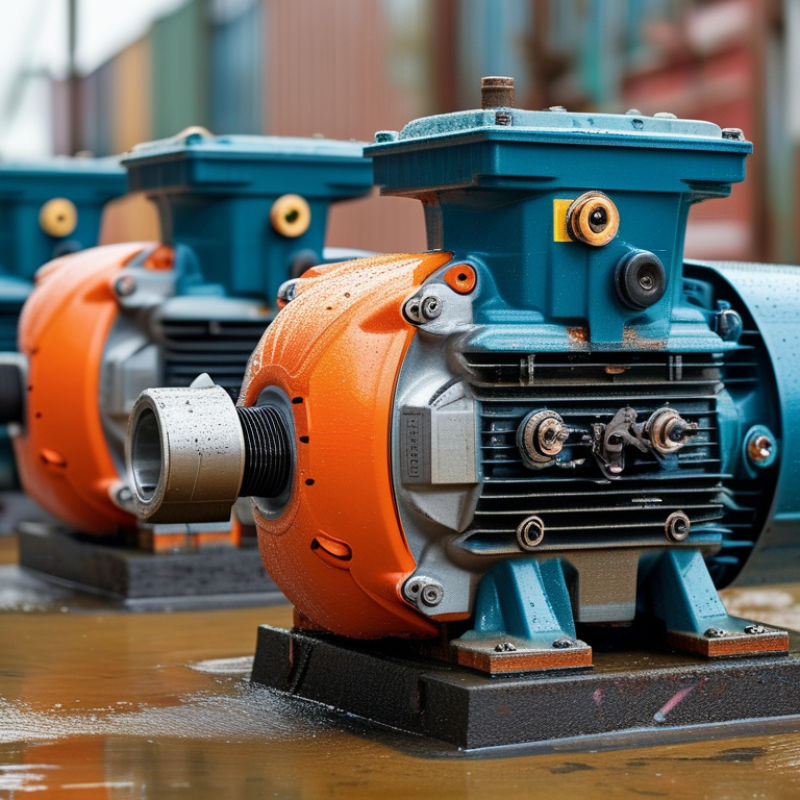
2026 Best Pump Motor Types for Global Buyers?

Pump Motor Basics: How Types, Ratings, and Applications Differ

For global buyers, the best pump motor depends on duty, not marketing language. The International Energy Agency reports that electric motor systems consume about half of global electricity. Small efficiency gains can therefore matter across thousands of operating hours.

An induction motor remains a practical choice for standard centrifugal pumps. It tolerates harsh sites and usually offers straightforward maintenance. Permanent-magnet motors can deliver higher efficiency at variable speed, especially in compact water systems. Synchronous-reluctance designs also reduce rotor losses, but technicians may need more specialized drive knowledge.

A neat classification can still mislead.

Check the nameplate carefully. Rated power, voltage, frequency, speed, insulation class, enclosure protection, and service duty must match the installation. The U.S. Department of Energy estimates pumping systems use about 27% of industrial electricity in the United States. That makes efficiency classes and variable-frequency control important purchasing factors.

A motor running far from its best load may waste more energy than expected. This is often overlooked.

For flooded stations, specify suitable ingress protection and corrosion resistance. For high-pressure dosing, compare torque stability rather than efficiency alone. Hydraulic Institute guidance and IEC 60034 testing practices provide useful references, but local grid conditions still demand verification. Data sheets are not operating experience.

Key Pump Motor Types for Industrial, Commercial, and Domestic Use

2026 Best Pump Motor Types for Global Buyers?

Industrial facilities usually depend on three-phase induction motors for centrifugal, process, and booster pumps. They tolerate long operating hours and offer practical maintenance costs. When flow changes often, pairing the motor with a variable-frequency drive can reduce throttling losses. However, the drive, motor insulation, and pump curve must match. A poor combination may create overheating or unstable pressure.

Commercial buildings often use compact single-phase induction motors for circulation, drainage, and water-transfer systems. Larger hotels, hospitals, and office complexes may need three-phase motors for reliable pressure control. Permanent-magnet synchronous motors can improve efficiency in systems with frequent speed changes. Their controls are more sensitive, though. Installation quality matters more than many buyers expect.

Domestic applications commonly use single-phase motors, brushless DC motors, or submersible pump motors. Brushless DC designs suit solar-powered wells because they can operate efficiently at changing input levels. Submersible motors need suitable sealing, cable protection, and thermal safeguards. Small details matter here. I would never select a motor from horsepower alone. Voltage, head, flow, duty cycle, water quality, ambient temperature, and service access also affect the decision. Some specifications remain uncertain until real site measurements are available. That is where many otherwise careful selections fail.

2026 Best Pump Motor Types for Global Buyers? - Key Pump Motor Types for Industrial, Commercial, and Domestic Use

Motor Type Typical Pump Applications Common Power Range Main Advantages Key Limitations Recommended Buyer Profile
Three-Phase Induction Motor Industrial water transfer, process circulation, cooling systems, irrigation, and wastewater treatment Approximately 0.75–500 kW Robust construction, low routine maintenance, good overload tolerance, and wide availability Requires three-phase electrical supply; speed control normally needs a variable-frequency drive Industrial facilities and large commercial installations
Single-Phase Induction Motor Domestic booster pumps, small irrigation systems, drainage pumps, and light commercial equipment Approximately 0.12–5.5 kW Operates from common single-phase supplies, simple installation, and economical replacement Lower starting performance and capacity than comparable three-phase motors Homes, small farms, shops, and small commercial buildings
Permanent Magnet Synchronous Motor High-efficiency HVAC circulation, water supply, precision pumping, and variable-flow systems Approximately 0.75–250 kW High efficiency over a broad load range, compact size, and strong low-speed performance Higher initial cost and usually requires a compatible electronic drive Buyers prioritizing energy savings and long operating hours
Brushless DC Motor Compact booster pumps, dosing equipment, portable systems, and battery-powered water systems Approximately 20 W–5 kW High controllability, efficient variable-speed operation, low brush maintenance, and suitable for battery systems Electronic controls are essential; heat dissipation and controller compatibility must be checked Portable, compact, smart, and off-grid pump applications
Switched Reluctance Motor Heavy-duty pumping, harsh industrial environments, and applications requiring high-temperature tolerance Approximately 1–250 kW Rotor has no permanent magnets or windings, good thermal robustness, and wide speed range Acoustic noise, torque ripple, and specialized drive requirements may increase system complexity Specialized industrial users with technical maintenance capability
Submersible Motor Borehole wells, drainage, sewage handling, flood control, and submerged dewatering Approximately 0.37–500 kW Space-saving installation, direct cooling by the surrounding liquid, and effective operation below water level Cable sealing, water ingress protection, and correct submergence are critical Well owners, municipalities, construction companies, and wastewater operators
Explosion-Protected Motor Chemical processing, petroleum handling, solvent transfer, and hazardous-area pumping Approximately 0.75–500 kW Designed to limit ignition risks when correctly matched to the classified hazardous area Higher purchase cost, strict installation rules, and certification requirements Industrial buyers operating in classified hazardous locations
Variable-Frequency Drive Motor System Variable-demand water supply, HVAC, process pumping, pressure boosting, and energy-managed systems Approximately 0.37–500 kW Adjustable speed, soft starting, improved pressure control, and potential energy reduction at reduced flow Requires electrical compatibility, correct programming, and protection against harmonics where necessary Commercial and industrial buyers with changing flow or pressure demand
Selection note: Final motor selection should be based on required flow, total dynamic head, liquid temperature, fluid characteristics, duty cycle, supply voltage and frequency, installation conditions, efficiency requirements, and applicable local safety standards.

Comparing Efficiency, Power Sources, and Operating Performance

2026 Best Pump Motor Types for Global Buyers?

Selecting a pump motor starts with operating conditions, not the catalogue price. The International Energy Agency reports that electric motor systems consume about 46% of global electricity. Pumping systems represent a major share of this demand.

High-efficiency induction motors remain practical for stable industrial duty. Permanent-magnet motors can reduce losses, especially during variable-speed operation. However, they may require higher upfront investment and more specialized maintenance.

Power sources also change performance. Grid-powered motors suit continuous sites with reliable electricity. Solar-powered pumps can serve remote farms, but battery storage adds weight and replacement costs.

Diesel systems offer mobility, yet fuel consumption, noise, and emissions require careful evaluation. The U.S. Department of Energy notes that pump-system efficiency depends heavily on correct sizing and control.

A motor running far below its design point wastes energy. Bigger is not always safer.

Tips: Record flow, head, duty hours, voltage, and ambient temperature before purchasing. Check efficiency at your real operating point.

A variable-frequency drive can improve control, but it also needs correct installation and protection. The Hydraulic Institute recommends evaluating the whole system, including pipes, valves, and fittings.

My practical concern is often overlooked: laboratory efficiency may not survive muddy water, voltage swings, or poor alignment. Allow a realistic maintenance margin. Then question it again.

Selecting Pump Motors for Regional Standards and Global Conditions

Choosing a pump motor for global use requires more than checking horsepower. Regional standards can change voltage, frequency, wiring, and certification requirements. A motor designed for 400 V and 50 Hz may not perform correctly on a 460 V, 60 Hz supply. Confirm the local electrical system before comparing efficiency ratings.

Details matter. In coastal areas, salt air can attack unprotected housings and terminals. Dusty sites may require a higher ingress protection rating, while high-altitude installations need attention to cooling and reduced air density. Consider ambient temperature, humidity, duty cycle, starting method, and available maintenance skills. A motor that works well in a clean factory may struggle beside an irrigation canal.

Field experience shows that documentation is often overlooked. Ask for test records, efficiency data, insulation class, temperature limits, and certification details accepted in the destination market. Regional rules may also affect cable sizes, control panels, grounding, and emergency isolation. Do not select by price alone. Energy losses continue for years.

There is no perfect global motor. Conditions change. A practical selection may involve compromises between efficiency, availability, repairability, and local compliance. I have seen projects specify an advanced motor, then discover that replacement bearings were unavailable nearby. That mistake was avoidable, but easy to make. Review the full operating environment with a qualified engineer before placing the order.

2026 Buying Criteria: Reliability, Maintenance, Cost, and Sustainability

2026 Best Pump Motor Types for Global Buyers?

2026 Buying Criteria: Reliability, Maintenance, Cost, and Sustainability

For global buyers, the best pump motor is not simply the most efficient model. It must match fluid load, duty cycle, voltage, frequency, and ambient temperature. Induction motors remain practical for rugged, continuous service. Permanent-magnet motors can reduce energy use under variable loads. However, their controllers add cost and technical dependence. Smaller systems may benefit from simpler motor designs. No motor wins every site.

Reliability starts with documented heat-rise tests, insulation class, bearing life, and ingress protection. Verify these values under stated conditions. A dusty workshop needs sealed construction and accessible drainage. A remote farm needs local technicians, spare bearings, and clear wiring diagrams. Soft-start control can reduce hydraulic shock and coupling stress. I would not trust a long warranty alone. Poor installation can damage a good motor within months. Independent test reports and applicable IEC requirements deserve careful review.

Compare total cost over ten years, including electricity, seals, downtime, transport, repairs, and disposal. A cheaper motor may consume more power every operating hour. Yet a premium design is not automatically sustainable. Check repairability, recyclable materials, and verified efficiency at the actual duty point. An oversized pump can waste energy, even with an efficient motor. That is an easy mistake. Recheck the duty point before ordering.

2026 Best Pump Motor Types for Global Buyers

Typical full-load efficiency comparison for 11 kW, four-pole low-voltage motors

Permanent-magnet synchronous and synchronous-reluctance motors generally provide higher operating efficiency than standard induction motors, which can reduce energy consumption and carbon emissions in continuously operated pumps. Buyers should also evaluate reliability, local service capability, spare-parts availability, variable-speed-drive compatibility, purchase price, and maintenance requirements. Actual efficiency varies by rated power, speed, voltage, load, and test method.


Close

Raise your Query

Hi! Simply click below and type your query.

Our experts will reply you very soon.

WhatsApp Us