How to Choose the Right Pump Motors for Your Needs?
Choosing the right pump motors is crucial for operational efficiency. According to the U.S. Department of Energy, improper motor selection can result in energy losses of up to 30%. This highlights the importance of making informed decisions in pump motor applications.
Understanding specific requirements is vital. Factors such as load demands, environmental conditions, and energy efficiency must be considered. Reports indicate that correctly matched pump motors can enhance system performance and lifespan. Overlooking some aspects can lead to challenges, such as increased operational costs and frequent maintenance issues.
Experience in the field reveals that many users underestimate the significance of selecting compatible pump motors. Common pitfalls include ignoring the application type and motor sizing. Addressing these can significantly improve productivity and reliability. Therefore, a careful approach to selecting pump motors is essential for any facility aiming for sustainable operations and reduced costs.
Understanding Different Types of Pump Motors and Their Applications
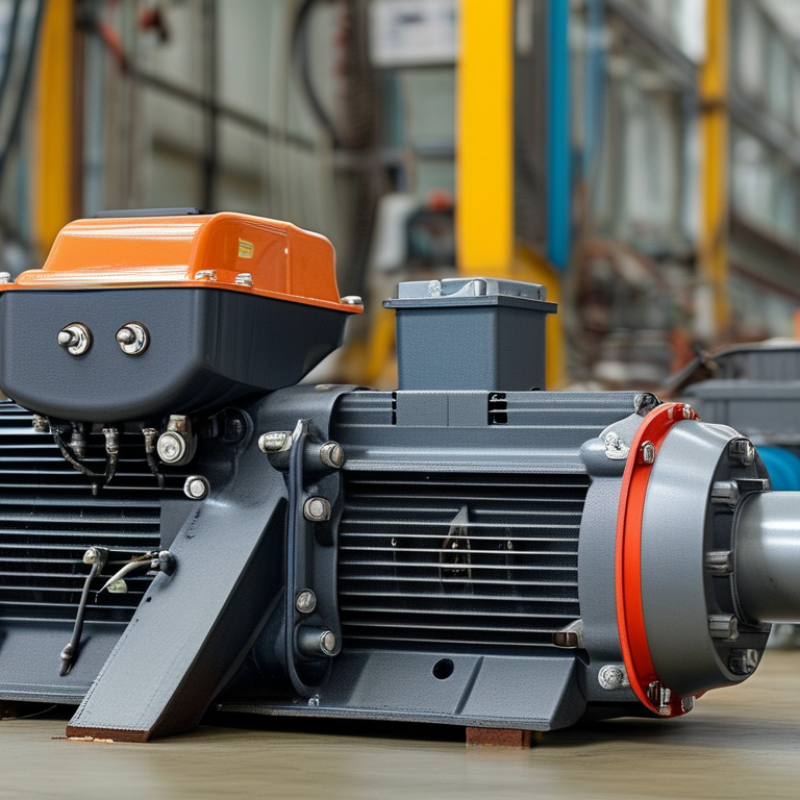
When selecting pump motors, understanding their types and applications is crucial. There are three primary categories of pump motors: AC motors, DC motors, and variable frequency drives (VFD).
AC motors are widely used due to their simplicity and reliability. According to the U.S. Department of Energy, approximately 90% of industrial motors are AC motors. They handle high-load applications effectively. This widespread use, however, also means that not all AC motors perform efficiently in every scenario.
DC motors, on the other hand, provide excellent speed control. They're ideal for low-torque applications where precise flow regulation is needed. Data from the Electric Power Research Institute indicates that DC motors can achieve efficiency rates exceeding 90% under certain conditions.
However, they may not always be suitable for environments with high moisture or dust levels.
Variable frequency drives offer a flexible solution. These systems can adjust motor speed based on demand.
They enhance energy efficiency and minimize wear and tear on pumps. Yet, the initial cost of VFD systems can be high, and retrofitting existing setups poses challenges. Making a choice requires weighing these factors carefully. Each option has pros and cons, and a one-size-fits-all approach rarely applies. Understanding your specific needs is essential.
Key Factors to Consider When Choosing a Pump Motor
When selecting pump motors, several key factors must be considered. Start with the motor type that aligns with your application.
AC motors are common in many settings due to their reliability. However, DC motors can offer better control, especially in variable speed situations.
Understanding your system's power requirements is crucial. Ensure the motor can handle the load while efficiently using power.
Next, consider the environment where the motor will operate. Will it be exposed to moisture or dust? Choosing a motor with adequate protection ratings can help prevent failure.
The right material for the motor casing can also enhance durability. If the motor will run continuously, heat dissipation features become vital.
This prevents overheating and extends the motor’s lifespan.
Finally, think about maintenance. Some motor designs allow easier access for repairs. Fewer moving parts can mean lower maintenance costs.
Reflect on past experiences with similar equipment. What problems arose, and how were they addressed? This analysis is important for making a well-informed decision.
Choosing the right pump motor is not just about immediate needs but also about long-term efficiency and reliability.
Assessing Power Requirements and Efficiency Ratings
Selecting the right pump motor involves a careful assessment of power requirements and efficiency ratings. Understanding these factors is crucial for optimal performance. The U.S. Department of Energy states that nearly 20-25% of all industrial electricity consumption is used by motors. Therefore, choosing a motor that aligns with your specific needs can significantly reduce energy costs.
Efficiency ratings play a critical role in purchasing decisions. According to the National Electrical Manufacturers Association, high-efficiency motors can save businesses up to 8% in energy costs annually. Regularly check the motor efficiency class. An efficient motor not only reduces expenses but also lowers greenhouse gas emissions.
Consider the power requirements of your system. It’s not just about matching horsepower; it’s essential to account for duty cycles and load variations. Underestimating power needs can lead to motor burnout, while overestimation wastes energy. To ensure you are making a well-informed decision, consult with an industry expert. Look for professional analysis and recommendations specific to your operational context.
Power Requirements and Efficiency Ratings of Different Pump Motors
Evaluating Environmental Conditions and Installation Space
When selecting pump motors, understanding environmental conditions is crucial. Factors like temperature, humidity, and exposure to chemicals can significantly impact pump performance. For instance, a motor operating in a high-humidity area may require specific protection from moisture. Materials used in the motor should also withstand the local environment. This enhances durability and reduces maintenance costs over time.
Installation space cannot be overlooked. The dimensions and layout of the installation area may limit the types of motors you can choose. Pump motors often need adequate airflow for cooling. In cramped spaces, overheating can be an issue. Furthermore, accessibility for maintenance must be considered. A well-placed motor can simplify repairs and prolong its life. Sometimes, the ideal choice may conflict with space limitations, requiring a thorough evaluation of both factors. Balancing environmental needs and installation constraints helps ensure long-term success and reliability.
Comparing Cost, Maintenance, and Longevity of Pump Motors
Choosing the right pump motor involves evaluating cost, maintenance, and longevity. Industry reports indicate that electric motors account for approximately 70% of all industrial energy consumption. This highlights the importance of purchasing an energy-efficient pump motor to reduce operational costs over time.
Cost is a critical factor. While a lower initial price can be attractive, overall lifetime expenses should be considered. Maintenance plays a significant role in this. According to the U.S. Department of Energy, routine maintenance can enhance motor efficiency by as much as 20%. Neglected motors may lead to increased energy consumption and premature failures, driving up costs.
Selecting the right motor also hinges on longevity. Quality motors can last 15-20 years with proper care. This contrasts sharply with lower-end models, which might only last a few years. Understanding the environment in which the motor will operate is essential, as adverse conditions can decrease lifespan. Opting for higher-quality materials and better designs often results in more reliable performance.
Consider your specific application when choosing a motor. Different environments and workloads may require unique features. Pay attention to load demands and environmental factors, as they significantly impact motor performance over time.
How to Choose the Right Pump Motors for Your Needs? - Comparing Cost, Maintenance, and Longevity of Pump Motors
| Pump Motor Type |
Cost ($) |
Maintenance Frequency (per year) |
Average Lifespan (years) |
| AC Induction Motor |
1200 |
1 |
15 |
| DC Motor |
1500 |
2 |
10 |
| Submersible Motor |
1800 |
1 |
12 |
| Permanent Magnet Motor |
2000 |
1 |
20 |
| Stepper Motor |
1000 |
3 |
8 |