Why Are Welding Positioners Used in Welding?

Welding Positioners help bring a workpiece into a more practical orientation while a weld is being made. A pipe joint can be rotated toward the welder; a heavy frame can be tilted instead of repeatedly repositioned by hand. The goal is simple: improve access to the seam and make the welding task more consistent. A positioner does not replace skill or guarantee a defect-free weld. Setup still matters.

The need for dependable fabrication is real. The American Welding Society has projected that the U.S. will need about 360,000 welding professionals by 2027, including workers replacing retirees and those entering new roles. That workforce pressure makes efficient equipment worth examining, though a positioner is only one part of the answer. OSHA identifies awkward postures and repetitive motion as ergonomic concerns; rotating a component may help reduce some of the reaching and twisting involved. It will not remove every risk. Fixture design, load limits, operator training, and inspection still count.

Small improvements matter. A steady rotation can help a welder maintain torch angle and travel speed around a joint, rather than stopping to reposition the part. That can support repeatable work, especially in production settings. The trade-off is easy to miss: the wrong positioner, poorly secured work, or an unsuitable speed can create new problems. This guide explains why shops use Welding Positioners, how they assist different welding tasks, and what to consider before choosing one.
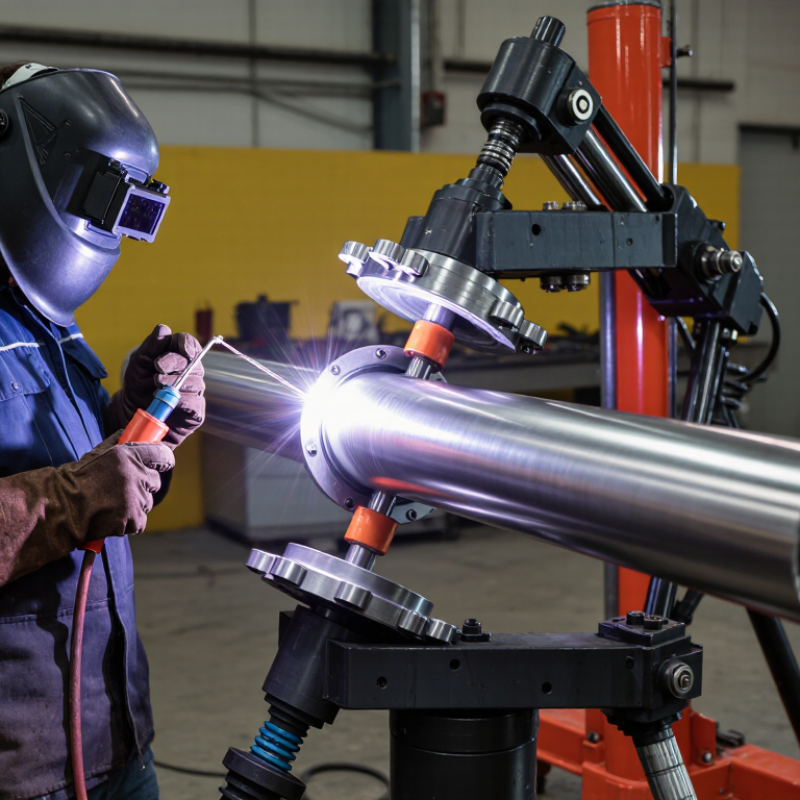
Why Are Welding Positioners Used in Welding?

What a Welding Positioner Is and How It Moves a Workpiece

A welding positioner is a machine that supports and reorients a workpiece during welding. It usually has a table, chuck, or fixture mounted on a frame. The workpiece is clamped in place, then turned or tilted by hand or by a powered drive. Some units rotate around one axis; others combine rotation with tilting. The exact movement depends on the machine and its controls.

That movement lets a welder bring a joint into a more accessible position instead of repeatedly walking around the part. For example, a round assembly can rotate steadily while the torch stays near the joint. A tilted table can also help place a seam at a comfortable angle. This may support a steadier weld path and reduce awkward reaching, though the result still depends on fit-up, settings, and operator skill. It is not magic.

Before moving a load, check its weight, balance, and clamping points against the positioner’s rated capacity. An off-center workpiece can shift as the table turns. Keep hands clear of pinch areas, and test the controls at low speed when practical. A positioner can still be awkward to set up; fixtures sometimes need adjustment, and a small change in balance can make a noticeable difference.

How Positioners Keep Welds in Favorable Positions

A welding positioner rotates or tilts a workpiece, bringing the joint into a more accessible position. This can help a welder maintain a steady torch angle and consistent travel speed. Those details matter. A small change in joint orientation can affect how the weld pool behaves, especially on curved or bulky parts.

Consider a pipe section mounted on a positioner. As it turns, the welder can work along the seam without repeatedly stepping around the fixture or reaching beneath the joint. For a frame assembly, tilting the table may place a corner weld closer to a comfortable, controlled position. The aim is not movement for its own sake. It is to keep the weld within a practical working range and reduce awkward body positions.

Positioners do not correct poor fit-up, incorrect settings, or an unsuitable procedure. Still, rotation is not a cure-all. The operator must secure and balance the workpiece, check the rated capacity, and choose a speed that suits the weld. In practice, a brief pause to adjust the angle can be worthwhile. A position that feels convenient may not be the best one for every joint.

How Stable Workpiece Control Improves Weld Quality

A welding positioner does more than rotate a workpiece. It keeps the joint steady and brings it into a practical welding angle. This helps the welder maintain a consistent torch distance, travel speed, and bead shape. In a flat position, gravity is less likely to pull molten metal away from the joint. Small shifts matter. Even a slight change in angle can affect penetration or leave uneven toes along the bead.

ISO 5817:2023 defines three weld quality levels: B, C, and D, with different acceptance limits for imperfections. That gives inspectors measurable criteria, but a positioner alone cannot guarantee a particular level. A loose clamp or poorly balanced fixture can introduce vibration instead of control. I have seen stable rotation make a long circumferential weld easier to manage, though setup still takes care. The operator must check alignment, secure the part, and watch the arc. The fixture helps; it does not replace judgment.

Why Are Welding Positioners Used in Welding? - How Stable Workpiece Control Improves Weld Quality
Positioner Function Workpiece Control How It Can Improve Weld Quality Practical Consideration
Rotating the workpiece Turns a component so the weld joint can be brought into a more accessible orientation. Helps the welder maintain a consistent torch or electrode angle and travel direction along the joint. Rotation speed should suit the welding process and the operator’s travel speed; not every joint is suitable for continuous rotation.
Tilting the workpiece Changes the angle of the workpiece to present a joint in a more favorable position. Can reduce the need to weld in difficult vertical or overhead positions, where gravity affects the weld pool. The available tilt range and safe working load depend on the positioner’s design and setup.
Holding a steady position Supports the workpiece while it is being welded, limiting unintended movement when properly secured. A stable joint position makes it easier to keep a consistent arc length, bead path, and heat application. Use suitable fixtures or clamps, and verify that the workpiece is secure before starting rotation or welding.
Improving access around a joint Moves different areas of a component into reach without requiring the welder to work around the entire part manually. Can improve visibility and access, helping the welder follow the joint and inspect the bead during work. Check clearances for the workpiece, cables, torch, and nearby equipment throughout the full movement range.
Supporting repeatable setups Allows similar parts to be located and presented in a consistent way when the fixture and setup are repeatable. Consistent positioning can reduce variation in weld approach and support repeatable production work. Repeatability also depends on fixture accuracy, part fit-up, welding parameters, and operator practice.
Managing load and balance Positions the workpiece within the equipment’s rated capacity when it is correctly mounted and balanced. Proper setup helps maintain controlled movement and reduces the risk of sudden shifts that could disrupt welding. Follow the manufacturer’s load, balance, clamping, and operating instructions; a positioner does not replace safe work practices.

How Positioners Support Safer, More Ergonomic Welding

A welding positioner rotates or tilts a secured workpiece, bringing the joint closer to a comfortable working angle. Instead of leaning across a large assembly, a welder can turn the part and keep the torch, helmet, and hands in a steadier position. That matters. Less reaching can reduce strain on the shoulders, back, and neck during repetitive work.

A better angle may also help the welder see the joint clearly and maintain consistent torch travel. This can make long seams easier to manage, especially when a component is heavy or difficult to move by hand. Still, a positioner is not an automatic safety fix. The workpiece must be properly secured, and its weight and balance must suit the equipment. Keep hands clear of rotating parts and pinch points. Follow the equipment’s operating instructions.

Good setup takes judgment. Check that the part will rotate without striking nearby tools, cables, or fixtures, and choose a speed that allows controlled movement. Some jobs still require awkward access, even with a positioner. That is worth noticing rather than ignoring. Pause to adjust the fixture or work height when practical, and avoid forcing a comfortable posture around a poorly placed joint. The equipment supports safer work; the welder’s attention completes the picture.

Where Welding Positioners Are Used in Production

In production shops, welding positioners are used wherever a workpiece needs controlled rotation or tilt during joining. They are common in tank and vessel fabrication, pipe assemblies, steel frames, and heavy-equipment components. A cylindrical shell can be turned steadily so a welder can work along a seam without repeatedly moving around it. Small parts benefit too. A fixture can hold brackets or flanges at a consistent angle for a batch of similar weldments.

The practical value depends on the workpiece and the production layout. On a pipe line, a positioner can bring a circumferential joint into a more accessible orientation. In frame fabrication, it can expose joints hidden against a table or fixture. This may reduce awkward reaches and make torch travel easier to control. It does not guarantee a sound weld. Fit-up, joint preparation, procedure, and operator skill still matter. Check the load rating and balance before rotation; an uneven assembly can shift unexpectedly.

Positioners also suit repeat production, where operators need to present similar joints in similar ways. That can help maintain a steady workflow between fitting, tacking, and welding stations. In practice, setups are not always neat. A large assembly may interfere with clamps, cables, or nearby equipment, so a dry run can reveal problems before welding starts. For short runs or irregular parts, repositioning the fixture may take longer than expected. The tool helps most when its capacity and motion match the actual job.


Close

Raise your Query

Hi! Simply click below and type your query.

Our experts will reply you very soon.

WhatsApp Us
