A busy warehouse can lose valuable floor space between pallet rows. Forklifts may travel long aisles to reach stock stored deep inside a lane. A Shuttle Racking System changes that layout. A powered shuttle carries pallets along rails, while a forklift handles loading and retrieval at the lane entrance. The result can be denser storage and fewer forklift movements within the rack.
That matters. But higher density is not automatically better. Shuttle racking works best when a warehouse stores multiple pallets of the same product and handles them in planned batches. Before choosing a system, managers should review pallet dimensions, load weights, inventory turnover, and the number of SKUs per lane. They should also consider whether their operation needs FIFO or LIFO access, since system configuration affects stock rotation. These details can change the daily workflow.
There are practical questions, too. Will the shuttle suit the existing forklift fleet and aisle design? How will operators charge, inspect, and maintain it? What happens when a unit needs service during a busy shift? Reliable planning includes these less visible details, not just the advertised storage capacity. A site assessment and clear throughput calculations can help reveal whether the investment fits real demand. Sometimes a simpler rack is the better choice. This guide explores the advantages, limitations, and selection factors behind a Shuttle Racking System, so warehouse teams can make a grounded decision rather than follow a trend.
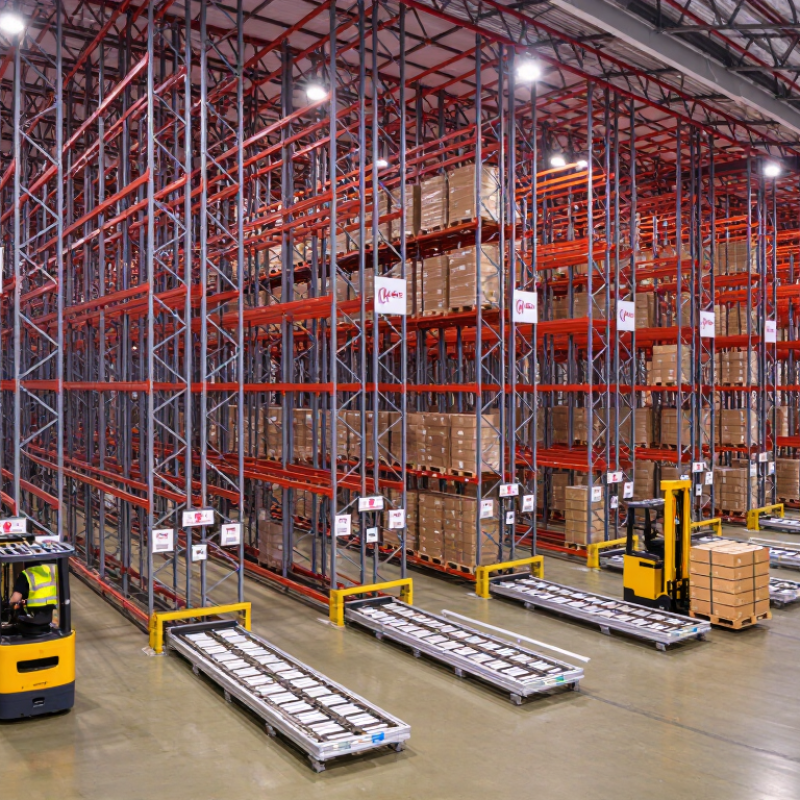
A shuttle racking system is a high-density pallet storage arrangement built around deep rack lanes. Each lane has rails and a powered shuttle cart that carries pallets between the entrance and available storage positions. A forklift places a pallet onto the cart, which travels within the lane and reduces forklift movement inside the rack. The operator controls the cart, often by remote.
Unlike selective racking, which offers direct access to each pallet, shuttle racking stores pallets several positions deep. This can suit warehouses holding many pallets of the same product with predictable turnover. It is not automatically the best fit. Slow-moving stock, mixed pallet sizes, or frequent SKU changes may complicate lane planning. Measure actual loads and aisle access, then map the proposed flow. Small assumptions can become daily delays.
At the lane entrance, a forklift places a pallet onto a low-profile shuttle. The shuttle travels along rails inside the storage channel, lifts the pallet, and moves it to an open position. Sensors help detect pallet positions and prevent collisions. An operator controls the shuttle remotely, while forklifts stay mainly at the lane entrance instead of driving deep into racks. Less travel inside the lane can make loading more orderly. It also reduces forklift movements in tight spaces.
For retrieval, the shuttle brings the selected pallet back to the entrance for forklift pickup. Depending on lane design and loading sequence, the system can support last-in, first-out or first-in, first-out handling. MHI’s 2024 Annual Industry Report found that 55% of surveyed organizations planned to increase supply-chain technology investment over the following two years; 88% expected digital supply chains to become predominant by 2028. These figures show growing interest in technology, not a guarantee that shuttle racking suits every warehouse. Lane depth, pallet consistency, battery charging, and control procedures all matter. One uneven pallet can interrupt a smooth-looking flow. That detail deserves attention during planning.
Shuttle racking suits warehouses that move many pallets through a limited number of product lines. It works especially well for beverage, food, and packaged-goods operations, where reserve stock arrives in batches and picks are often made by pallet. A powered shuttle carries pallets deep into a lane, reducing forklift travel and keeping aisles clear. Useful on busy shifts.
It is also a strong option for seasonal inventory and temperature-controlled rooms, where dense storage can make better use of costly floor space. MHI’s 2024 Annual Industry Report found that 55% of surveyed supply-chain professionals were increasing technology investment. That signals growing interest in automation, but it does not mean every site needs a shuttle system. Check pallet sizes, lane turnover, and replenishment patterns first.
Shuttle lanes are less suitable when workers need frequent, direct access to many individual SKUs. A pallet may sit behind another, so retrieving one item can require moving stock. The U.S. Census Bureau reported that e-commerce sales grew 8.1% in 2024, highlighting demand pressure on fulfillment operations; however, fast-growing, mixed-item picking often needs more than dense pallet storage. That trade-off matters. Review order profiles with warehouse staff, too—the spreadsheet may miss the awkward pallets.
A shuttle racking system stores pallets deep within lanes, reducing the number of access aisles needed. More of the floor can hold inventory. A battery-powered shuttle moves pallets inside the rack, while forklifts stay near the lane entrance. That can reduce truck travel and help keep replenishment traffic away from picking areas. It is not magic: operators still need clear lane rules and compatible pallet loads. The trade-off is real.
Workflow gains depend on the operation. Configure lanes for FIFO or LIFO according to product rotation, then group fast-moving stock near dispatch. In its 2024 Annual Industry Report, MHI reported that 55% of surveyed organizations planned to increase supply chain technology investment. That figure does not prove shuttle racks are right for every site, but it reflects growing interest in operational technology. Measure pallet turns, aisle congestion, and peak-hour forklift queues before investing.
Tips: Start with one representative lane. Check pallet condition, load consistency, and shuttle charging routines during a trial. Record retrieval times and any blocked pallets. A small mismatch in pallet dimensions can disrupt flow. Look closely before scaling.
Start with the operating pattern, not the rack drawing. Map pallet dimensions, weights, daily moves, peak-hour demand, and SKU counts from real order data. Then test whether the goal is denser storage, faster replenishment, or both. These needs can conflict. Shuttle systems can support deep-lane storage, but their value depends on consistent pallet sizes and suitable stock-rotation rules. Will each lane hold one SKU, or will products be mixed? That assumption can be wrong.
In the 2024 MHI and Deloitte Annual Industry Report, 55% of respondents planned to invest over $1 million in supply-chain innovation. That is a broad technology benchmark, not proof that shuttle storage will pay back. Check usable height, floor flatness, pallet condition, fire-protection design, and service access before comparing proposals. Ask for a peak-hour simulation using your own order profile, not an ideal throughput figure. Include shuttle availability, charging where applicable, and controls support in the cost model. Small details matter.
| Assessment Dimension | What to Check | When Shuttle Racking May Fit | Key Trade-Off or Decision |
|---|---|---|---|
| SKU profile and stock rotation | Review the number of SKUs, pallet quantities per SKU, replenishment patterns, and whether stock must be picked in a specific sequence. | It can suit warehouses that store multiple pallets of the same SKU in deep lanes. | Deep lanes are less suited to operations needing immediate access to many individual SKUs. Confirm whether the required flow is FIFO or LIFO and how the lane layout supports it. |
| Storage density and building layout | Measure usable floor area, clear height, column positions, aisle requirements, floor condition, and access for equipment and emergency routes. | It may increase pallet storage density by reducing the number of forklift travel aisles compared with many selective-racking layouts. | Actual capacity depends on lane depth, pallet dimensions, clearances, building constraints, and the required operating layout. Validate the design against a measured site plan. |
| Pallet and load specifications | Confirm pallet type, overall dimensions, load weight, load stability, pallet condition, and any overhang or packaging variation. | Consistent, compatible pallet loads generally make lane storage and shuttle operation easier to plan. | Rack, shuttle, and pallet requirements must be matched. Have the supplier verify rated capacities and compatibility for the actual loads and operating conditions. |
| Throughput and peak demand | Estimate pallet movements per hour or shift, peak-season volumes, replenishment demand, and the number of loading and retrieval points needed. | A shuttle can move pallets within a lane while forklifts perform other handling tasks, which may help reduce forklift travel into the rack. | Throughput varies with lane arrangement, shuttle quantity, travel distance, lift-truck availability, and operating procedures. Request a capacity estimate based on real demand data. |
| Forklift fleet and workflow | Check truck type, aisle width, lift height, operator routes, charging or fueling arrangements, and how pallets are presented to the system. | It may be worth considering where reducing forklift entry into storage lanes is an operational goal. | Forklifts are still required to load and retrieve pallets at lane openings. Review the complete workflow rather than assessing the shuttle in isolation. |
| Operating mode and inventory control | Define whether lanes will operate on a FIFO or LIFO basis, how locations will be assigned, and how operators will track pallet movements. | Shuttle systems can be configured for different stock-flow approaches, depending on lane access and the overall layout. | Choose the operating mode based on product rotation, expiration dates, and order processes. Confirm how the controls integrate with warehouse procedures or software. |
| Safety and site requirements | Review rack design, load-handling procedures, operator training, pedestrian separation, inspections, and applicable local safety requirements. | Remote pallet movement can reduce the need for forklifts to travel into deep storage lanes. | It does not remove the need for safe truck operation, sound rack design, inspections, and documented procedures. Obtain a site-specific safety review. |
| Maintenance and business continuity | Ask about routine inspections, spare parts, battery or charging needs, service response, operator training, and contingency procedures. | It may be appropriate when the operation can support the required equipment and maintenance processes. | Consider how a shuttle outage would affect lane access and daily operations. Compare maintenance arrangements and lifecycle costs before choosing. |
| Total cost and return | Compare rack and shuttle costs with installation, controls, training, maintenance, energy, and any changes to material-handling equipment. | It may offer value where the benefits of higher storage density or reduced forklift travel justify the investment. | Calculate using site-specific capacity, labor, throughput, and operating-cost assumptions; avoid relying on a generic payback estimate. |
Planning note: Final capacity, throughput, equipment compatibility, and safety provisions should be confirmed through a site survey and system design based on actual pallet and operating data.
Hi! Simply click below and type your query.
Our experts will reply you very soon.
