A Standard Conveyor can make everyday material handling more predictable. It moves cartons, components, or packaged goods along a defined route, reducing repeated lifting and helping staff keep work areas organized. The right choice depends on what your operation actually moves: product weight, dimensions, surface, travel distance, and required speed all matter. A belt conveyor may suit small cartons, while rollers can handle rigid packages with flat bases. Simple details matter. A dusty workshop, a damp washdown area, or a tight corner can change which design performs reliably.
Manufacturing engineer Shigeo Shingo warned, “The most dangerous kind of waste is the waste we do not recognize.” That principle applies when evaluating a conveyor: recurring delays, awkward handoffs, and unnecessary walking may be less visible than equipment price, yet they affect daily output. A standard system can offer familiar components, easier maintenance, and a practical starting point for businesses that do not need a highly customized line. Still, standard does not mean suitable for every site. Measure the route, check load requirements, and consider cleaning and access before choosing. A conveyor that looks efficient on a floor plan may create a bottleneck beside a packing station. That deserves a second look. With clear operating requirements and realistic expectations, a Standard Conveyor can support safer, steadier material flow without adding needless complexity.
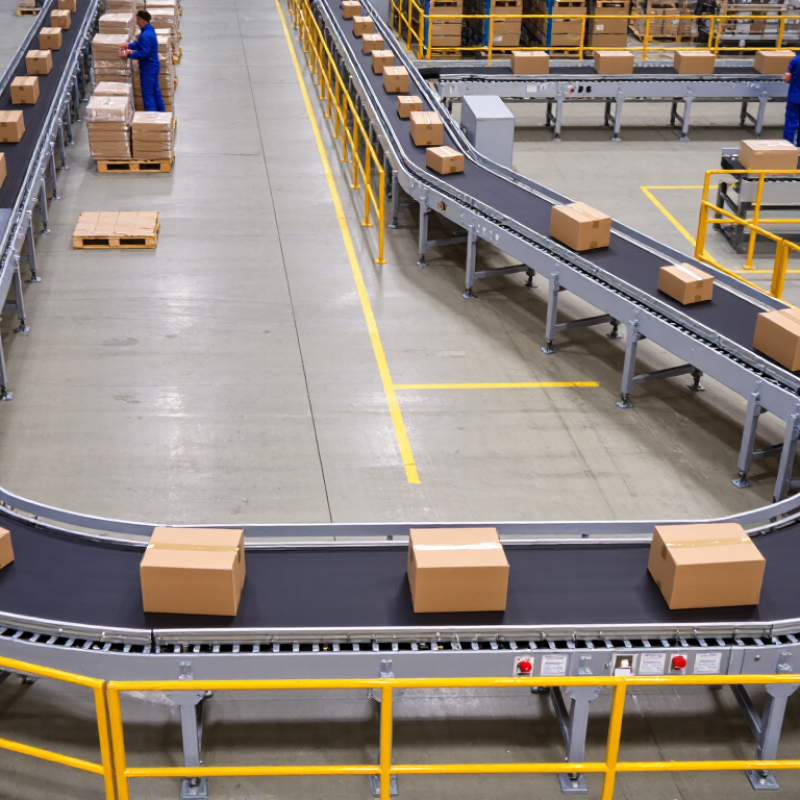
A standard conveyor is a general-purpose material-handling system that moves items along a set route between work areas. It usually combines a frame, a moving surface or rollers, and a motorized drive. Some systems also include guards, sensors, or basic controls. In plain terms, it keeps things moving.
These conveyors commonly carry cartons, totes, and packaged components through packing, assembly, or sorting areas. Picture a box leaving a workbench and arriving at a packing station without repeated lifting. The conveyor’s width, speed, and load capacity should match the products and the pace of work. Even small differences matter: a narrow belt may catch uneven cartons, while excessive speed can make careful handling harder.
A standard design can suit steady, predictable flows, but it is not right for every job. Loose parts, unusually shaped items, or frequent changes in direction may need extra guidance or a different setup. Maintenance access matters too. A drive motor tucked behind a crowded frame can turn a quick belt check into an awkward task. That sounds simple. It is, until the layout changes or the line gets busy. A practical assessment should consider product dimensions, daily volume, available floor space, and how operators will load and unload the system.
This chart shows how conveyor speed affects theoretical volumetric capacity when the material load cross-section remains constant at 0.01 m².
Capacity is calculated as belt speed × load cross-section × 3,600 seconds per hour. Actual capacity depends on factors such as material properties, belt width, and loading conditions.
A standard conveyor moves materials by converting motor power into steady belt or roller motion. A motor and gearbox turn a drive pulley, pulling the belt forward. On powered roller systems, rotating rollers carry cartons along the line; gravity rollers use a slight slope. Simple mechanics. A sealed carton may travel smoothly, while an uneven tote can drift or catch at a transfer point. Side guides, correct belt tension, and suitable spacing help keep items aligned.
Operators should match conveyor speed and capacity to the actual load, not just the planned average. Heavy cartons need adequate drive torque, and closely spaced items can create jams near bends or merges. These details matter.
A conveyor still needs careful layout, routine inspection, and safe access for clearing stoppages. In practice, dust, worn rollers, or a belt that tracks slightly off-center can disrupt an otherwise straightforward line. That part is easy to underestimate.
A standard conveyor can make daily material movement more predictable. Instead of carrying cartons between work areas, staff can load them onto a moving belt. This may reduce repetitive handling and keep packing stations supplied during busy shifts. The benefits are clearest when product sizes, routes, and speeds stay fairly consistent. That matters.
A standard system can also simplify workflow planning. A short conveyor linking a picking bench to a packing table may reduce walking and queue buildup. Operators can spot delays more easily because items follow a visible path. Common components can make routine inspection and replacement easier, too. Still, a conveyor cannot fix a poor layout. A belt placed too high or near a doorway may create awkward work and new bottlenecks. Even a well-sized line can feel clumsy when products change; that detail is easy to underestimate.
Tips: Measure cartons and walkways before choosing a layout. Test the proposed route with typical loads, and leave room for cleaning and maintenance. Ask operators where jams or awkward reaches might occur. Their feedback can reveal problems a floor plan misses.
Standard conveyors are common in manufacturing, warehousing, food processing, agriculture, and recycling. Their basic job is simple: move products along a predictable route with less manual carrying. The details matter, though. Product weight, surface texture, and operating conditions all affect which conveyor design is suitable.
In factories, conveyors carry components between workstations, such as metal housings moving toward assembly or cartons traveling to a packing area. Warehouses use them to move parcels between sorting, labeling, and dispatch points. A small roller line can help with boxes; loose or uneven items may need a belt instead. Small differences matter.
Food processors often use belt conveyors to move ingredients or packaged goods between preparation and packing areas. The belt material and cleaning routine should fit the product and working environment. A standard model may not suit every sanitation requirement, so specifications need careful checking. It is easy to overlook that.
Agricultural facilities use conveyors to move grain, feed, or produce, while recycling operations transport sorted materials toward further processing. Dust, moisture, and irregular loads can affect performance in both settings. A conveyor that works well for dry cartons may struggle with damp produce. Standard conveyors serve many industries, but matching the equipment to the actual load is the practical starting point.
| Industry | Typical Materials or Products | Common Standard Conveyor | Typical Application |
|---|---|---|---|
| Food and beverage | Packaged foods, bottles, cans, cartons, and ingredients | Belt, roller, or modular plastic belt conveyor | Moving products between processing, packaging, inspection, and case-packing stations |
| Warehousing and distribution | Cartons, totes, parcels, and palletized goods | Roller, belt, or accumulation conveyor | Sorting, order fulfillment, packing, and transfer between work areas |
| Manufacturing and assembly | Components, work-in-progress items, and finished products | Belt, roller, or chain conveyor | Supplying assembly stations and transferring products through production steps |
| Automotive | Parts, subassemblies, and vehicle bodies | Roller, overhead, or chain conveyor | Moving components and assemblies through manufacturing and finishing operations |
| Pharmaceuticals and medical products | Sealed packages, bottles, cartons, and medical supplies | Belt or roller conveyor | Transporting packaged products between filling, labeling, inspection, and packaging areas |
| Agriculture and food processing | Grain, seed, produce, and bagged agricultural products | Belt, roller, or screw conveyor | Handling harvested materials and moving products through sorting or processing areas |
| Mining and aggregates | Coal, ore, gravel, sand, and crushed stone | Heavy-duty belt conveyor | Moving bulk materials between extraction, screening, storage, and loading points |
| Recycling and waste management | Mixed recyclables, paper, plastics, and packaged waste | Belt or chain conveyor | Feeding sorting lines and transferring materials to separation or processing equipment |
| Airport baggage handling | Checked bags and passenger luggage | Belt or roller conveyor | Transporting baggage between check-in, screening, sorting, and baggage-claim areas |
Choosing the right standard conveyor starts with the load, not the catalogue. Record each item’s dimensions, weight, shape, and packaging; a soft bag behaves differently from a rigid carton. Then measure peak hourly throughput, not just the daily average. A system sized for average demand may create a queue during the afternoon rush. Small detail. Also map the route, including turns, elevation changes, and space for operators to clear jams.
MHI’s 2024 Annual Industry Report found that 55% of surveyed supply-chain leaders planned to increase technology investment. The figure is not conveyor-specific, but it highlights why capacity and future needs deserve attention. Compare belt and roller options against product stability, noise, cleaning needs, and accumulation requirements. Check motor access, guarding, and spare-part availability before installation. A neat spreadsheet is not enough. Test representative loads at realistic speeds, and log jams, handling damage, and recovery time. Recheck the assumptions; carton mix and staffing often change after launch.
Hi! Simply click below and type your query.
Our experts will reply you very soon.
