Choosing the right Fence Post Machine can change how a fencing business handles daily production. It can reduce repetitive labor, improve post consistency, and shorten installation preparation. Yet, buying the largest machine is not always the smartest decision.
As construction equipment consultant Mark Ellison explains, “The best machine matches the ground, workload, and skill of its operator.” That principle deserves attention. A compact workshop may need a simple hydraulic model, while a large contractor may require faster forming and automated feeding. Soil conditions matter too. Wet clay, dry gravel, and compacted earth can affect machine performance. So can post dimensions, concrete mix, available power, and workspace.
A Fence Post Machine also creates more control over product quality. Uniform posts are easier to stack, transport, and install. They can reduce material waste around molds and reinforcement. However, the machine does not solve every problem. Poor maintenance can cause uneven vibration, damaged molds, or unexpected downtime. Training is essential. Even a reliable machine can underperform when workers rush setup or ignore cleaning.
The financial case should be measured carefully. Compare production volume, labor savings, maintenance costs, and expected service life. Do not rely on attractive promises alone. Request demonstrations, inspect the frame, and ask about spare parts. It is not magic. It is equipment.
For many businesses, the strongest choice is not the fastest machine. It is the model that fits real working conditions, supports dependable output, and leaves room for honest improvement.
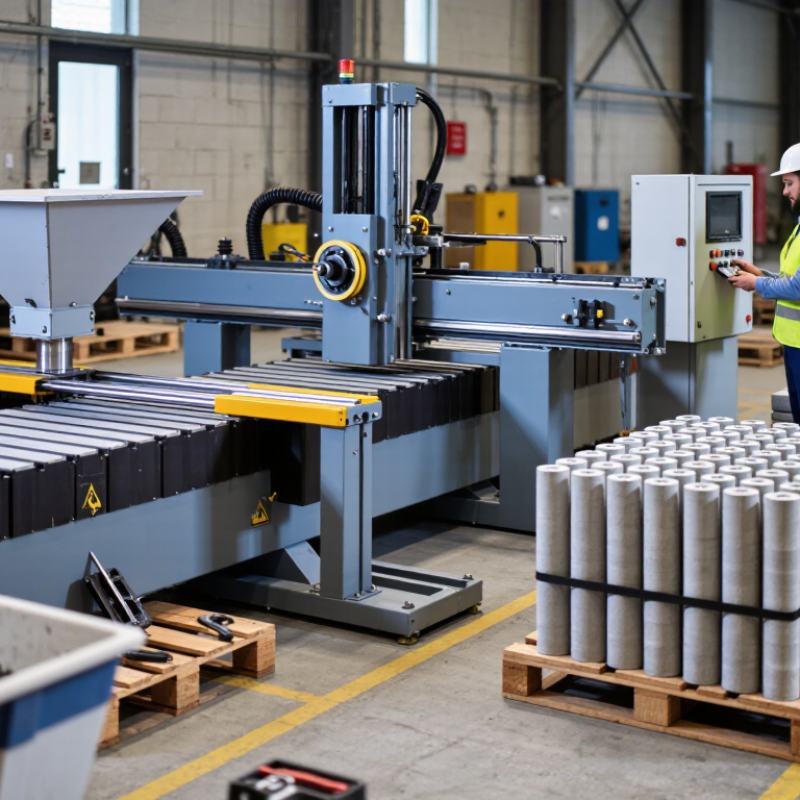
A fence post machine is equipment designed to produce uniform concrete posts for fencing projects. It usually combines a material mixer, forming molds, vibration units, and a controlled release system. Workers prepare cement, sand, aggregate, water, and approved additives according to the required strength. The fresh mix enters a mold, where vibration removes trapped air and improves density. Pressure or mechanical movement then shapes the post. After demolding, each post needs proper curing, not hurried drying. This stage affects cracking, surface hardness, and service life.
A business may choose this machine when manual production becomes slow or inconsistent. The equipment can create repeated post sizes, helping contractors plan gates, corners, and long fence lines more accurately. It can also reduce heavy hand labor around mixing and molding. In practical use, operators still need to check moisture, mold wear, vibration time, and curing conditions during every shift. Small mistakes matter. A loose mold may leave rough edges or weak corners. The process is not flawless. Poorly graded aggregate can also reduce strength, even when the machine works correctly. Before purchasing, a company should compare output capacity, available floor space, cleaning demands, spare parts, and worker training. A smaller operation may prefer a simpler model with slower production and easier maintenance. A larger workshop may need automated batching and several molds, but higher output brings greater quality-control responsibility.
A fence post machine forms and compacts concrete into standardized post molds. The chart shows the calculated production capacity at a 30-second forming cycle, before accounting for loading, demolding, curing, and other operating time.
Calculation basis: production capacity = number of mold cavities × 120 cycles per hour. Actual output depends on mold design, concrete preparation, labor, curing time, and machine utilization.
A fence post machine can produce more than one standard profile. In practice, the mold system determines its commercial range. Common outputs include square, rectangular, round, and tapered concrete posts. Slotted posts are useful for sliding panels between posts. Corner, end, and gate posts usually require stronger reinforcement and thicker sections.
Some machines also produce decorative posts with grooves, caps, or textured faces. Reinforced concrete versions can include steel wire or rebar cages inside the mold. This matters for long boundary lines, agricultural fencing, and areas exposed to wind. According to Grand View Research, the global fencing market was valued at about USD 30 billion in 2023. That scale suggests steady demand for standardized and customized post systems.
Dimensions still need careful control. A 100-millimeter square post suits lighter fencing, while heavier panels may require larger sections. Local soil conditions can change the required length and footing design. A machine with adjustable molds supports several sizes, but flexibility may reduce production speed. That trade-off is easy to underestimate. The best choice is rarely the machine producing the most shapes. It is the machine matching nearby buyers, available aggregates, curing space, and transport limits. Reports from the Precast Concrete Institute emphasize consistent batching, vibration, curing, and quality inspection. Those steps affect strength more than appearance alone. A smooth surface can still hide poor compaction.
| Fence Post Type | Main Material | Typical Production Method | Common Cross-Section | Typical Length Range | Typical Applications | Business Advantages |
|---|---|---|---|---|---|---|
| Precast Concrete Post | Concrete with steel reinforcement | Mold filling, vibration, pressing, and controlled curing | Square, rectangular, or slotted | 1.8–3.0 m | Residential fencing, boundary walls, agricultural fencing | High durability, low maintenance, repeatable dimensions |
| Prestressed Concrete Post | High-strength concrete and prestressing wire | Wire tensioning, concrete casting, vibration, and curing | Square, rectangular, or tapered | 2.0–3.5 m | Long-span fencing, livestock areas, infrastructure projects | Improved crack resistance and strong load-bearing performance |
| Steel T-Post | Hot-rolled or formed steel | Roll forming, punching, cutting, and surface coating | T-shaped profile | 1.5–2.4 m | Wire mesh, pasture, temporary, and farm fencing | Fast installation, lighter weight, and efficient continuous production |
| Steel U-Channel Post | Galvanized or coated steel | Roll forming, hole punching, cutting, and coating | U-shaped channel | 1.8–3.0 m | Mesh panels, garden fencing, and light-duty barriers | Good material utilization and convenient panel attachment |
| Round Steel Pipe Post | Carbon steel, galvanized steel, or coated steel | Tube forming or tube cutting, drilling, and welding | Circular hollow section | 1.8–3.6 m | Chain-link fencing, security fencing, and sports enclosures | Clean appearance, high rigidity, and compatibility with fittings |
| PVC-Coated Steel Post | Steel core with PVC outer coating | Steel forming followed by extrusion or powder/PVC coating | Round, square, or rectangular | 1.5–3.0 m | Decorative fencing, garden fencing, and residential projects | Corrosion protection, color options, and improved visual appeal |
| Treated Wood Post | Pressure-treated softwood or hardwood | Sawing, shaping, drilling, and preservative treatment | Round, square, or rectangular | 1.8–3.6 m | Agricultural fencing, privacy fencing, and landscaping | Natural appearance, easy customization, and simple processing |
| Composite or Recycled-Plastic Post | Recycled plastic, polymer composite, or fiber-reinforced polymer | Extrusion, molding, cutting, and surface finishing | Square, rectangular, or round | 1.2–2.4 m | Garden fencing, landscaping, lightweight barriers | Moisture resistance, low maintenance, and consistent color |
Note: Dimensions are typical commercial ranges. Actual post size, reinforcement, coating, strength, and production speed depend on the selected machine configuration, mold or forming tooling, raw materials, and applicable local standards.
A fence post machine can turn a small production area into a more dependable manufacturing operation. It forms posts with repeatable dimensions, helping crews maintain consistent spacing during installation. Uniform products also reduce fitting problems on site. That matters when contractors manage several projects at once. Production speed can improve as well. Instead of shaping every post manually, operators can produce multiple units through a controlled cycle. This may lower labor pressure and create more predictable delivery schedules. Less rework means fewer wasted materials.
The financial benefit depends on real operating conditions. A machine needs trained operators, suitable molds, regular cleaning, and planned maintenance. It is not magic. Poorly prepared concrete or incorrect vibration settings can still produce weak or uneven posts. With proper checks, businesses can track mix ratios, curing time, dimensions, and surface quality more accurately. These records support reliable quality control and help identify problems before shipment. A machine can also support gradual expansion. Companies may add molds for different post sizes instead of rebuilding their entire process. However, buying equipment too early can strain cash flow. The practical choice is to compare daily demand, available floor space, power requirements, maintenance skills, and expected payback. This reflection is important because higher output has little value when orders remain inconsistent.
Choosing the right fence post machine starts with the post you plan to produce. Concrete, steel, and composite posts require different forming systems, molds, and curing conditions. A machine designed for one material may perform poorly with another. Confirm the post length, diameter, surface finish, and daily production target before comparing equipment.
Measure your real workload, not an ideal forecast. A small contractor may need a compact machine with quick mold changes. A large producer may require automated feeding, vibration control, and consistent cycle times. I have found that output claims often depend on skilled operators and stable raw materials. Check the figures carefully. Ask for test production using your own mix or material, if possible. Watch the finished posts for cracks, weak corners, uneven surfaces, and size variation.
Maintenance deserves equal attention. Inspect the hydraulic system, electrical controls, mold durability, and access to replacement parts. Simple access can reduce hours of downtime.
Safety features should protect operators during feeding, forming, and cleaning. Training also matters, because even reliable equipment can produce defects when settings are misunderstood.
The cheapest option can look attractive. It may become expensive through waste, repairs, and inconsistent quality. A detailed cost review should include energy use, labor, installation, maintenance, and rejected posts. Leave room for growth, but avoid paying for capacity your business cannot use. The best choice may be less impressive on paper.
A fence post machine can improve production consistency, but safe operation requires more than pressing a start button. Operators need training on material feeding, machine controls, emergency stops, and product measurements. They should understand the permitted post dimensions, material strength, and machine capacity before production begins.
Never bypass guards or continue running equipment with unusual vibration, noise, or heat. Small warning signs often become expensive failures.
The work area must remain clean, level, and well lit. Loose scrap can obstruct material flow or create a trip hazard. Operators should wear suitable eye, hearing, and hand protection, while avoiding loose clothing near moving parts. A pre-operation check should cover fasteners, cables, sensors, cutting tools, and protective covers.
Keep the manual and emergency contact details nearby. Simple habits matter.
Maintenance needs a written schedule based on operating hours, not memory. Lubricate specified points, inspect wear surfaces, and check alignment before defects appear in finished posts. Dust and metal particles should be removed from vents and control areas with approved methods. Electrical inspections require qualified personnel. Record every adjustment, replacement, and abnormal event. These records reveal patterns that casual inspection misses.
A perfect schedule is unrealistic, especially during busy seasons. However, skipping checks repeatedly is a poor business decision.
Allow cooling time before servicing, isolate the power source, and verify that stored energy has been released. Calibration should also be reviewed when post dimensions gradually change.
Hi! Simply click below and type your query.
Our experts will reply you very soon.
