Why Choose 304L Stainless Steel Sheet?
304l Stainless Steel Sheet is valued for its balance of corrosion resistance, formability, and weldability. The “L” means low carbon: ASTM A240 limits carbon in 304L to 0.03% maximum. That lower carbon content can reduce carbide precipitation during welding, helping limit intergranular corrosion risks in suitable service conditions. It does not make the steel immune to corrosion. Chlorides, stagnant water, surface contamination, and poor cleaning can still cause problems. Details matter.
The market context is substantial, though production figures do not prove the performance of any specific grade. worldstainless reported 58.4 million metric tonnes of global stainless-steel crude production in 2023, in its Stainless Steel in Figures 2024 report. Materials scientist and textbook author William D. Callister Jr. captures a useful principle: “The properties of materials are determined by their structures.” For buyers, that means checking chemistry, thickness tolerance, finish, and material certification—not relying on the grade name alone. A smooth sheet may suit food-processing equipment, while a fabricated component may need careful weld cleanup and passivation. Applications differ. 304L is not automatically the best choice for every environment; seawater exposure or aggressive chemical service may call for a different alloy. A practical selection should compare operating conditions, fabrication methods, and lifecycle needs. That review takes time, but skipping it can be expensive.
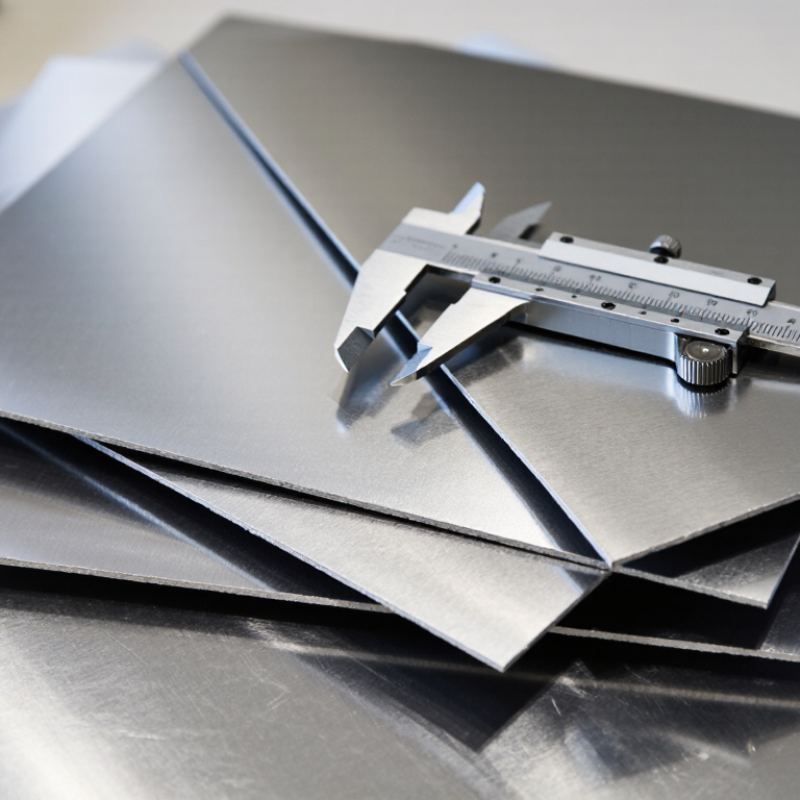
304L Composition: 18–20% Chromium, 8–12% Nickel, and ≤0.03% Carbon
Why Choose 304L Stainless Steel Sheet?
304L Composition: 18–20% Chromium, 8–12% Nickel, and ≤0.03% Carbon
The composition explains much of 304L’s everyday performance. Chromium forms a thin passive surface layer that helps resist corrosion in many indoor and mildly corrosive environments. Nickel supports its austenitic structure, which contributes to toughness and formability. The carbon limit of 0.03% is especially useful for welded parts. It reduces the risk of chromium carbide precipitation near welds, which can weaken corrosion resistance. It does not make the sheet immune to corrosion. Salt, harsh chemicals, and poor cleaning can still cause problems.
Tips: Check the material certificate for the actual chemistry and grade. Match it to the service environment, not just the quoted composition. Clean weld areas and remove heat tint when the application requires strong corrosion resistance. Small details matter.
For fabrication, 304L sheet can be cut, bent, and welded using suitable procedures. Its low carbon content can be an advantage when a component needs extensive welding, though the right filler and finishing method still matter. I would not choose it by grade name alone. Confirm the thickness, surface finish, and exposure conditions first; overlooking one of these can lead to disappointing results.
How Low Carbon Content Helps Reduce Weld-Related Sensitization
Why Choose 304L Stainless Steel Sheet?
How Low Carbon Content Helps Reduce Weld-Related Sensitization
Welding heats stainless steel unevenly. Near the weld, some areas can remain within a temperature range that encourages chromium carbide formation. This can deplete chromium at grain boundaries and reduce corrosion resistance. ASTM A240/A240M specifies a maximum carbon content of 0.03% for 304L, compared with 0.08% for standard 304. That difference helps limit carbide precipitation during welding. It matters most around heat-affected zones, where a narrow band beside the bead may face prolonged heating.
The benefit is practical, not absolute. Technical guidance from TWI describes sensitization as a concern in austenitic stainless steels exposed to roughly 450–850°C. Lower carbon reduces risk, but does not make every weld immune. Heat input, section thickness, joint design, and post-weld conditions still matter. A clean, well-fitted joint and controlled welding procedure help protect performance. Small details count.
Tips: Check the material certificate for the 304L carbon limit. Keep welds consistent, avoid unnecessary reheating, and inspect the heat-affected area when corrosion resistance is critical. One caveat: real fabrication rarely follows ideal conditions exactly.
Key Mechanical Properties: ≥485 MPa Tensile Strength and ≥170 MPa Yield Strength
Why Choose 304L Stainless Steel Sheet? Its specified strength gives engineers a useful baseline for selecting sheet used in tanks, panels, and fabricated equipment. ASTM A240/A240M sets minimum tensile strength at 485 MPa and minimum yield strength at 170 MPa for 304L. The tensile figure describes resistance to breaking under a test; yield strength marks when permanent deformation begins. They are not interchangeable.
That distinction matters when a flat sheet supports a bracket or resists pressure during service. A sheet may exceed both minimums, but its actual test results depend on the material condition and product thickness. Small margin matters. The stated values are not allowable design stresses, either; engineers still apply suitable safety factors and account for temperature, forming, and weld details.
For purchasing, check the mill test report against the ordered grade and ASTM specification, rather than relying on a generic product description. Look for the reported tensile and yield results, plus thickness and heat identification. In fabrication, a tightly bent edge or a drilled hole can concentrate stress, even when the base sheet meets the minimums. One practical lesson: strength numbers help, but they do not replace a check of the finished part’s geometry and loading.
Corrosion Resistance and Formability in Everyday Service Environments
304L stainless steel sheet suits kitchens, equipment housings, and indoor panels where moisture and frequent cleaning are routine. Its chromium-rich surface forms a thin passive film that can repair itself when exposed to oxygen. ASTM A240/A240M specifies 18–20% chromium, 8–12% nickel, and no more than 0.03% carbon for 304L. The low carbon limit helps reduce sensitization risks during welding. That matters around seams and heat-affected areas. It is not immunity.
Formability is another practical advantage. The ASM Handbook’s sheet-forming reference describes austenitic stainless steels as suitable for operations such as bending and drawing, though their work-hardening can raise forming forces. In a workshop, that may mean a tighter bend needs careful setup, not guesswork. A scratched sink panel may still resist ordinary damp conditions, but salt deposits, bleach, and stagnant water can trigger localized corrosion. Small details matter. Regular rinsing and drying help, especially near coastal air or cleaning chemicals. I’d avoid calling 304L maintenance-free; real service conditions are rarely as tidy as a specification sheet.
Common 304L Sheet Applications in Food Processing, Architecture, and Equipment
Why Choose 304L Stainless Steel Sheet?
Common 304L Sheet Applications in Food Processing, Architecture, and Equipment
304L stainless steel sheet is common in food-processing rooms, where surfaces meet frequent washdowns and changing temperatures. Its low carbon content helps reduce the risk of weld-related sensitization during fabrication. It can be formed into splash guards, worktables, and machine covers. Small details matter.
A smooth, properly finished surface is easier to clean than a rough one, but the alloy alone does not guarantee hygienic design. Crevices, poor drainage, and unfinished welds can still trap residue. Fabricators should select a suitable finish and clean welded areas carefully. Food-contact requirements also depend on the specific application.
In architecture, 304L sheet appears in wall cladding, interior panels, and elevator surrounds, where its clean appearance suits busy spaces. Equipment makers use it for tanks, housings, and conveyor components that need forming and welding. Still, it is not ideal for every environment: prolonged exposure to chlorides may cause pitting. Check the operating conditions and maintenance needs before choosing a grade.

