Seawater looks clear, but it carries dissolved salts, minerals, and tiny particles. A Seawater Membrane helps separate much of this material from water. In a common process called reverse osmosis, pumps push pretreated seawater against a semipermeable membrane. Water molecules pass through its fine structure, while most dissolved salts are held back. The clean-water stream is called permeate. The concentrated stream left behind is brine.
The membrane is only one part of the system. Filters remove suspended particles before the water reaches it, and pressure gauges help operators monitor performance. Flow rate, temperature, feedwater quality, and membrane condition all affect the result. Small changes matter. A membrane does not turn every drop into drinking water by itself; the permeate may need further treatment and testing for its intended use.
This technology supplies water to coastal communities, ships, and industrial facilities where freshwater is limited. Yet it requires energy, careful operation, and regular maintenance. Fouling can slow water production, while excessive pressure can increase wear. These practical details are easy to overlook when the process is described as simple filtration. It is not quite that simple. Understanding how a Seawater Membrane works—and what limits it—offers a clearer starting point for evaluating desalination systems and their real-world performance.
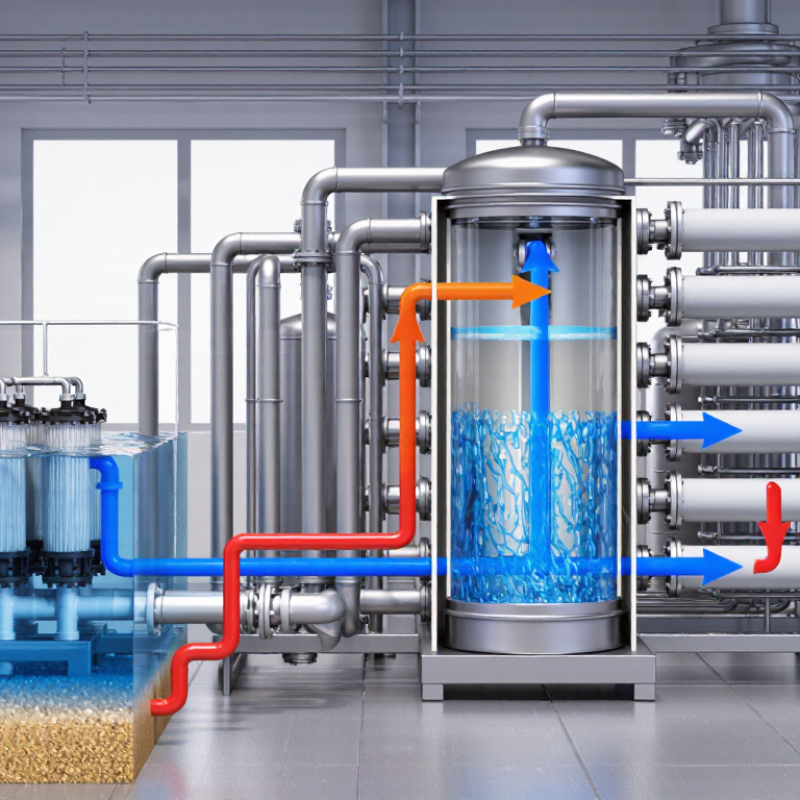
A seawater membrane is a selective barrier used in reverse osmosis desalination. It lets water molecules pass while holding back much of the dissolved salt. Most modern membranes use a thin polymer layer supported by stronger, porous materials. The membrane is not a simple sieve. Salt ions are far smaller than visible pores, so separation depends on the membrane’s material and structure.
Inside a spiral-wound element, sheets of membrane are wrapped around a central tube. Pressurized seawater flows along the membrane surface. Some water passes through and collects in the tube as product water; concentrated brine continues along the feed channel. The membrane itself does not create pressure or make every contaminant disappear. Performance varies with water quality, pressure, temperature, and membrane condition. Real systems are a little less tidy than diagrams suggest.
Tips: Check whether a description refers to the membrane sheet or the complete element. They are related, but not identical. Look for operating conditions when comparing performance figures, and treat salt rejection as a measured value, not a promise of perfect removal. A small distinction, but useful.
Seawater reverse osmosis membranes are selective barriers. Pressure pushes water through the membrane while most dissolved salts are rejected. This chart shows the approximate composition of the major dissolved ions in typical seawater with a salinity of about 35 g/kg; values are percentages of total dissolved salts.
A seawater membrane is a thin selective layer used in reverse osmosis desalination. High-pressure pumps push seawater against it, overcoming the natural pressure that draws water toward saltier solutions. Water molecules cross the membrane; most dissolved salts remain in the concentrated brine. The barrier is not a kitchen sieve with uniform holes. Instead, its chemistry and structure make it much harder for hydrated salt ions to pass than for water molecules. That distinction matters. Some salt still passes through, and membrane performance can decline as particles and minerals collect on its surface.
The National Research Council’s 2008 report, Desalination: A National Perspective, places seawater desalination’s theoretical minimum energy near 1 kilowatt-hour per cubic meter under specified recovery conditions. Real plants use more because pumps, pretreatment, and other equipment also consume energy. Inside a membrane vessel, many elements are connected in sequence: feedwater flows along the membrane, while filtered water gathers in a central tube. The remaining brine becomes saltier as water is removed. Operators monitor pressure, flow, and salt levels to spot changes. The membrane is selective, not perfect. That is worth remembering.
A seawater membrane is a selective layer used in reverse osmosis systems. It allows water molecules to pass while holding back most dissolved salts. The membrane does not pull water through by itself. A pump creates the pressure needed to overcome seawater’s natural osmotic pressure. In many systems, that pressure reaches several dozen bar, though the exact requirement depends on salinity, temperature, and system design.
Under pressure, feed water moves along the membrane surface. Some water crosses the thin membrane layer and becomes permeate, or product water. Most salts remain in the concentrated flow, called brine, which exits separately. The pressure must be high enough to produce useful flow, but more pressure is not always better. It can raise energy use and increase stress on equipment. Membrane fouling can also reduce water flow over time. That part is easy to underestimate.
Tips: Check pressure readings alongside flow and salt-removal measurements. A rising pressure need can signal a clogged prefilter or membrane scaling, but it is not proof by itself. Compare readings under similar operating conditions. Keep careful maintenance records; small changes are easier to spot on paper than from memory.
A seawater membrane is a thin, selective barrier used in reverse osmosis. It allows water molecules through while holding back much of the dissolved salt. The membrane does not work alone. Pumps, filters, and careful monitoring support the process.
At the intake, screens remove seaweed, shells, and other debris. Pretreatment then reduces fine particles and substances that could foul the membrane. Small details matter. A pressure pump pushes the conditioned seawater against the membrane surface. Fresh water passes through tiny pathways, while concentrated brine remains on the feed side. The pressure is substantial, so energy-recovery equipment can capture some energy from the outgoing brine and reuse it.
The collected permeate is not always ready to drink. Operators may adjust its mineral content and disinfect it before distribution. Sensors track pressure, flow, and water quality; changes can signal clogging or membrane wear. In practice, the steps are less tidy than a diagram suggests. Feedwater changes with tides and seasons, and pretreatment needs can vary. Even a well-run system requires routine cleaning and testing to maintain reliable output.
A seawater membrane separates dissolved salts from water under pressure, but its performance depends on more than the membrane itself. Feedwater salinity, temperature, and pressure all affect water production and salt rejection. Colder water often passes through more slowly. Higher salinity can require greater operating pressure. Small changes matter.
Particles, algae, and mineral scale can clog or damage membrane surfaces. Effective pretreatment reduces these risks, though it cannot remove every cause of fouling. Operators should track pressure, flow, and salt levels over time. A single reading can mislead.
Tips: Check feedwater filters regularly, and compare measurements under similar conditions. Record unusual changes before adjusting the system.
Water quality depends on both membrane condition and stable operation. A rise in permeate conductivity may signal reduced salt rejection, a damaged seal, or changing feedwater. It does not identify the cause by itself. Confirm readings with calibrated instruments and inspect the system. For drinking use, test the finished water against relevant health requirements; membrane treatment alone may not address every contaminant. Post-treatment and routine testing can matter. Even careful monitoring has limits. Freshwater output can vary, and that deserves attention.
A seawater reverse osmosis (SWRO) membrane is a semipermeable barrier that allows water to pass under pressure while retaining most dissolved salts and many other constituents. Values below are general reference ranges; actual results depend on feedwater, system design, membrane type, and operating conditions.
| Factor or Dimension | Typical Reference | Effect on Membrane Performance | Effect on Water Quality |
|---|---|---|---|
| Feedwater salinity | Open-ocean seawater commonly contains about 35,000 mg/L total dissolved solids (TDS). | Higher salinity raises osmotic pressure, so more applied pressure is needed to maintain water production. | Higher feed salinity can increase permeate salinity if operating conditions are not adjusted. |
| Applied pressure | SWRO systems often operate at roughly 55–80 bar, depending on feed salinity, temperature, recovery, and system design. | Pressure above the feedwater’s osmotic pressure drives water through the membrane. Higher pressure can increase production but also raises energy use and mechanical load. | Adequate pressure supports salt separation; pressure alone does not guarantee a particular product-water quality. |
| Recovery rate | Many seawater systems are designed for approximately 35–50% recovery, though the suitable value is site-specific. | Higher recovery concentrates salts in the brine and can increase scaling risk and the pressure needed to sustain production. | Poorly controlled recovery may contribute to scaling, reduced flow, and unstable product-water quality. |
| Water flux | A broad design range for seawater RO flux is about 10–20 L/m²·h; the appropriate design depends on feed conditions and pretreatment. | Higher flux produces more water per membrane area but can increase concentration polarization and fouling potential. | Excessive flux may cause a gradual decline in output and can make stable salt rejection harder to maintain. |
| Feedwater temperature | Seawater temperature varies by location and season; system design should account for the site’s expected range. | Warmer water generally increases water permeability and production. Colder water generally reduces permeate flow at the same pressure. | Temperature changes can also affect salt passage, so permeate quality should be assessed alongside flow. |
| Pretreatment and suspended particles | A common pretreatment objective is a silt density index (SDI15) of 3 or less at the RO feed; project requirements may differ. | Particles, colloids, and biological matter can foul the membrane and increase pressure drop. | Effective pretreatment helps maintain steady production and reduces the likelihood of performance deterioration. |
| Free chlorine exposure | Many seawater RO membranes use polyamide, which is vulnerable to oxidation by free chlorine; allowable exposure depends on the membrane specification. | Chlorine damage can be irreversible and may increase salt passage through the membrane. | Oxidative damage can raise permeate salinity. Dechlorination and monitoring are commonly used where chlorine is present upstream. |
| Scaling ions and concentration | Calcium, sulfate, carbonate, and silica can become more concentrated in the brine as water is recovered. | Scale deposits can obstruct membrane surfaces, reduce water flow, and increase cleaning frequency. | Scaling primarily harms reliability and output; pretreatment and recovery control help limit its formation. |
| Salt rejection and permeate TDS | Seawater RO membranes commonly achieve high salt rejection, often around 99% or more under specified test conditions; actual values vary. | Rejection depends on membrane condition, pressure, temperature, feed composition, and operating age. | Permeate TDS is usually much lower than seawater TDS, but it is not necessarily zero. Product water may require remineralization and disinfection before distribution. |
| Boron rejection | Boron is present in seawater mainly as boric acid at typical seawater pH. | Boron passage can be greater than passage of many dissolved salts. Its removal depends on pH, membrane properties, and system configuration. | Where low boron is required, additional treatment or a second RO pass may be considered after site-specific assessment. |
Note: Reference ranges are indicative, not guaranteed design values. Confirm operating limits, cleaning procedures, and product-water requirements against the applicable membrane and system specifications.
Hi! Simply click below and type your query.
Our experts will reply you very soon.
