What Is a VTOL Fixed Wing Drone?

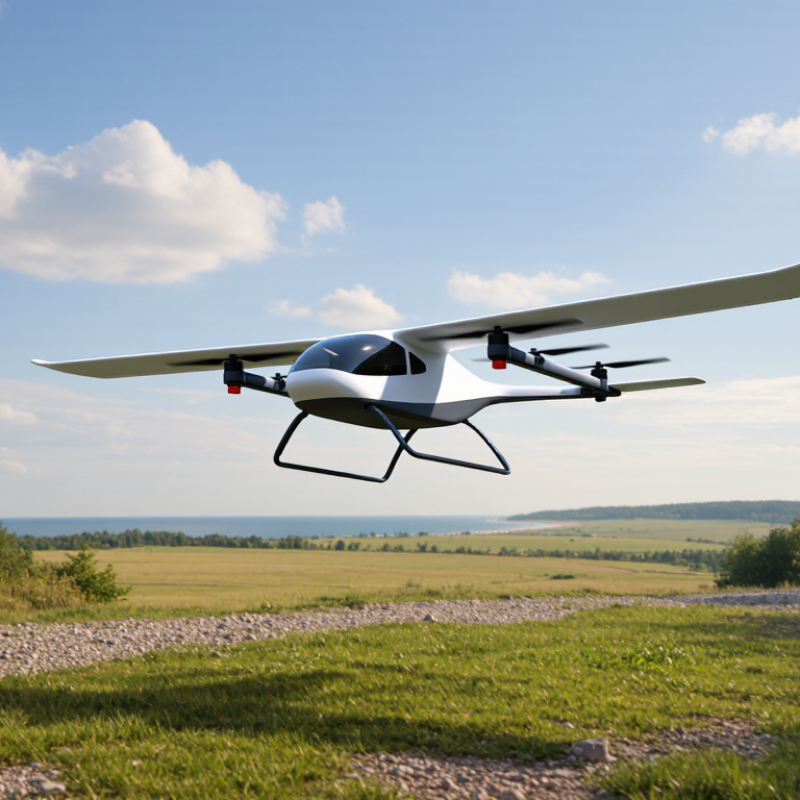
A Vtol Fixed Wing Drone combines the hovering ability of a multirotor with the efficient forward flight of a conventional airplane. It can rise vertically from a small clearing, then transition to wing-borne flight across a field or coastline. No runway is needed for takeoff. That is the central appeal, especially where launch space is limited.

The design usually includes lift rotors for vertical flight and a wing with a separate cruise propulsion system, though configurations vary. During a typical mission, an operator may watch the aircraft lift above nearby trees, stabilize, and accelerate into forward flight. On return, it slows and descends vertically. The transition is a critical phase, not a minor detail. Wind, aircraft weight, battery condition, and software settings can all affect performance. A published range is not a promise for every mission.

This article explains how these aircraft work, what distinguishes them from multirotors and conventional fixed-wing drones, and where their strengths and limitations become practical. We will also look at payloads, endurance, operating environments, and the questions worth asking before choosing a platform. The category is not perfectly tidy: manufacturers use different layouts and transition methods, so specifications need careful comparison. The label alone tells you little. A capable aircraft still needs sound planning, trained operators, and realistic expectations. Vertical launch is useful, but it does not remove the need to assess weather, landing areas, and mission demands.
What Is a VTOL Fixed Wing Drone?

Definition and Core Design of a VTOL Fixed-Wing Drone

A VTOL fixed-wing drone combines vertical takeoff and landing with the efficient forward flight of an airplane. It can rise from a small clearing without a runway, then travel on its wings once it gains speed. The design solves a practical problem: reaching distant sites where a conventional aircraft cannot take off easily.

Most designs use separate systems for these flight modes. Lift motors point upward and provide the thrust needed for takeoff and landing. A fixed wing carries the aircraft during forward flight, while a forward-facing propeller may provide cruise thrust. The frame, motor placement, and flight controller must work together. During transition, the aircraft gradually shifts from rotor-supported flight to wing-borne flight. This moment demands careful control; a poorly tuned transition can cause instability or waste energy.

Not quite simple. The added lift motors, wiring, and structure increase weight and create more parts to inspect. Designers must balance payload, range, wind tolerance, and landing precision rather than maximize one feature. In practice, a careful preflight check should include propellers, fasteners, battery condition, and control response. Dust on a landing surface or a gust across an open field can still affect handling. The layout looks elegant on paper, but real-world performance depends on sound engineering and disciplined operation.

What Is a VTOL Fixed-Wing Drone? — Definition and Core Design

A VTOL fixed-wing drone uses vertical-lift propellers for takeoff and landing, then relies on its wings for efficient forward flight. The chart shows representative airspeeds for a small aircraft; actual values vary by design and operating conditions.

How Vertical Takeoff and Fixed-Wing Flight Work Together

What Is a VTOL Fixed Wing Drone?

How Vertical Takeoff and Fixed-Wing Flight Work Together

A VTOL fixed-wing drone combines hovering lift with efficient forward flight. Small vertical rotors raise it from a compact launch area, such as a gravel clearing or rooftop. Once airborne, it tilts or transitions into wing-borne flight. The wing then provides most of the lift, while a forward motor moves the aircraft along its route. That is the appeal. It can avoid a runway, yet cover more ground than a multirotor on the same battery. The handoff is not effortless: wind, payload, and transition speed all affect stability and energy use. A fixed wing also cannot hover over a point to inspect a detail. The FAA’s 2024 Aerospace Forecast projects the U.S. commercial small-drone fleet could approach 955,000 aircraft by 2028. That figure describes the wider market, not VTOL fixed-wing models specifically, but it signals growing demand for practical aerial work.

Tips: Plan the route around the aircraft’s transition and landing space, not just its survey path. Check wind near launch height, and leave battery reserve for a return and vertical landing. For close inspection, pause the mission and use a hovering aircraft if the task requires it. A little extra planning helps; it is easy to underestimate the transition.

Key Components and Flight Control Systems

A VTOL fixed-wing drone combines the lift of multiple rotors with the efficiency of a wing. Its airframe supports both jobs, while separate motors may provide vertical lift and forward thrust. Some designs use tilting motors instead. The flight controller is the central coordinator. It reads sensors, processes pilot commands, and adjusts motor speed and control surfaces.

An inertial measurement unit tracks rotation and acceleration. A barometer estimates altitude, while satellite navigation helps determine position. During forward flight, an airspeed sensor can help the controller judge whether the wing is producing enough lift. Electronic speed controllers regulate motor power; servos move surfaces such as ailerons and elevators. Small errors matter. Poor sensor calibration can make a steady hover feel uneasy.

Flight control changes during transition. In hover, the controller balances rotor thrust across several axes. As the aircraft gains speed, it gradually relies more on the wing and aerodynamic surfaces. The timing must suit the aircraft’s weight, wind, and available thrust. This transition is not perfectly smooth on every airframe. Testing should include careful checks of sensor readings, motor direction, and control response before flight. Even a well-designed system can behave differently after a payload change, so flight settings deserve regular review.

What Is a VTOL Fixed Wing Drone? — Key Components and Flight Control Systems
System or Component Typical Configuration Primary Function Flight-Control Role
Fixed-wing airframe Wing, fuselage, and tail surfaces; layout varies by aircraft design Provides lift efficiently during forward flight and houses the aircraft’s equipment. Wing and tail aerodynamics determine stability, trim, and the control response used in cruise.
Vertical-lift propulsion Often several upward-facing motors and propellers on a quadplane; other layouts include tiltrotor and tailsitter designs Generates thrust for vertical takeoff, hovering, and vertical landing. The controller varies motor output to manage hover attitude, altitude, and position. The exact motor arrangement depends on the airframe.
Cruise propulsion A forward-facing motor and propeller on many quadplanes; some designs use a different propulsion arrangement Provides forward thrust for fixed-wing flight. Throttle is adjusted to support airspeed and climb or descent targets during wing-borne flight.
Electronic speed controllers (ESCs) One or more ESCs matched to the motors and electrical system Regulate motor speed in response to commands from the flight controller. Translate control outputs into motor commands; compatible ESCs may also report operating information such as temperature or current.
Control surfaces and servos Typically ailerons, elevator, and rudder; the particular surfaces depend on the aircraft Change aerodynamic forces and moments during forward flight. Servos move the surfaces to control roll, pitch, and yaw. Some designs also use them during transition or hover.
Flight controller Onboard computer running stabilization and navigation software Combines sensor data with pilot or mission commands to control the aircraft. Coordinates motor and servo outputs, manages flight modes, and may automate takeoff, transition, navigation, and landing.
Inertial measurement unit (IMU) Usually includes gyroscopes and accelerometers; some systems use multiple IMUs Measures angular motion and acceleration. Supports attitude estimation and stabilization, particularly during hover and when the aircraft is changing flight mode.
GNSS receiver Satellite-navigation receiver, sometimes combined with a compass Provides position and ground-velocity estimates outdoors. Supports position hold, waypoint navigation, and route recording. GNSS position is not a direct measurement of airspeed.
Airspeed sensor Commonly a pitot tube connected to a differential-pressure sensor Measures airspeed relative to the surrounding air. Can help the controller manage safe fixed-wing speed and guide transition between hover and forward flight.
Power system Battery, power distribution, wiring, and any required voltage regulation Supplies electrical energy to propulsion, control, and sensing equipment. Available voltage and current affect propulsion performance and endurance; power monitoring can provide low-battery warnings.
Transition control Software-controlled change between vertical-lift and wing-borne flight; implementation differs by aircraft architecture Allows a VTOL fixed-wing drone to take off or land vertically and cruise using its wings. Coordinates propulsion and control surfaces while monitoring flight conditions. Transition procedures and limits must be configured for the specific aircraft.

Common Applications and Operating Environments

A VTOL fixed-wing drone can rise vertically from a small clearing, then transition to efficient forward flight. That makes it useful where a runway is impractical: crop surveys, power-line inspection, coastal mapping, and emergency-area assessment. Operators can launch near a field edge, follow a planned route, and collect imagery across long distances. The details matter. A hovering launch does not guarantee a safe landing; gusts, uneven ground, and overhead branches can quickly narrow the margin.

PwC’s 2016 report, Clarity from Above, estimated a $127.3 billion addressable market for drone-powered solutions across industries, including agriculture and infrastructure. That is a modeled opportunity, not measured sales, and it should be read with care. In practice, the best operating environments have clear takeoff zones, reliable communications, and enough space for a contingency landing. FAA guidance also stresses checking weather, airspace, and equipment limits before flight. Wind can be deceptive near ridgelines. Tall crops may weaken positioning signals, while salt spray can complicate coastal work. A fixed-wing aircraft covers ground efficiently, but it cannot hover over every detail. That trade-off is easy to underestimate.

Advantages, Limitations, and Safety Considerations

What Is a VTOL Fixed Wing Drone?

Advantages, Limitations, and Safety Considerations

A VTOL fixed wing drone combines vertical takeoff with wing-borne forward flight. It can rise from a compact clearing, then travel more efficiently than a hovering multirotor. That can help when a site has no runway or a route covers several distant fields. The trade-off is a more complex aircraft, with separate lift and cruise systems to manage.

Range is useful, but not magic. Strong winds, cold batteries, and extra payload can reduce endurance more than a flight plan suggests. The transition from vertical lift to forward flight also needs enough clear space and stable conditions. A careful operator checks the aircraft’s limits, battery condition, control surfaces, and planned landing area before launch. Small details matter.

Safety starts on the ground. Keep people clear of the propellers, inspect fasteners, and confirm the return or landing procedure works as intended. Avoid launching when gusts could push the aircraft toward obstacles. During flight, watch battery reserves rather than stretching the route for one more image. I would still leave a wider margin than seems necessary; estimates are not guarantees. After landing, let hot motors and batteries cool before handling or packing them.


Close

Raise your Query

Hi! Simply click below and type your query.

Our experts will reply you very soon.

WhatsApp Us
