What Are the Top Types of Pressure Pumps?
Choosing the right pump is rarely a matter of selecting the highest pressure rating. Real systems are less cooperative.
In this guide, “What Are the Top Types of Pressure Pumps?” introduces the main technologies used across industrial, commercial, and water-handling applications. Centrifugal pumps suit steady flow and relatively clean liquids. Positive displacement pumps handle demanding pressure requirements and thicker fluids. Diaphragm, piston, plunger, gear, and peristaltic designs each solve different problems.
No single pump wins every application.
Pump specialist Dr. Lev Nelik often emphasizes, “A pump creates flow; the system creates pressure.” That principle deserves attention. Pressure Pumps operate within pipes, valves, filters, tanks, and changing demand. A pump that performs well on a test bench may struggle when suction lines are undersized or fluid viscosity rises.
Field experience makes these differences visible. A noisy centrifugal pump may be fighting cavitation. A diaphragm pump may need slower cycling for delicate materials. A plunger pump may deliver excellent pressure, but require careful maintenance around seals and valves. These details matter more than impressive catalog numbers.
This outline compares the leading Pressure Pumps by operating method, typical use, strengths, limitations, and maintenance needs. It also considers flow stability, energy consumption, fluid compatibility, and installation conditions. The comparison cannot predict every site problem. That is an honest limitation.
A practical choice begins with measured requirements, not assumptions. Check pressure, flow, temperature, solids, duty cycle, and available power before choosing. Sometimes, the simplest pump is the most reliable. Sometimes, it is not.
What Is a Pressure Pump and How Does It Work?
A pressure pump moves liquid by adding mechanical energy, then converting that energy into usable pressure. It does not create pressure from nothing. The system’s resistance, including pipe friction, elevation, and valves, determines the final pressure. According to the Hydraulic Institute, pump selection should match flow, head, fluid properties, and operating conditions.
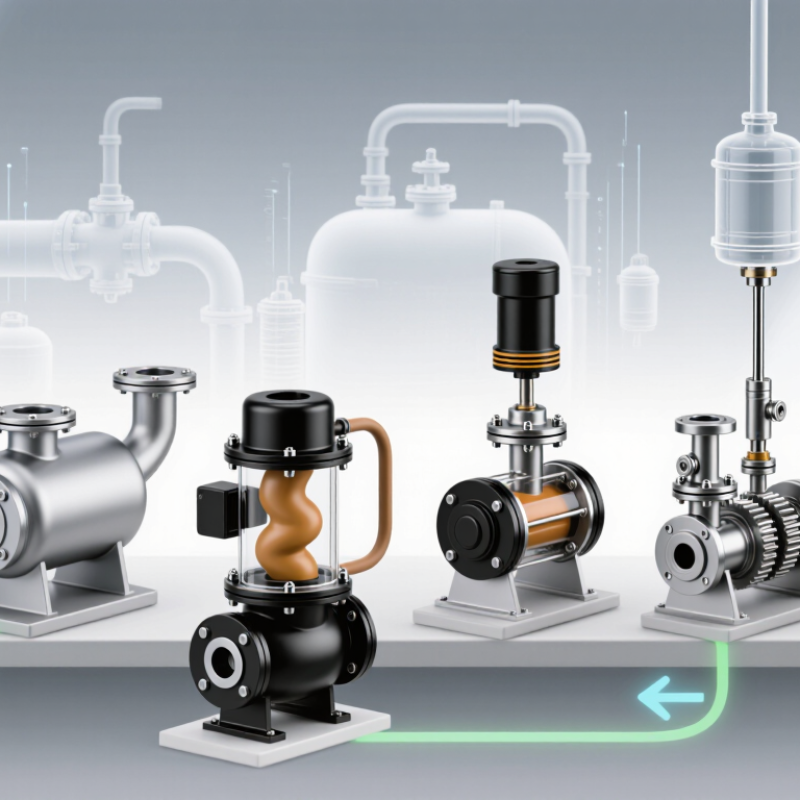
Centrifugal pumps are common for steady, high-flow duties. An impeller accelerates the liquid, while the casing changes velocity into pressure. Positive-displacement pumps work differently. They trap fixed volumes and push them forward, making them useful for thick fluids or precise dosing. Diaphragm, piston, and gear pumps belong to this group. Small pressure-boosting units often use sensors, pressure tanks, or variable-speed controls to respond as demand changes.
The numbers show why this matters. The WHO and UNICEF Joint Monitoring Programme reported that 2.2 billion people lacked safely managed drinking water in 2022.
Reliable pressure control supports treatment, distribution, irrigation, and building services. Yet a pump rated for high pressure may perform poorly when the pipe network is restrictive. That is an easy mistake. Field engineers should check the pump curve, net positive suction head, motor efficiency, and shutoff pressure before installation. Relief protection is essential for positive-displacement designs. Real systems are rarely perfect, and changing demand can expose weaknesses that a laboratory test misses.
What Are the Main Types of Pressure Pumps?
Pressure pumps mainly fall into two families: dynamic pumps and positive-displacement pumps.
Dynamic pumps, especially centrifugal pumps, raise pressure by accelerating fluid through a rotating impeller. They suit high-flow duties, such as water circulation, irrigation, and cooling loops. Their output changes with system resistance. Positive-displacement pumps move a measured volume during each cycle. Reciprocating piston, plunger, diaphragm, and rotary gear pumps belong here. They deliver steadier pressure at lower flow rates, although pulsation and maintenance require attention.
The U.S. Department of Energy estimates that pumping systems consume about 20% of industrial electricity.
That figure makes pump selection an energy decision, not only a pressure decision. Centrifugal pumps often perform efficiently near their best-efficiency point. Running far from it can increase vibration, heat, and electricity use. Positive-displacement pumps can handle thick fluids and high discharge pressure, but relief protection is essential. Small details matter. Pipe friction matters.
Agriculture adds another practical dimension.
The United Nations World Water Development Report 2024 states that agriculture accounts for roughly 70% of global freshwater withdrawals. Irrigation systems commonly use centrifugal pumps for volume, while diaphragm or plunger pumps support metering and higher-pressure applications. In field assessments, a pump is sometimes selected from pressure alone. That approach is incomplete. Fluid viscosity, temperature, solids, duty cycle, and suction conditions can change the result. Even published efficiency data may not match an aging installation. A careful engineer should verify operating data on site, then compare lifecycle energy, seal wear, controls, and servicing access.
How Do Positive Displacement Pressure Pumps Operate?
Pressure pumps fall into several groups, including centrifugal, piston, plunger, diaphragm, gear, and screw designs. Positive displacement pumps work differently from centrifugal pumps. They trap a measured volume of fluid, then force it toward the discharge line. This action produces steady pressure, even when flow resistance changes.
A piston or plunger pump uses a reciprocating chamber. During the suction stroke, an inlet valve opens and fluid fills the chamber. The outlet valve stays closed. During the discharge stroke, the inlet valve closes, while the outlet valve opens. The piston then pushes the trapped fluid forward. Diaphragm pumps follow a similar cycle, but a flexible membrane separates the fluid from moving mechanical parts. This design can reduce leakage risks and protect sensitive fluids.
Rotary positive displacement pumps use rotating gears, screws, or vanes. Small spaces form between the moving parts and the housing. Fluid enters these spaces, travels around the casing, and exits under pressure. Engineers must match pump speed, viscosity, temperature, and pressure requirements carefully. A thicker fluid may need slower operation. Excessive speed can create heat and wear. It is easy to oversimplify this choice. Real systems often behave differently because of air pockets, worn seals, or changing fluid conditions. Regular pressure checks and inspection of valves can reveal these problems early.
How Do Dynamic Pressure Pumps Differ?
Dynamic pressure pumps differ from positive-displacement pumps through their method of creating flow. Centrifugal, mixed-flow, and axial-flow pumps accelerate liquid with an impeller. The casing then converts velocity into pressure. Their flow changes with system resistance, making them suitable for water circulation, cooling loops, and irrigation. Positive-displacement pumps move fixed volumes through repeated chamber action. Reciprocating, gear, screw, and diaphragm pumps deliver stronger pressure at lower flow rates.
The difference appears clearly on a pressure gauge. A centrifugal pump may provide high flow at moderate pressure, but clogged filters can reduce output quickly. A piston pump can maintain pressure despite resistance, though pulsation and seal wear require attention. The U.S. Department of Energy’s Improving Pumping System Performance sourcebook identifies pumping systems as potentially consuming about 25% of industrial facility electricity. That figure makes correct pump selection more than a maintenance decision. It affects operating cost.
Field engineers usually compare the pump curve with the system curve before choosing equipment. Hydraulic Institute guidance also emphasizes testing at actual flow, head, temperature, and fluid conditions. Dynamic pumps often operate efficiently near their best-efficiency point. Running far from it can increase vibration and energy loss. This is where simplified advice fails. A larger pump is not automatically safer. In some installations, variable-speed control can reduce throttling losses, but poor sensor placement may undermine the benefit. Real pipe friction, not brochure pressure, should decide the final selection.
Dynamic pressure pumps, such as centrifugal, mixed-flow, and axial-flow pumps, transfer energy by increasing fluid velocity. Their flow rate normally decreases as system pressure rises. Positive-displacement pumps, including rotary and reciprocating designs, move a defined volume per cycle and can produce substantially higher pressure; flow is comparatively less affected by pressure until leakage, bypass, or a relief device limits operation. The pressure ranges shown are broad typical engineering ranges and vary with pump design, speed, fluid, and application.
How Should You Choose the Right Pressure Pump?
Choosing the right pressure pump starts with the fluid, required flow, and working pressure. A centrifugal pump suits clean water and high-volume circulation, but it may struggle with very high pressure. Piston and plunger pumps deliver stronger pressure for washing, spraying, and process equipment. Diaphragm pumps handle many abrasive or chemically active fluids because the moving parts remain separated from the liquid.
Measure the real operating conditions before comparing pump specifications.
Check flow in litres per minute, pressure at the discharge point, suction lift, and daily running hours. Do not select a pump by maximum pressure alone. A unit rated far above the system may waste energy and create unstable control. Keep a practical pressure margin, but avoid excessive capacity.
Fluid temperature matters. So does viscosity. Stainless steel, coated metal, or engineered plastic may be suitable for different liquids, but compatibility should be verified from technical data. Inspect the pipe diameter, bends, filters, valves, and power supply. Small restrictions can reduce performance significantly.
Keep maintenance realistic.
Can operators reach the seals, diaphragm, or filter without dismantling half the system? That detail is often missed. Noise, vibration, and automatic controls also affect daily use. Sizing is rarely perfect on the first attempt. Recheck the calculation after installation, because actual demand can differ from the original estimate.