What Are the Top Linked Smoke Detectors?
A smoke alarm is easy to overlook until smoke reaches the hallway. Linked Smoke Detectors are designed to make that warning travel: when one compatible unit detects smoke, other connected alarms can sound too. That can give people in distant bedrooms more time to respond. It matters.
But “top” does not mean the most features or the highest price. A useful comparison should consider how alarms connect, how clearly they alert, and whether they keep working during a power outage. Battery life, backup power, installation requirements, and replacement parts deserve attention as well. Small details count.
Some models send phone notifications, identify which alarm triggered, or connect with other smart-home devices. Those features can help, but an app alert should not replace an audible alarm. Wi-Fi interruptions, setup errors, and compatibility limits are real possibilities. Not every home needs every feature.
This guide looks at the practical differences among leading linked options, including wired and wireless designs. It also considers who may benefit from each type, from households with multiple floors to people who want simpler installation. Product specifications and independent safety certifications are worth checking before purchase; features can vary by model and region. Follow the manufacturer’s instructions and applicable local guidance when choosing and installing alarms. No connected system is perfect, and that deserves honest consideration. The right choice is the one that suits the home, can be maintained, and provides a dependable warning when it matters.
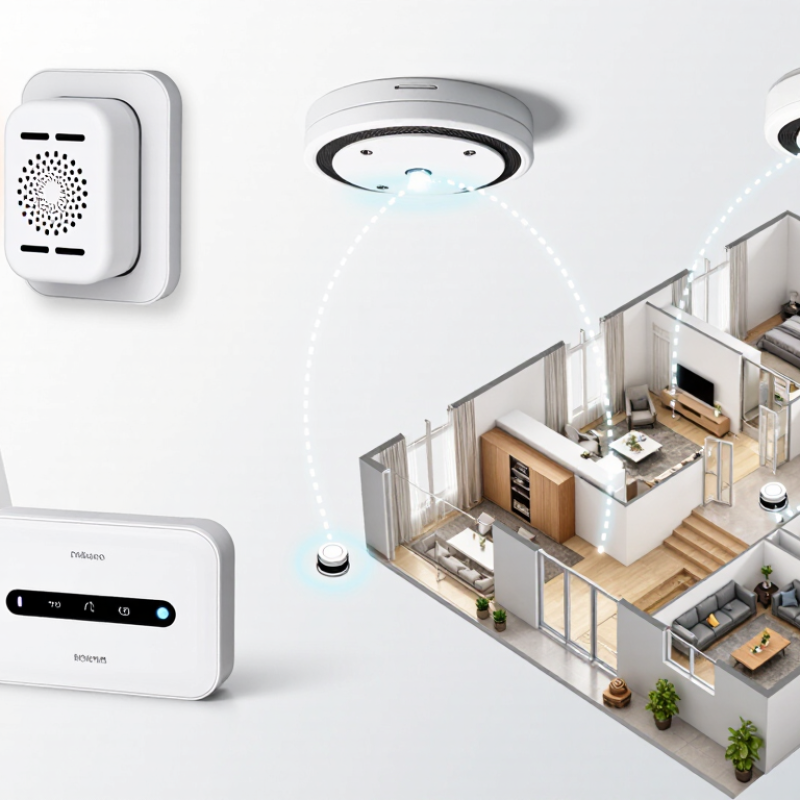
What Linked Smoke Detectors Are and How They Differ
Linked smoke detectors communicate with one another, so smoke detected in one room can trigger alarms throughout the home. The connection may use wiring or a wireless signal; either way, the key difference from standalone alarms is shared warning. A detector near the kitchen, for example, can alert someone asleep upstairs. That extra reach matters. But linked alarms do not necessarily share every feature: sensing types, backup power, and compatibility vary by model. Check the product instructions before combining units. The easy assumption is that “linked” means universally compatible. It does not.
NFPA’s report Smoke Alarms in U.S. Home Fires found that smoke alarms were present in 74% of reported home fires from 2014 to 2018. The death rate per 1,000 reported fires was about twice as high where no alarm was present: 12.3, compared with 5.7. Those figures describe alarms broadly, not linked systems specifically, so they should not be read as proof that interconnection alone prevents deaths. The U.S. Fire Administration advises replacing smoke alarms after 10 years. A connected system still needs regular testing, fresh backup batteries, and clear placement. Small details count. A missed test is easy to overlook.
How Interconnected Alarms Detect and Share Smoke Alerts
Interconnected smoke alarms do more than make a room-by-room warning louder. When one unit senses smoke, it sends a signal through a wired or wireless connection. Other linked alarms then sound, helping alert people in bedrooms or behind closed doors. The detecting unit may be near a kitchen, while the warning reaches a hallway upstairs. That extra reach matters at night.
Each alarm still relies on its own sensor, power supply, and working connection. A network cannot help if a unit is disconnected, its batteries are depleted, or its sensor is past its service life. Features also vary: some systems identify which alarm detected smoke, while others simply sound together. Check the instructions for your specific setup. A small limitation is easy to miss: shared alerts do not tell you where to go, so everyone should know an exit route.
Tips: Test every alarm using the maker’s instructions, and confirm that linked units sound together. Keep alarms clear of dust, and replace batteries or whole units when needed. If an alert sounds, leave promptly and call emergency services from outside. Don’t stop to investigate.
Key Features for Comparing Linked Smoke Detectors
A linked smoke detector is valuable when an alarm in one room can alert people elsewhere. Compare how the units connect: some use wiring, while others communicate wirelessly. Check the stated range and whether walls or floors can weaken the signal. A hallway test is useful, but follow the manufacturer’s instructions for testing every connected unit.
Look closely at power and maintenance. Mains-powered models may include battery backup; battery-powered units need a clear replacement schedule. A low-battery warning should be easy to hear, even from a bedroom. Check for a test button, a hush feature, and a distinct end-of-life alert. Small details matter. A hush control that is hard to reach can be frustrating when cooking smoke triggers an alarm.
Sensor type also deserves attention. Photoelectric sensors can respond well to slow, smouldering fires, while other designs may detect different fire conditions; consult the product documentation rather than assuming one type suits every room. Confirm that linked units are explicitly compatible, and check applicable safety certifications for your region. Installation guidance matters too, because placement near kitchens, bathrooms, or air vents can affect nuisance alarms. One detail is easy to miss: a detector may sound locally without successfully alerting every linked unit. Test the complete system regularly, and keep its instructions somewhere you can find them.
Leading Linked Smoke Detector Types and Their Strengths
Linked smoke detectors mainly differ in how alerts travel. Hardwired units send alarms through building wiring, so one detector can trigger every connected unit. This suits multi-level homes, where a closed bedroom door may muffle a hallway alarm. Wireless radio-linked units offer similar whole-home signaling without new cables, making them useful in finished homes. No setup is flawless.
App-connected detectors add phone alerts and status checks. These can help when residents are away, but depend on network and power conditions. Phone notifications should never replace audible alarms. The National Fire Protection Association’s 2021 report, Smoke Alarms in U.S. Home Fires, found alarms were present in 74% of reported home fires from 2014 to 2018. They operated in 89% of fires where installed. That makes routine testing essential, not optional.
Hardwired links are a strong fit for new construction; wireless types simplify retrofits. App-linked models suit households that want remote status checks, though setup can be fiddly.
Try this practical check: trigger one detector and confirm another floor’s unit sounds too. Small detail, big difference. In older homes, ask a qualified installer to check compatibility. A linked alarm that cannot communicate reliably offers less protection than expected.
Installation, Testing, and Maintenance of Linked Alarms
Linked smoke alarms can alert people across several rooms, but reliable protection starts with careful placement. Install each unit as its instructions specify, usually on a ceiling or high on a wall. Keep alarms away from vents, corners, curtains, and shelves that could obstruct airflow. Choose units designed to connect with one another; similar appearance does not guarantee compatibility. Have a qualified person handle hardwired installation, and check that backup batteries are fitted. Small details matter.
Press each alarm’s test button monthly, or as often as its instructions recommend. Confirm that every linked unit sounds, including alarms near bedrooms. Ask someone in another room to listen while you test. If one alarm stays quiet, check its power and connection using the manual. Never use an open flame to test an alarm. Gently remove dust with a vacuum’s soft brush; avoid spraying cleaner into openings. The test button checks alarm operation, but it cannot replace timely maintenance.
Check each unit’s age and replacement guidance, and write the installation date somewhere easy to find. Replace batteries only as directed; sealed-battery units may need replacement instead. After dusty renovation work, inspect and clean alarms according to their instructions. It is easy to treat a successful test as the whole job. It isn’t. Regular checks help, but they cannot make an expired or poorly placed alarm dependable.

