Zinc Die Cast Parts appear in products people handle every day, though they often remain hidden inside the finished item. A compact door lock, a laptop hinge, and a vehicle sensor housing may all rely on zinc components. The process forces molten zinc alloy into a steel die, shaping fine details quickly and consistently. That makes it useful for complex, high-volume parts with thin walls and smooth surfaces. Small parts matter.
Casting researcher John Campbell’s published principles can be paraphrased this way: “Sound castings depend on sound metal and controlled flow.” It is a useful reminder, not a substitute for engineering checks. Alloy choice, die design, cooling, and inspection all affect the result. A part may look clean yet still need testing for strength, fit, or performance under heat and vibration.
This guide explores where Zinc Die Cast Parts are used, from automotive fittings and electrical connectors to appliance controls, furniture hardware, and consumer electronics. It also considers why manufacturers choose zinc, and where its limits matter. Zinc can support detailed shapes and efficient production, but it is not automatically the best material for every application. That point is easy to miss. Real parts face wear, changing temperatures, and assembly tolerances; design choices should reflect those conditions.
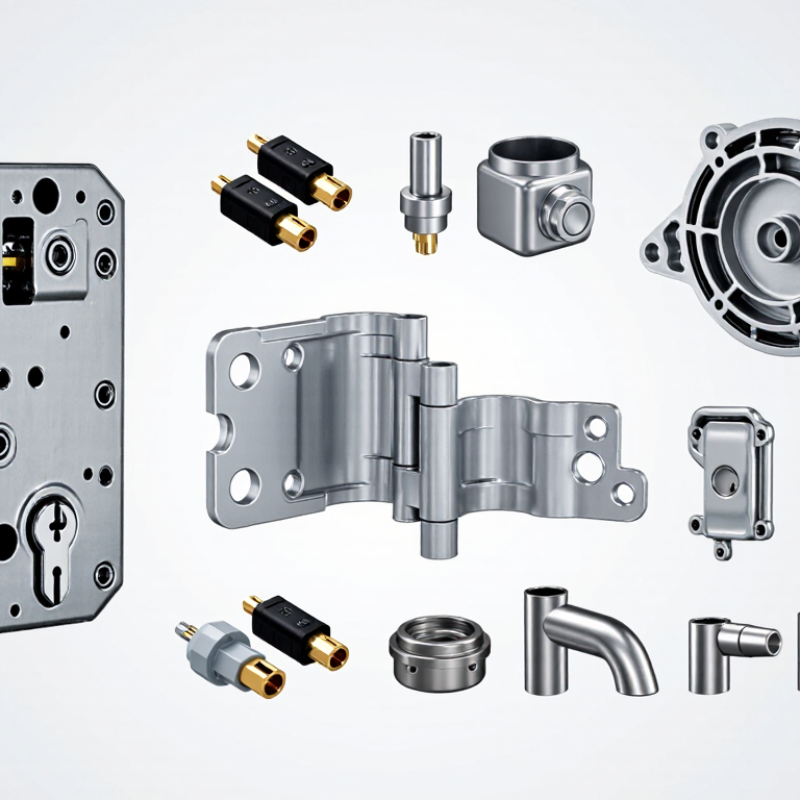
In automotive systems, zinc die cast parts often support compact mechanisms that need accurate shapes and repeatable dimensions. Examples include door-lock housings, seat-adjustment components, HVAC control parts, connector shells, and mounting brackets. A carefully formed housing can hold small moving pieces in alignment, even when space behind a door panel is tight. Zinc alloys also accept finishing treatments that help protect surfaces and improve appearance.
These parts are useful, but they do not fit every job. Designers consider load, temperature, vibration, and exposure to moisture before selecting an alloy and finish. A bracket near a hot engine area may need a different material. Thin walls and complex shapes can reduce weight and combine several features in one casting, yet porosity or uneven coating can affect performance. Real production requires inspection, not just a good-looking drawing. Even a small dimensional mismatch can make an assembly feel rough.
Tips: Check critical dimensions, coating coverage, and moving-part fit during evaluation. Ask how the component performs under vibration and temperature changes. A clean sample is helpful, but it may not reveal every production issue.
Zinc die cast parts appear in many building hardware and fixture assemblies. Common examples include door handles, lock housings, window operators, cabinet pulls, and decorative plumbing trim. The alloy fills detailed moulds, making it practical to form ribs, recesses, and mounting features in one component. That can reduce machining and simplify assembly. The parts also feel solid in the hand, which matters for frequently touched fittings.
A good design considers more than appearance. Wall thickness, draft angles, and the location of the casting line affect both production and the finished surface. Zinc components are often plated or coated to improve appearance and help resist corrosion. Still, a finish can wear at edges or around moving joints. I have seen small details get overlooked: a handle may look sturdy but feel loose if its fastener interface is poorly designed. For load-bearing or safety-related hardware, confirm the part’s strength and performance in the actual assembly.
Tips: Check the finish near edges and screw holes, where wear may show first. Keep drainage and cleaning access in mind for fixtures exposed to moisture. Ask for samples; the real feel can be surprising.
In electronics, zinc die cast parts often form compact housings, connector shells, heat-spreader frames, and mounting brackets. Their fine casting detail can create narrow ribs, screw bosses, and alignment features in one piece. That helps keep circuit boards and small switches seated during assembly. A conductive zinc enclosure may reduce electromagnetic interference, but only when its seams, coatings, and grounding points are designed properly. The alloy alone is not a shielding plan. Small details matter.
Consumer appliances use zinc components where a part must feel solid and withstand repeated handling. Examples include mixer gear housings, appliance knobs, hinge blocks, and latch mechanisms. A threaded boss can hold a fastener securely, while a plated or painted surface can improve appearance and resist everyday wear. Fit matters. In a countertop appliance, that can mean a firm control knob that does not wobble after months of use. Still, zinc is denser than many plastics, so weight and cost may rule it out for large covers. Heat, cleaning chemicals, and impact loads also need testing in the actual product. Poor wall thickness or loose fits can cause trouble, a trade-off that is easy to overlook.
Zinc die cast parts appear in many industrial machines, often where compact shapes and repeatable dimensions matter. They can form housings for sensors, small actuators, and control components. A cast housing may include screw bosses, mounting ears, and narrow ribs in one piece. This reduces the number of separate parts. It also helps keep assemblies compact. Useful on crowded equipment frames.
In pumps and gearboxes, zinc castings may serve as covers, brackets, or protective enclosures. Their smooth surfaces can support a clean fit against mating components. Threads and locating features can often be incorporated into the design, though critical interfaces still need careful inspection. A slight mismatch can cause assembly trouble. A small detail.
Material choice needs context. Zinc alloys offer useful strength and casting detail, but they are not right for every operating condition. Designers should check load, vibration, temperature, and exposure to moisture or chemicals. Surface finishing may improve corrosion resistance, but the finish must suit the service environment. I would not assume a casting is protected just because it looks polished. For production, consistent wall thickness and sensible draft angles can support reliable filling and easier part release. Prototype testing can reveal issues that drawings miss, especially around fasteners and repeated impacts.
What Are Zinc Die Cast Parts Used For?
How Part Design Determines Suitable Applications
Zinc die-cast parts appear in appliance controls, door hardware, electrical enclosures, and compact vehicle components. Their value depends less on a broad label than on the geometry and service conditions of each part. A thin, detailed housing may be a better fit than a large, heavily loaded structural piece. Small details matter.
Zinc alloys can fill fine features, supporting thin walls, ribs, threaded bosses, and integrated mounting points. This may reduce separate fasteners and simplify assembly when the design allows reliable filling and ejection. Draft angles, gradual wall transitions, and carefully placed parting lines help limit sticking, distortion, and visible seams. Fit comes first. A handheld control housing, for example, may need crisp button openings and a smooth plated or painted face. A connector shell may instead prioritize consistent dimensions and electrical shielding, which should be tested in the finished assembly.
Design also sets boundaries. Zinc components are not automatically suitable for every high-temperature, corrosive, or high-impact environment. Wall thickness, alloy choice, coatings, and expected loads all affect service life. One easy-to-miss issue is a deep pocket that traps heat or complicates die release. Reviewing tolerances and the parting line with a foundry early can expose trade-offs before tooling is finalized. Samples should then be checked under realistic operating conditions.
| Application | Typical Zinc Die Cast Parts | Design Features That Suit the Application | Why Zinc die casting Is Suitable | Design Considerations and Limits |
|---|---|---|---|---|
| Locks and door hardware | Lock housings, handles, latch components, and small gear or lever parts | Ribs and bosses can add stiffness; integrated details can locate springs, pins, and other components. Draft and consistent wall sections help metal fill and part release. | The process can form detailed shapes and features that may reduce the number of separately assembled pieces. Cast surfaces can also be finished or plated for appearance. | Account for load-bearing areas, wear, and fastening forces. Specify an appropriate alloy and finish for the service environment; exposed zinc alloys can require protection against corrosion. |
| Automotive mechanisms and interiors | Small housings, brackets, knobs, handles, and components for latches or adjustment mechanisms | Use ribs instead of unnecessarily thick walls where practical; provide draft, radiused transitions, and accessible datum surfaces for machining or assembly. | Zinc die casting can produce repeatable, detailed parts in production quantities and can combine mounting and locating features in one component. | Check operating temperature, vibration, impact, and fatigue requirements. Zinc alloys are not suitable for every high-temperature or highly loaded automotive component. |
| Electrical and electronic products | Connector shells, small housings, shielding components, and precision brackets | Design openings, thin sections, ribs, and locating features around the required electrical and assembly functions. Identify surfaces that need machining or a conductive finish. | Fine detail and dimensional repeatability can support compact assemblies. With suitable alloy and surface treatment, a cast part may also provide a conductive enclosure or shielding component. | Do not assume a bare casting meets conductivity, grounding, insulation, or electromagnetic compatibility requirements. Verify the alloy, finish, tolerances, and electrical performance. |
| Appliances and household equipment | Control knobs, handles, small housings, brackets, and gear-related components | Consolidate compatible features into the part, while keeping wall thickness reasonably uniform and providing draft on surfaces parallel to the die-opening direction. | Complex shapes and decorative details can be produced at volume, with finishing options available for visible components. | Consider cleaning agents, humidity, contact with dissimilar metals, and repeated user loads. Select a protective finish when the environment or appearance requirements call for one. |
| Tools and consumer products | Tool housings, triggers, levers, decorative fittings, and small mechanical components | Use generous radii at transitions, place ribs near highly loaded areas, and design fastening points to avoid excessive local stress. | Zinc die casting can combine detailed geometry with a solid feel and supports repeatable manufacture for many small components. | Evaluate drop impact, wear, and concentrated loads for the specific design. A different material or process may be preferable for parts requiring exceptional impact resistance or low weight. |
Design note: Suitability depends on the part’s geometry, alloy, production volume, operating environment, required finish, and performance requirements. Final designs should be reviewed with the die-casting supplier.
Hi! Simply click below and type your query.
Our experts will reply you very soon.
