Top US Ocean Freight Lines for Global Importers?
Choosing among the top US Ocean Freight Line options requires more than comparing vessel size or brand recognition. Global importers need dependable sailings, suitable port coverage, equipment availability, and clear inland connections. A delayed container can sit beneath a gray sky in Savannah, while storage charges continue accumulating.
UNCTAD’s Review of Maritime Transport reports that more than 80% of global merchandise trade by volume moves by sea. That scale makes carrier selection commercially important. Drewry’s World Container Index tracks spot rates across eight major routes, while Sea-Intelligence measures monthly schedule reliability. These reports offer useful evidence, but they do not tell the entire story. Service quality can change by trade lane, season, port, and booking channel. The details decide.
Lars Jensen, CEO of Vespucci Maritime, has described container shipping as “a network industry.” His observation explains why a strong transpacific service may not perform equally well on an Asia–US East Coast route. This guide compares major carriers through practical measures, including sailing frequency, transit consistency, terminal access, documentation support, and surcharge transparency. It also considers importer experience, not only published capacity. No ranking is permanent. A carrier may look efficient in a report, yet struggle when equipment is tight in Long Beach or a rail connection slips in Chicago. That is worth admitting. Reliable decisions require current data, lane-specific checks, and careful review of each importer’s cargo profile.
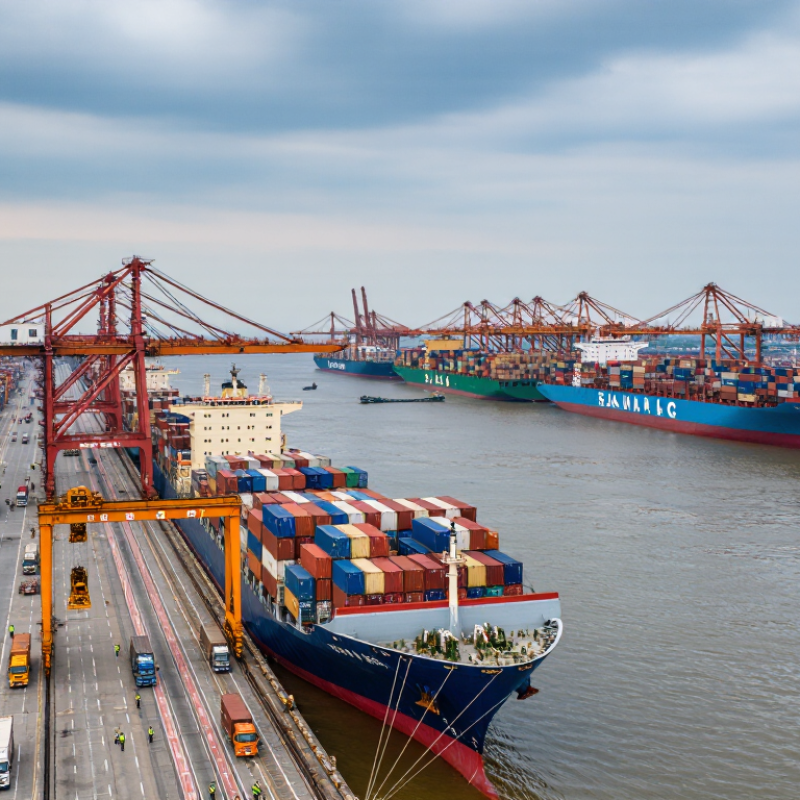
US Ocean Freight Lines: Role in Global Importing
US ocean freight lines play a practical role in global importing. They connect overseas manufacturers with American ports, inland rail, and distribution centers. Maritime shipping carries more than 80% of global merchandise trade by volume, according to UNCTAD’s Review of Maritime Transport 2024. That figure explains their influence. A delayed vessel can leave containers waiting beside a warehouse for days.
Importers usually evaluate sailing frequency, port coverage, transit consistency, and equipment availability. Price matters, but it is rarely the whole story. The World Bank’s Logistics Performance Index 2023 shows that reliable tracking and predictable delivery remain central to supply-chain performance. Ocean lines also manage documentation, container repositioning, and schedule changes during weather or port congestion. These details feel small until a production line stops.
In practice, importers should compare recent performance, not only published schedules. Sea-Intelligence’s Global Liner Performance data regularly measures schedule reliability across major container services. Results can change sharply after labor disputes, canal restrictions, or severe storms. That uncertainty deserves attention. A carrier with a lower quote may create higher storage and inventory costs later. I have also seen teams overvalue transit time while ignoring cut-off rules and inland handoffs. The better choice is not always the fastest vessel. It is the service that matches cargo volume, risk tolerance, and delivery requirements. Still, no ranking stays perfect for long.
US Ocean Freight Lines: Role in Global Importing
Global container port throughput illustrates the scale of ocean freight networks supporting importers. Higher throughput reflects the volume of containers handled by ports worldwide, including cargo moving to and from the United States.
Source: UNCTAD, Review of Maritime Transport and UNCTADstat. Figures are rounded global container port throughput estimates in million TEU.
How to Compare Ocean Freight Lines for Import Needs
Choosing an ocean freight line requires more than comparing the lowest quote. UNCTAD’s Review of Maritime Transport 2024 reports that ships carry over 80% of global merchandise trade by volume. That scale makes reliability a practical buying factor. Compare published sailing frequency, port coverage, transit-time ranges, and connection options. A route with three weekly departures may protect inventory better than a cheaper weekly service.
Use measurable evidence. Sea-Intelligence’s Global Liner Performance report tracks schedule reliability and delays across major container services. Review at least six months of results, not one attractive month. Ask for average delay, rolled-container frequency, free-time terms, and documentation cutoffs. The World Bank’s Logistics Performance Index 2023 also highlights tracking, timeliness, and customs efficiency as important logistics outcomes. These factors often decide whether cargo reaches a warehouse smoothly.
Tips: Request a lane-specific quotation. Confirm every surcharge in writing. Compare total landed transport cost, not ocean freight alone. Ask how disruptions are communicated. A low price can hide storage exposure.
I have learned that carrier rankings change quickly, especially during port congestion or capacity shifts. Data helps, but it is not perfect. A shipper should test assumptions against recent booking records, missed connections, and actual arrival timestamps. Small details matter.
Port Coverage, Transit Times, and Shipping Routes
For global importers, the strongest ocean freight line is rarely the cheapest quote. Port coverage matters first. A carrier serving Los Angeles, Long Beach, New York, Savannah, Houston, and Seattle gives importers more routing choices when congestion spreads. UNCTAD’s Review of Maritime Transport 2024 reports that maritime shipping carries over 80% of global merchandise trade. A missed sailing can therefore affect factories, warehouses, and retail shelves far beyond one port.
Transit time should be measured port to port, not from booking to delivery. Typical Asia–US West Coast services may take about 14–22 days. Asia–US East Coast routes often require 28–40 days, depending on canal use and port calls. Add customs clearance, drayage, and inland rail separately. The World Bank’s Container Port Performance Index 2023 shows how handling efficiency varies sharply between ports. That difference can add hours, or several days, during peak periods.
Route design needs practical testing. Ask whether weekly sailings remain available during blank sailings, storms, or equipment shortages. Independent schedule data from Sea-Intelligence has repeatedly shown that global vessel reliability can fall well below normal expectations. Published transit times are not guarantees. I have seen a “faster” route lose its advantage after one missed connection. A small pilot shipment can expose weak transshipment links, limited port coverage, or poor communication before larger volumes move.
Selecting the Right Carrier for Global Imports
Selecting a carrier for global imports starts with the cargo, not a familiar logo. I review origin, destination, container type, delivery window, and customs requirements before requesting rates. A low ocean quote can lose value when terminal charges or inland delays appear. Experienced import teams compare total landed transport cost, not only the base freight.
Service reliability deserves evidence. Ask for recent performance data on the exact trade lane, including schedule changes, rolled bookings, port omissions, and average transit time. Request a written list of local agents, escalation contacts, free-time terms, and documentation deadlines. Clear tracking should show booking confirmation, container pickup, gate-in, vessel departure, and arrival updates. Small details matter when a container waits beside a warehouse at 6 a.m.
The right carrier also fits your risk tolerance. Confirm cargo insurance options, equipment availability, temperature controls, and procedures for damage or delay claims. Check whether the carrier can support your required import documents and compliant customs process.
References from shippers with similar volumes can reveal service gaps that sales calls hide. I have learned that promised flexibility is not always operational flexibility. A trial shipment may be wiser than a large commitment.
Review results after delivery, including invoice accuracy, response speed, and condition on arrival. No carrier performs perfectly. The useful question is how openly it fixes mistakes.

