Magnetic Hooks are becoming practical tools for organized homes, retail displays, workshops, warehouses, and temporary fixtures. Their appeal is simple: a small hook can hold signage, cables, tools, or lightweight equipment without drilling a surface. Yet holding strength is never just a packaging claim. It depends on magnet grade, steel thickness, air gaps, surface direction, coating, hook geometry, and load movement.
Industry data supports wider interest in magnetic technologies. Grand View Research valued the global permanent magnets market at approximately USD 36 billion in 2023. Its report also projects continued growth through 2030, supported by electronics, automotive systems, renewable energy, and industrial automation. The U.S. Department of Energy’s 2023 Critical Materials Assessment highlights supply-chain risks involving rare-earth materials. That matters for buyers comparing neodymium and ferrite Magnetic Hooks. Price alone can mislead.
Magnetics researcher Dr. David Jiles has stated, “Magnetic performance is a systems problem, not a single-number problem.” This principle fits hooks perfectly. A listed pull force may describe a polished steel test plate, not a painted warehouse beam. Real conditions are messier. Dust, vibration, angled loads, and repeated removal can reduce confidence. Buyers therefore need clear specifications, independent testing, corrosion guidance, and realistic safety margins. This guide examines the top types of Magnetic Hooks for global buyers, including neodymium, ferrite, swivel, countersunk, and enclosed designs. Some categories overlap. That is worth admitting. The best choice depends on the surface, load, environment, and consequences of failure.
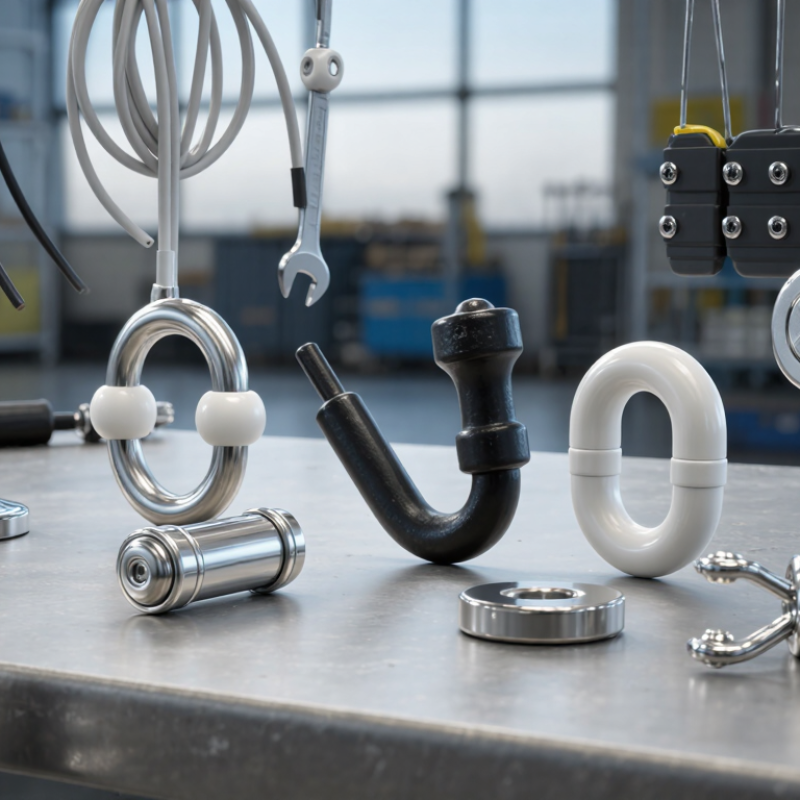
Magnetic hooks combine a permanent magnet, steel cup, hook body, and protective coating. The magnet creates a concentrated field at the contact surface. This field attracts ferromagnetic materials, such as clean iron or mild steel. It does not work well on aluminum, glass, wood, or most stainless steel. Neodymium magnets offer strong holding force in compact sizes. Ferrite magnets cost less and tolerate some demanding environments, but they usually need a larger body. Steel cups guide magnetic flux toward the surface and protect the magnet from impact. Swivel, fixed, and rotating hooks suit different installation needs.
Holding capacity depends on more than magnet strength. A smooth, thick steel plate gives better contact than a painted, curved, or rusty surface. Pulling straight away is also different from sliding sideways. Manufacturers may test capacity under ideal conditions, so buyers should allow a practical safety margin.
Real-world performance is less tidy. Moisture, temperature, vibration, and uneven surfaces can reduce reliability. Check the coating, thread size, hook opening, and test method before comparing products. For outdoor use, corrosion resistance deserves careful attention.
Tips: Clean both surfaces before testing. Keep loads below the stated limit. Test the hook gradually. Avoid placing magnetic hooks near sensitive electronic devices, medical equipment, or storage media. A small hook may look convenient, but its working load can be surprisingly limited. Recheck the attachment after movement, temperature changes, or repeated use.
Top Types of Magnetic Hooks for Global Buyers
Heavy-Duty Magnetic Hooks for Industrial and Commercial Applications
Heavy-duty magnetic hooks support tools, cables, signs, and temporary fixtures in demanding workplaces. Their holding power depends on steel thickness, surface condition, and pulling direction. A clean, flat steel panel usually provides stronger contact than painted or uneven metal. Swivel magnetic hooks suit warehouses because the hook can rotate with changing loads. Fixed hooks work well on machines, storage racks, and metal doors. Rubber-coated bases can reduce scratches and improve grip during routine handling.
For higher loads, buyers often select neodymium magnetic hooks with enclosed steel cups. The cup protects the magnet and concentrates its force toward the mounting surface. Screw-eye models provide a stable point for ropes, lights, and lightweight equipment. Double-hook designs can distribute smaller loads across two hanging points. Check the rated capacity, safety factor, magnet grade, coating, and operating temperature. A published load rating is useful, but it may assume ideal laboratory conditions.
In real facilities, dust, oil, vibration, and angled pulling can reduce performance. I have found that users sometimes choose the strongest hook without checking the surface. That is a costly mistake. Load testing should match the intended direction and working environment. Buyers should also review packaging, traceability, and conformity documents for their destination market. Requirements differ across regions. A careful supplier should explain testing methods clearly, not simply advertise a large weight figure. Even then, inspection remains necessary. Magnets weaken when damaged.
Typical rated holding capacities for commonly purchased magnetic hook designs used in industrial and commercial applications.
Indicative category-level values based on commonly specified industrial magnetic hook ranges. Actual capacity depends on steel thickness, surface condition, pull direction, air gap, and safety requirements.
Compact magnetic hooks suit homes, offices, and retail displays because they save space without permanent drilling. Grand View Research estimates the global magnetic materials market reached about USD 22.5 billion in 2023, with continued growth expected through 2030. That trend supports wider access to compact magnetic hardware, but it does not guarantee every hook performs equally.
Cup-style neodymium hooks provide strong holding power on steel shelving, refrigerators, and warehouse panels.
Swivel hooks work better for cables, keys, and lightweight signage.
Rubber-coated versions protect painted surfaces and reduce sliding.
In an office, one small hook can hold a headset beside a monitor. In retail, it can organize price cards or seasonal accessories.
Check the rated load, contact diameter, coating, and surface condition before purchase. The published load usually assumes a clean, flat steel surface. Curved shelves, dust, paint, or sideways pulling can reduce capacity sharply.
ISO 9227 salt-spray testing is useful when hooks face humidity, although test results may not represent daily kitchen use.
The weak point remains real-world installation. I would test each hook gradually, especially above a desk or customer walkway. Keep magnetic items away from sensitive devices and medical equipment. Compact does not mean risk-free.
Top Types of Magnetic Hooks for Global Buyers
Specialized Magnetic Hooks for Outdoor and Marine Environments
Outdoor and marine work demands more than a strong magnet. Salt spray, rain, vibration, and changing temperatures can expose weak materials quickly. Rubber-coated magnetic hooks help protect painted steel and reduce sliding. Stainless-steel housings suit damp areas, but buyers should inspect the actual alloy and coating details. Not every stainless finish handles saltwater equally well.
Swivel hooks work well on boats, trailers, and outdoor frames. They follow movement instead of twisting the load sideways. Carabiner-style designs add security for tools, cables, and temporary signs. Use them on clean, flat steel surfaces. A thin layer of paint, rust, or trapped sand can reduce magnetic force. The stated holding capacity may also apply only to a direct pull, not a swinging load.
Test carefully.
For marine purchasing, ask for corrosion testing, working-load limits, magnet grade, and coating thickness. A sealed magnet is safer around moisture than an exposed magnetic core. Still, no hook should support people or critical equipment without an independent safety system. During a site check, wipe away salt crystals and examine the hook after repeated wet-dry cycles. One practical mistake is trusting a large weight rating without checking the mounting angle. I have seen strong hooks slide when a modest load pulled outward. That detail deserves more attention. Global buyers should also confirm packaging, magnetic-shielding requirements, and destination-specific transport rules before shipment.
| Magnetic Hook Type | Typical Magnet Construction | Common Outdoor or Marine Applications | Typical Rated Pull Range* | Key Advantages | Environmental Protection | Main Limitations | Recommended Buying Criteria |
|---|---|---|---|---|---|---|---|
| Rubber-Coated Magnetic Hook | Neodymium magnet enclosed in a rubber or elastomer protective coating with a steel hook. | Boat covers, temporary lighting, camping equipment, storage organizers, vehicle-side accessories and outdoor signage. | Approximately 50–300 N (11–67 lbf) | Protects painted surfaces, improves grip on smooth steel and reduces sliding and scratching. | Good resistance to splash, dust and incidental abrasion when the coating is intact. | Rubber can be damaged by sharp edges, prolonged ultraviolet exposure, fuels or strong solvents. | Check coating hardness, hook rotation, sealing quality, UV resistance and compatibility with the mounting surface. |
| Swivel Magnetic Hook | Magnetic pot base with a rotating or pivoting steel hook, commonly using a neodymium magnet. | Hanging tools, cables, lanterns, hoses, safety equipment and removable fixtures on steel structures. | Approximately 100–800 N (22–180 lbf) | Allows the load to align naturally and can reduce side-loading on the magnet. | Suitable for sheltered outdoor use; stainless or plated hardware improves resistance to moisture. | Actual capacity decreases when the load pulls sideways, the surface is curved or an air gap is present. | Confirm swivel angle, locking design, corrosion-resistant hardware and separately stated axial and lateral loads. |
| Magnetic Carabiner Hook | Magnetic base combined with a spring-gate carabiner-style connector. | Temporary attachment of ropes, bags, work lights, measuring equipment and non-critical deck accessories. | Approximately 80–500 N (18–112 lbf) | Fast attachment and removal with a closed connector that helps retain the suspended item. | Appropriate for general outdoor use when the body and gate are corrosion-resistant. | Not a certified fall-arrest or climbing device unless specifically tested and certified for that purpose. | Review gate strength, safety warnings, magnetic pull rating, salt-spray performance and load direction. |
| Magnetic Eye Hook | Magnetic pot base with a fixed threaded eye, ring or closed-loop attachment point. | Temporary guy lines, tarpaulin retainers, removable barriers, cable routing and light-duty marine fittings. | Approximately 100–700 N (22–157 lbf) | Closed attachment point reduces the risk of a line or cord slipping off the hook. | Performs well in dry or sheltered outdoor locations; stainless steel or high-quality plating is preferred near salt water. | Fixed eye orientation may create side loads, which can significantly reduce holding capacity. | Check eye diameter, thread security, metal grade, drainage around the magnet and allowable side-load rating. |
| Heavy-Duty Pot-Magnet Hook | Steel cup or pot housing that concentrates magnetic flux through a neodymium magnet and supports a robust hook. | Warehouse doors, steel containers, temporary marine fixtures, workshop storage and heavy outdoor equipment organization. | Approximately 300–1,500 N (67–337 lbf) | High pull strength and good resistance to direct axial loads on clean, flat steel surfaces. | Best for controlled or partially sheltered environments; the exposed steel housing requires corrosion protection. | High strength can make removal difficult; impact, heat, rust and side loads can reduce performance. | Verify working load rather than only maximum pull, steel thickness, surface flatness, protective plating and removal clearance. |
| Stainless-Steel Magnetic Hook | Magnetic assembly with stainless-steel hook or housing; the magnet itself is usually sealed or plated. | Coastal workshops, boat interiors, galley storage, marina equipment and frequently washed outdoor areas. | Approximately 80–600 N (18–135 lbf) | Improved resistance to moisture and oxidation compared with ordinary unprotected carbon-steel hardware. | Better suited to humid and coastal conditions, especially when the magnet is fully sealed. | Stainless steel is not automatically immune to corrosion; crevices, contamination and salt deposits still require cleaning. | Identify the stainless-steel grade, sealing method, salt-spray test results and galvanic-corrosion precautions. |
| Marine-Sealed Magnetic Hook | Encapsulated magnetic assembly with sealed joints, corrosion-resistant hardware and a protective elastomer or polymer layer. | Saltwater-exposed storage, dock accessories, boat covers, removable navigation aids and temporary deck organization. | Approximately 50–500 N (11–112 lbf) | Designed to limit water and salt ingress while maintaining quick, tool-free attachment to ferrous surfaces. | Best suited to splash and humid environments when the seal remains undamaged; rinse with fresh water after salt exposure. | Not automatically suitable for permanent underwater use; salt, sand and damaged seals can accelerate corrosion. | Request immersion limits, salt-spray results, operating temperature, seal material and maintenance instructions. |
| Adjustable Magnetic Hook | Magnetic base with a threaded, sliding or angle-adjustable hook mechanism. | Uneven steel frames, temporary barriers, outdoor displays, boat fittings and adjustable cable or rope support. | Approximately 100–600 N (22–135 lbf) | Flexible positioning helps accommodate different load heights and mounting arrangements. | Suitable for outdoor use when adjustment components are sealed or made from corrosion-resistant materials. | Moving parts may loosen, collect grit or lose capacity if the hook is not fully tightened. | Check adjustment range, locking method, thread material, vibration resistance and the rated load at each position. |
*Rated pull ranges are indicative market ranges for general product comparison, not guaranteed working loads. Actual holding force depends on magnet grade, steel thickness and quality, surface cleanliness, air gap, temperature, load direction and safety factor. Magnetic hooks should not be used as fall-protection or life-safety equipment unless specifically certified for that application.
Global buyers compare magnetic hooks by application, not appearance alone. Flat-back hooks suit walls, cabinets, and steel panels. Swivel hooks work better when hanging items move or face different directions. Double-sided models offer flexible placement, but they may lose stability on uneven surfaces. Carabiner-style hooks add retention around cords, tools, or display wires.
Pulling force is a key specification, yet catalog figures can mislead. Buyers should check whether the force was measured vertically or sideways. A hook rated for 20 kilograms may hold much less on a painted door. Fit matters. Compare magnet diameter, hook opening, base thickness, and contact area. Neodymium magnets provide strong attraction in compact designs, while ferrite magnets can offer better cost control for lighter loads.
Material choice also affects global purchasing decisions. Stainless steel resists moisture, but coated steel may provide a lower-cost option indoors. Check the coating thickness, working temperature, and corrosion test method. Ask suppliers for batch testing, load-test records, and clear packaging labels. Do not rely on one impressive number. In practical trials, dust, air gaps, and surface curvature often reduce performance. We have seen small gaps cause surprising failures. Test it. Buyers should compare samples under real conditions before approving large orders. A useful test includes repeated loading, angled pulling, and several days of use. Some specifications remain unclear, and that deserves a second question.
Hi! Simply click below and type your query.
Our experts will reply you very soon.
