Laser Cut Parts are used in equipment housings, brackets, panels, and precision assemblies across many industries. For global buyers, finding a manufacturer involves more than comparing prices. Material availability, cutting accuracy, edge quality, finishing options, and dependable communication all affect the final result. Small details matter. A mounting hole that sits slightly off position can slow assembly or require costly rework.
This guide introduces ten manufacturers for buyers evaluating international supply options. The profiles are intended as a starting point, not a substitute for checking each supplier’s current capabilities. Production methods and service coverage can change. Ask for evidence. Review sample parts, drawings, inspection reports, and stated tolerances before placing a larger order. Not always. A polished website alone cannot confirm consistent production quality.
The comparison considers factors buyers can verify, including supported materials and thicknesses, prototyping and production capacity, quality-control practices, finishing services, and export experience. A useful supplier should explain its process clearly and flag design issues early, such as narrow slots, heat-sensitive materials, or features that may affect cutting precision. Share your specifications and expected volumes when requesting a quote. Then compare not just the unit price, but also lead time, packaging, documentation, and how the supplier handles questions. These checks take effort, and no single ranking fits every project. The right choice depends on your part design, quality requirements, and delivery needs.
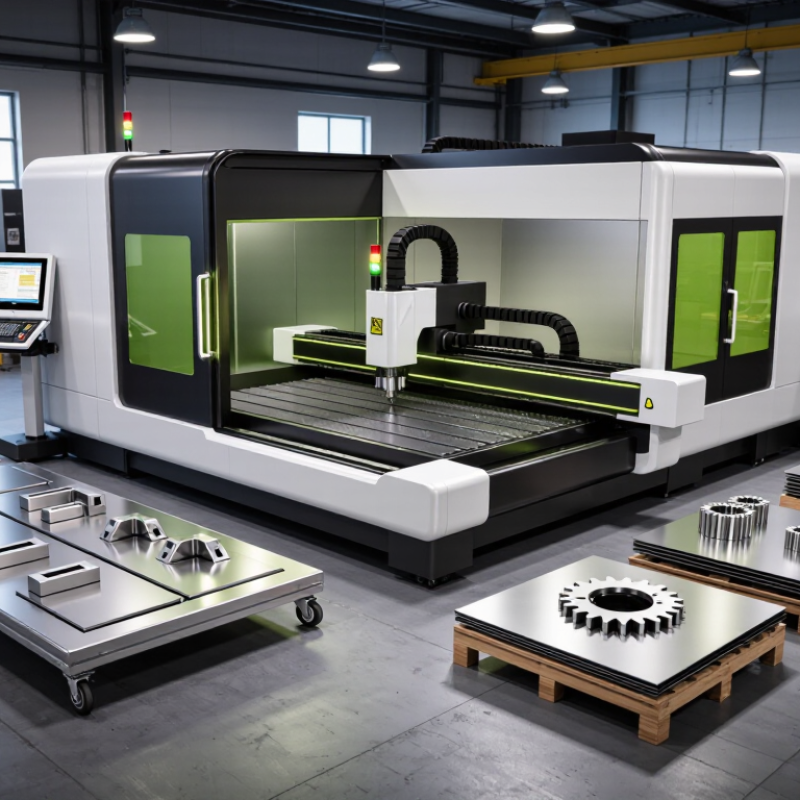
Laser-cut parts are shaped by a focused beam that melts, burns, or vaporizes material along a programmed path. The process suits sheet metal, acrylic, wood, and some plastics, though each responds differently to heat. Stainless steel may need a clean edge; acrylic often benefits from smooth, polished-looking cuts. Small details matter. Kerf width, sheet thickness, and assist gas can all affect fit. A precise drawing helps, but it cannot replace a test cut.
Tips: Confirm material grade and thickness before quoting. Keep critical slots and tabs away from tight corners, where heat can alter edges. Ask for a first article when dimensions are important. A perfect-looking CAD file can still need adjustment in production; that is easy to overlook.
These parts appear in equipment enclosures, brackets, signage, interior panels, and prototypes. For a ventilation panel, for example, evenly spaced slots can improve airflow while reducing weight. A manufacturer should review tolerances, edge finish, and expected quantities before choosing a process. Laser cutting is fast for many flat profiles, but it is not ideal for every geometry or material. Comparing samples can reveal burrs or heat marks that drawings do not show. Reliable production depends on clear specifications and practical inspection, not just a clean machine path.
Global buyers should compare process evidence, not machine lists. Request samples cut from your actual material grade and thickness. Check edge dross, kerf width, heat discoloration, and hole roundness under consistent lighting. Ask for documented tolerances and repeatability across several parts, not one perfect sample. ISO 9013:2017 provides useful classifications for thermal-cut quality and dimensional tolerances. It gives buyers a shared technical language, though it cannot replace inspection of the finished part. Ask for proof.
Review the supplier’s inspection records, material traceability, maintenance schedule, and corrective-action process. The International Federation of Robotics reported 541,302 industrial robot installations worldwide in 2023 in its World Robotics 2024 report. That signals broad factory automation, not guaranteed laser-cut quality; confirm how automation affects your specific job. Request a small pilot run, then compare measured dimensions with the drawing. Also discuss packaging, lead-time buffers, and how the shop handles urgent revisions. A polished quotation can hide weak production controls. One awkward but useful question: what happens when the first article fails inspection? A clear, documented answer is more meaningful than a low unit price.
Typical wavelengths are approximately 10.6 μm for CO₂ lasers, 1.064 μm for Nd:YAG lasers, and 1.07 μm for ytterbium fiber lasers. Wavelength is one factor to discuss when evaluating a cutting supplier; material, thickness, cut quality, tolerances, and production capacity also matter. Actual specifications vary by equipment.
The Top 10 Laser Cut Parts Manufacturers for Global Buyers should be assessed by measurable capability, not polished claims. Grand View Research valued the global laser cutting machine market at USD 6.83 billion in 2023 and projected a 7.5% compound annual growth rate through 2030. This forecast concerns equipment, not finished parts, but it signals continued investment in cutting capacity. Buyers should ask suppliers for material-specific tolerances, maximum sheet dimensions, and inspection records. A clean edge on a thin steel sample may not predict results on thicker aluminum.
Tips: Send a dimensioned drawing and request a first-article inspection report. Confirm the material grade, thickness, surface finish, and packaging before production. Ask how revisions are controlled and whether batch records can be traced to the order. Small details matter. A polished website is not proof of consistent quality; request sample parts or documented process evidence. Also compare lead times against realistic production and shipping schedules, rather than relying on the shortest quoted date. Some specifications may still need clarification—that is a reason to pause and review, not to assume the supplier has understood them.
A practical comparison framework for evaluating laser-cut parts suppliers. The entries describe manufacturing capabilities and buyer checks, not named or ranked companies.
| No. | Capability to Compare | Relevant Manufacturing Facts | What Global Buyers Should Verify |
|---|---|---|---|
| 1 | Fiber laser cutting | Fiber lasers are widely used for cutting metal sheet and plate, including carbon steel, stainless steel, and aluminum. Actual capacity depends on laser power, material grade, thickness, and machine configuration. | Ask for the supported material-and-thickness range for the exact machine and request sample parts in your material. |
| 2 | CO₂ laser cutting | CO₂ lasers are used for many non-metal materials, such as acrylic, wood, and selected plastics. Their suitability depends on the material; some plastics can release hazardous fumes when processed. | Confirm the exact material is safe and compatible, and check the supplier’s extraction and ventilation arrangements. |
| 3 | Material range | Common laser-cut sheet materials include mild steel, stainless steel, aluminum, and, for suitable laser systems, non-metal sheet materials. Reflectivity, thickness, coatings, and surface condition can affect processing. | Specify the alloy or grade, thickness, finish, protective film, and any material certification requirements. |
| 4 | Assist-gas options | Oxygen, nitrogen, and compressed air are used in different cutting setups. The gas choice affects the cutting process and may influence edge appearance, oxidation, and downstream finishing needs. | State edge-finish requirements and ask which gas and process the supplier proposes for each material. |
| 5 | Dimensional quality | Achievable dimensions depend on factors such as material thickness, part geometry, machine condition, and process settings. ISO 9013 provides a framework for classifying quality and dimensional tolerances in thermal cutting. | Set tolerances on the drawing and ask the supplier to identify the inspection method and applicable acceptance criteria. |
| 6 | Part size and nesting | Maximum part dimensions are constrained by the cutting bed and material-handling setup. Nesting parts on a sheet can improve material utilization, subject to part spacing, grain direction, and quality requirements. | Provide the largest part envelope and ask how nesting, sheet remnants, and material yield are handled. |
| 7 | Secondary operations | Laser-cut parts may require deburring, bending, tapping, welding, coating, or other finishing operations. These processes are separate from cutting and can affect fit, appearance, and lead time. | Confirm which operations are performed in-house or subcontracted and define inspection points between stages. |
| 8 | Quality management | ISO 9001 specifies requirements for a quality management system; certification relates to the organization’s management system, not automatic approval of every part or shipment. | Check certificate scope and validity, and agree on first-article approval, traceability, and inspection records. |
| 9 | Compliance documentation | Depending on the product and destination market, buyers may need material test reports, declarations, or evidence related to applicable chemical-substance and product requirements. | Identify destination-market requirements before ordering and confirm which documents the supplier can provide for the specified material and finish. |
| 10 | Export readiness | International orders require clear packaging, labeling, shipping terms, and customs documentation. Packaging needs vary with part size, weight, surface finish, and transport route. | Agree on Incoterms, packaging protection, carton or pallet details, shipment documents, and responsibility for freight and customs clearance. |
Buyer note: Compare suppliers using the same drawings, material specifications, tolerances, inspection requirements, and delivery terms.
A useful comparison of laser-cut parts manufacturers starts with the shop floor, not the brochure. Ask which materials, thicknesses, and tolerances each supplier handles regularly. A thin stainless-steel bracket and a thick aluminum plate place different demands on cutting power, nesting, and edge finishing. Request sample parts, inspection records, and a drawing review before committing. A clean quote is not proof.
Quality depends on repeatable checks. Compare how suppliers verify dimensions, manage revision changes, and document nonconforming parts. ISO 9001 certification can indicate a documented quality system, but it does not guarantee that every cut meets your drawing. The Deloitte 2023 Smart Manufacturing Survey found that 86% of manufacturers saw smart manufacturing as a competitiveness driver over the next five years. For buyers, that makes machine monitoring and production data worth asking about—not assuming. Still, a polished dashboard cannot fix a poorly maintained lens.
Lead times need the same scrutiny. Ask for separate estimates for engineering review, first-article approval, production, and shipping. The 2024 MHI Annual Industry Report found that 55% of respondents planned to increase supply-chain technology investment. That trend may improve visibility, but it does not promise faster parts. Check whether suppliers offer finishing, kitting, packaging, and responsive engineering support. Then test communication with one small order. It may reveal delays a capability list misses.
International buyers evaluating laser-cut parts manufacturers should look beyond the quoted unit price. Compare material grades, thickness tolerances, edge condition, and inspection methods. Ask how drawing revisions are controlled and whether sample parts are checked against production criteria. A clean cut is not enough. Confirm packaging, labeling, export paperwork responsibilities, and realistic transit times before placing an order. For parts with critical fit requirements, request a first-article inspection report.
Tips: Send a clearly marked drawing and identify critical dimensions. State acceptable burr levels and surface requirements. Ask for photos of packed parts if damage is a concern. Keep one approved sample for comparison during repeat orders.
Long-term supply depends on more than machine capacity. Discuss how the manufacturer manages material shortages, maintenance, and changes to production schedules. Require approval before material substitutions or process changes. Review quality records and delivery performance over several orders, not just one successful batch. A process can look stable on paper and still drift. If communication feels vague, pause and clarify responsibilities in writing; it may slow the first order, but prevent costly misunderstandings later.
Hi! Simply click below and type your query.
Our experts will reply you very soon.
