Choosing the right High Alumina Castable supplier in 2026 requires more than comparing alumina percentages or published price lists. Plant operators need evidence from actual service conditions, including furnace temperature, slag chemistry, abrasion, thermal cycling, and installation limits. A castable that performs well in a cement kiln may fail in a steel ladle. The difference often appears at the joints, corners, and anchor lines.
Dr. Pradip K. Jena, a refractory materials specialist, observes, “A castable is judged by its performance after installation, not by its datasheet alone.” This practical view should guide every supplier comparison. Leading manufacturers should provide traceable raw materials, controlled particle grading, batch consistency, technical data, and documented field results. They should also explain curing schedules, mixing water, drying procedures, and repair methods clearly. Vague promises are warning signs.
This guide examines the 2026 Top High Alumina Castable Suppliers through a balanced, application-focused lens. It considers product quality, laboratory testing, manufacturing capacity, technical support, delivery reliability, and customer feedback. Some suppliers may appear strong but lack transparent service records. Others may offer dependable materials yet provide limited installation guidance. That weakness matters.
Real performance is rarely perfect. Site conditions change, and even a well-designed lining can deteriorate early when mixing or drying is poorly controlled. Buyers should ask uncomfortable questions. What happens after failure? Who investigates? Can the supplier adjust the formulation?
The strongest supplier is not always the largest. It is the one that can connect chemistry, workmanship, and measurable furnace life.
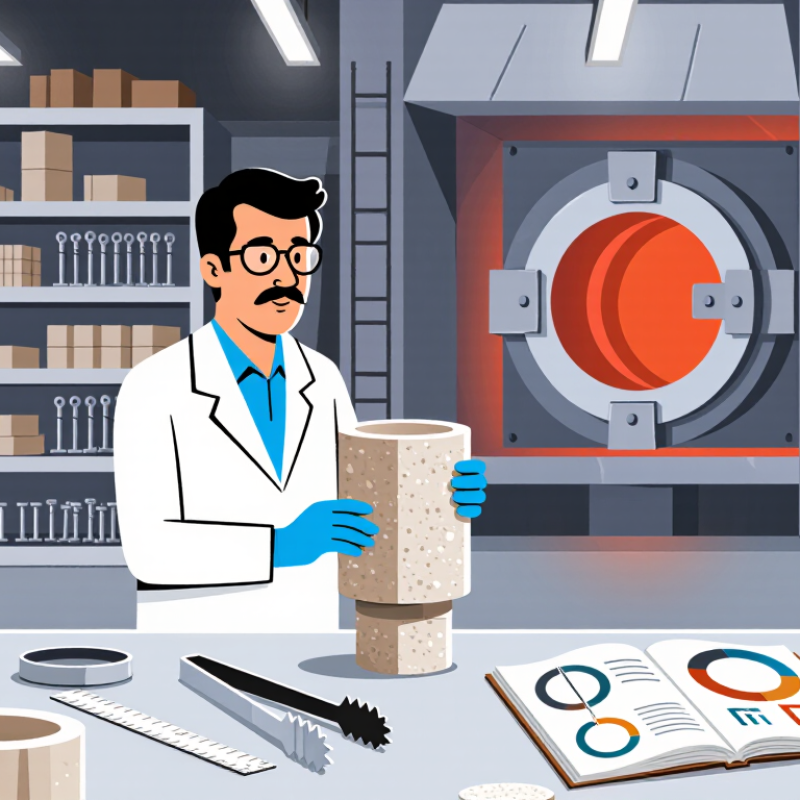
High alumina castable is a monolithic refractory concrete containing a high proportion of alumina-bearing aggregates and binders. Under ASTM C401, castable refractories are classified by chemistry and service performance, not by the word “premium.” In practice, high alumina grades commonly contain 50% to 90% Al2O3. The exact level matters.
It is mixed with water, placed around furnace linings, then dried and fired during operation. A well-designed grade can resist abrasion, molten slag, thermal shock, and temperatures above 1,500°C. However, alumina content alone does not guarantee durability. Particle grading, cement content, pore structure, and installation quality often decide the result. I have seen a strong formulation fail after rushed drying. Small details matter. Water dosage is one.
Industry demand remains linked to alumina and refractory-consuming sectors. The USGS Mineral Commodity Summaries 2025 reports approximately 390 million metric tons of bauxite mined globally in 2024, showing the scale of the alumina supply chain.
Market studies also identify steel, cement, nonferrous metals, and waste-processing furnaces as major castable users. These figures describe upstream activity, not direct castable consumption, so they should be interpreted carefully.
When comparing suppliers in 2026, request the Al2O3 test method, bulk density, cold crushing strength, permanent linear change, thermal conductivity, and service temperature.
Ask for batch traceability and drying instructions.
A supplier that cannot explain water demand or curing conditions deserves closer review.
The best material on paper can still underperform in a wet, unevenly heated lining.
High alumina castables contain substantial alumina, often above 70%, for demanding refractory zones. Their main strengths include high hot strength, abrasion resistance, and chemical stability. These properties matter near molten metal, clinker, and intense flame exposure. A low-cement formulation can reduce porosity after proper curing and firing. However, installation quality still decides performance. Even an excellent castable may fail after rushed mixing or uneven drying.
Industrial applications vary by temperature, atmosphere, and mechanical stress. Steel ladles use high alumina castables around impact and wear areas. Cement plants apply them in kiln outlets, coolers, and transition zones. Nonferrous furnaces may require resistance to slag penetration and repeated thermal cycling.
In practice, suppliers should provide technical data, batch traceability, installation instructions, and test results from recognized methods. Claims without testing deserve caution. Field conditions often differ from laboratory results.
Tips: Compare tested performance, not alumina content alone. Check particle sizing, cement level, bulk density, and recommended water addition. Ask for drying schedules suited to actual lining thickness. I have seen premature cracking linked to excess water and incomplete curing. That detail is easy to overlook. Supplier support during installation can be as valuable as the material itself. Temperature changes, furnace geometry, and operator experience should influence the final selection.
Evaluating high alumina castable suppliers requires more than comparing Al2O3 percentages. A reliable supplier should provide recent test data for alumina content, bulk density, cold crushing strength, permanent linear change, abrasion, and thermal conductivity. These values should match the intended zone, whether it is a burner throat, kiln transition area, or steel ladle lining. ASTM C401 and ISO 1927 provide useful reference points for refractory classification and testing. Ask for batch-specific results, not only a general product brochure.
Production experience matters under real furnace conditions. Request installation records from similar operating temperatures, lining thicknesses, and heating schedules. A technically strong supplier can explain mixing water, vibration time, drying rates, and repair limits. These details often decide whether a castable survives thermal cycling. The World Steel Association reported global crude steel production of about 1.88 billion tonnes in 2024, showing the scale of refractory demand across high-temperature industries. Still, a large market does not guarantee consistent quality.
Check manufacturing controls, traceability, and independent laboratory reports. The supplier should identify raw material sources and explain how particle grading is controlled. USGS Mineral Commodity Summaries 2025 estimated global bauxite mine production near 390 million tonnes in 2024, but raw material availability alone proves little. Site audits can reveal poor storage, moisture exposure, or uneven packaging. I would also compare delivered performance, not just purchase price. A small mistake in water addition can reduce strength sharply. Supplier claims deserve testing. Sometimes, the most attractive specification is incomplete.
The chart presents indicative technical screening targets for common high-alumina castable grades. Higher Al₂O₃ content and service temperature can improve refractoriness, but supplier evaluation should also verify apparent porosity, cold crushing strength, abrasion resistance, thermal-shock performance, installation consistency, and independent test documentation. Values are generic industry benchmarks and do not represent any company or brand.
Top High Alumina Castable Suppliers in 2026
The best high alumina castable suppliers combine stable raw materials, controlled mixing, and documented installation support. World Steel Association data reported global crude steel production above 1.8 billion tonnes in 2024. This scale keeps demand strong for abrasion-resistant, heat-stable monolithic refractories. Suppliers serving steel, cement, foundry, and nonferrous plants should provide alumina content, bulk density, cold crushing strength, and permanent linear change data.
Technical buyers should examine more than a product brochure. High-quality suppliers normally offer calcined bauxite, tabular alumina, or fused alumina grades for different service temperatures. Independent testing should follow recognized methods, including ASTM C401 where applicable. The 2025 USGS Mineral Commodity Summaries also highlights alumina and bauxite as strategically important industrial minerals. Supply continuity therefore matters. A delayed shipment can stop a furnace repair.
Field experience reveals small details. Ask for batch traceability, shelf-life records, mixing water limits, and curing instructions. Request samples from the proposed production lot. Suppliers with refractory engineers can help adjust grain size, anchoring, and dry-out schedules. That support often prevents explosive spalling after installation. However, a ranking is never fully objective. Published strength values may come from ideal laboratory curing, not a dusty repair site. Buyers should compare test results with furnace history, operating temperature, slag chemistry, and actual service life. Price alone is a weak filter. A cheaper castable may create longer outages and higher maintenance costs.
| Supplier Category | Typical Al₂O₃ Content | Typical Bulk Density | Cold Crushing Strength | Maximum Service Temperature | Typical Lead Time | Best-Suited Applications |
|---|---|---|---|---|---|---|
| Premium monolithic refractory supplier | 85–95% | 2.90–3.20 g/cm³ | 70–120 MPa | 1,700–1,800°C | 4–8 weeks | Steel ladles, rotary kilns, high-wear furnace zones |
| High-purity castable specialist | 90–98% | 2.95–3.25 g/cm³ | 80–140 MPa | 1,750–1,850°C | 5–10 weeks | Non-ferrous furnaces, laboratory furnaces, severe chemical environments |
| Low-cement castable supplier | 70–90% | 2.65–3.05 g/cm³ | 60–110 MPa | 1,600–1,750°C | 3–7 weeks | Cement kilns, reheating furnaces, heat-treatment equipment |
| Fast-setting repair castable supplier | 70–85% | 2.60–2.95 g/cm³ | 45–90 MPa | 1,500–1,700°C | 2–5 weeks | Emergency maintenance, burner quarls, localized furnace repairs |
| Wear-resistant castable supplier | 75–90% | 2.75–3.15 g/cm³ | 65–115 MPa | 1,550–1,750°C | 3–8 weeks | Cyclones, chutes, material-transfer points, abrasion-prone linings |
| Precast refractory component supplier | 80–95% | 2.80–3.20 g/cm³ | 70–130 MPa | 1,600–1,800°C | 6–12 weeks | Burner blocks, kiln furniture, lintels, custom furnace components |
Note: The figures are indicative market ranges for 2026 procurement screening. Actual values depend on aggregate type, cement content, additives, curing method, firing schedule, package size, and project specifications.
Buying high alumina castable requires more than comparing alumina percentages. Check the intended furnace zone, service temperature, installation method, and repair schedule. A castable with 80% alumina may perform poorly if its bonding system does not suit your process. Request a current technical data sheet, safety documentation, and a batch-specific test report. Useful values include bulk density, cold crushing strength, permanent linear change, abrasion resistance, and thermal shock behavior. Ask how these results were tested.
Quality becomes clearer through evidence. Request samples from the proposed production batch, not only standard laboratory samples. Confirm particle grading, low-cement content, storage life, and mixing instructions. Factory audits can reveal basic problems, such as damp warehouses or uncalibrated testing equipment. Documentation may look complete. It can still miss important details. A small trial installation often exposes issues before a full shutdown. Delivery also deserves technical attention. Confirm production capacity, packaging protection, pallet strength, port arrangements, and realistic lead times. Include inspection points before loading and after arrival.
Tips: Compare suppliers using the same specification sheet. Keep reserve material for urgent repairs. Record batch numbers, mixing water, and installation conditions. Do not accept vague promises about delivery. A slightly cheaper quote can become expensive after delays, damaged bags, or inconsistent performance. Ask one difficult question: what happens when the product fails outside normal conditions?
Hi! Simply click below and type your query.
Our experts will reply you very soon.
