Top Portable Mini Fridge Suppliers for Global Buyers?

Global buyers comparing suppliers need more than an attractive product photo. A Portable Mini Fridge may look simple, yet cooling performance, power options, noise, and build quality can vary widely. The right supplier should explain these differences clearly and provide specifications buyers can verify.

Consider where the fridge will be used. A compact unit for a hotel room may need quiet operation, while a model for a vehicle may require a suitable DC connection and secure storage. Check usable capacity, temperature range, insulation, door seals, and ventilation requirements. Small details matter. A poorly placed vent can limit performance, even when the listed capacity looks ideal. Ask suppliers to state test conditions rather than relying on broad claims such as “fast cooling.”

Supplier evaluation also involves practical questions. Request a sample, confirm production lead times, and review packaging details before placing a large order. Ask about warranty coverage, spare parts, quality checks, and communication during production. Verify whether plugs, labels, and documentation match the destination market. A low quoted price can become less attractive if replacement parts are difficult to obtain. There is no perfect fit. Even a detailed checklist cannot predict every issue in daily use. This guide introduces supplier-selection criteria and comparison points to help global buyers make more informed decisions, reduce avoidable surprises, and choose products suited to their customers and distribution plans.
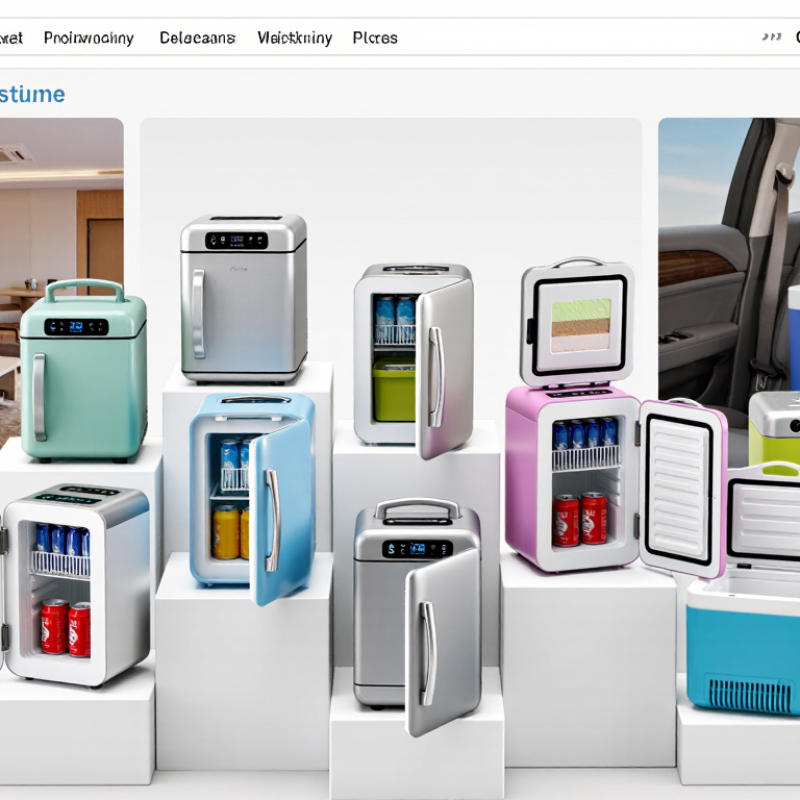
Top Portable Mini Fridge Suppliers for Global Buyers?

What Defines a Portable Mini Fridge and Its Main Applications?

A portable mini fridge is a compact, powered appliance that keeps drinks or food cool while you move between locations. Unlike an insulated cooler, it actively cools its interior using a compressor or thermoelectric system. Designs vary, so cooling speed, usable capacity, and temperature range should be checked in the product specifications. Some models use vehicle outlets, household power, or rechargeable batteries. That matters.

Common uses include road trips, small hotel rooms, dormitories, offices, and mobile workspaces. A compact unit can hold lunch, several cans, or a few fresh ingredients without taking up much floor space. It may also suit outdoor events when a reliable power source is available. Not every trip. Warm surroundings, poor ventilation, and frequent opening can reduce cooling performance. I would not assume a small fridge maintains the same temperature in every setting.

Tips: Measure the space before buying, including room for the door to open. Check the power options and place the unit on a stable, ventilated surface. For temperature-sensitive items, confirm the required range and monitor the actual interior temperature; a display alone may not tell the whole story.

Which Types of Portable Mini Fridges Do Suppliers Offer?

Portable mini fridge suppliers typically offer compressor, thermoelectric, and absorption models. Each suits a different kind of trip. Compressor units provide the strongest cooling and can maintain set temperatures in hot vehicles. They suit long drives, small cabins, and buyers storing temperature-sensitive groceries. Many accept vehicle DC power and household AC power through an adapter.

Thermoelectric coolers are lighter and simpler, but usually cool only a set amount below the surrounding temperature. On a hot afternoon, that limit matters. Absorption models run quietly and may use more than one power source, though their cooling performance depends heavily on ambient conditions. Suppliers also sell compact cube fridges, vehicle drawer units, and larger camping refrigerators. Check usable capacity, not just the outside dimensions; a bulky housing can hide a surprisingly small compartment.

Energy deserves attention, too. The International Energy Agency’s 2018 report, The Future of Cooling, estimated that space cooling used about 2,000 terawatt-hours of electricity in 2016, roughly 10% of global electricity demand. That figure concerns air conditioning, not portable refrigerators, so it should not be treated as a fridge-efficiency statistic. Still, it puts energy use in perspective. Compare rated input power, insulation thickness, and expected runtime. Real-world results can differ, especially when a lid is opened often or the unit sits in direct sun.

Top Portable Mini Fridge Suppliers for Global Buyers? - Which Types of Portable Mini Fridges Do Suppliers Offer?

Product Type Cooling Method Typical Capacity Typical Temperature Performance Common Power Options Typical Applications Key Buying Considerations
Portable compressor refrigerator Compressor-based refrigeration, similar in principle to a household refrigerator Approximately 10–60 L Many models offer adjustable cooling and can reach freezer temperatures around −18°C; performance varies by model and ambient conditions. Usually 12/24 V DC; some models also support 100–240 V AC through an adapter. Road trips, camping, RVs, boats, delivery vehicles and off-grid use Check usable capacity, rated power consumption, battery-protection settings, ventilation clearance and whether an AC adapter is included.
Thermoelectric cooler and warmer Solid-state thermoelectric module; commonly provides cooling relative to the surrounding air rather than a set refrigerator temperature Approximately 4–30 L Typically cools about 15–20°C below ambient temperature; some models also provide a warming mode. Commonly 12 V DC; selected models include an AC adapter or dual-voltage operation. Short drives, personal use, drinks, snacks and temperature-sensitive items that do not require freezer-level cooling Cooling depends on ambient temperature, so confirm the stated temperature difference, operating noise and whether the unit is suitable for the intended contents.
Absorption refrigerator Heat-powered absorption refrigeration; operation is generally quiet because it has no conventional compressor Approximately 20–40 L Cooling performance depends strongly on ambient temperature, ventilation and the selected power source; it is generally intended for refrigeration rather than deep freezing. Depending on model, 12 V DC, 120/230 V AC or LPG; not every model supports every source. Campers, cabins and locations where quiet operation or multiple energy sources are useful Verify approved fuel and electrical connections, ventilation requirements, installation orientation and the manufacturer’s operating instructions.
Dual-voltage portable refrigerator Usually compressor-based; this describes the power configuration rather than a separate cooling technology Approximately 10–50 L Temperature range depends on the refrigeration system; compressor models may offer both refrigerator and freezer settings. Typically 12/24 V DC for vehicle use and 100–240 V AC for household or campsite power, often through an adapter. Buyers moving between vehicles, homes, campsites and international markets Confirm AC voltage and frequency compatibility, plug type, adapter specifications and DC connector compatibility for the destination market.
Passive insulated cooler (ice chest) Insulation retains cold from ice or frozen packs; it does not actively refrigerate Approximately 5–50 L Temperature and hold time vary with insulation, ice quantity, ambient conditions, lid opening and how the cooler is packed. No electrical power required Day trips, picnics, short journeys and situations without an electrical supply Compare insulation construction, seal design, drainage, internal dimensions and any published ice-retention test conditions.

Note: Capacity and performance figures are indicative ranges for commonly offered product categories, not guarantees for every model. Buyers should verify product specifications, test conditions, applicable electrical standards and import requirements with the supplier.

What Criteria Help Global Buyers Evaluate Mini Fridge Suppliers?

Global buyers should assess mini fridge suppliers by evidence, not polished product photos. Ask for temperature test reports showing performance in warm rooms and after repeated door openings. A fridge that cools an empty showroom may behave differently inside a parked vehicle.

Check power options, rated energy use, noise levels, and insulation details. Ask how temperature consistency is checked across production batches. Request samples when possible. Measure the usable interior space yourself, including shelf clearance and door-bin depth.

Supplier reliability also depends on clear quality controls and practical support. Review factory audit records, defect-handling procedures, production capacity, minimum order quantities, and realistic lead times.

Confirm that manuals, labels, plugs, and packaging can be adapted for your destination market. Ask about spare parts, warranty terms, and response times before placing a large order.

Ask for evidence. Details matter. A low quotation can hide costs in weak packaging or limited after-sales service. Still, documents cannot reveal every issue; a sample test may not represent every unit. Buyers should compare written claims with observed performance, and leave room to revise their assumptions.

How Do Buyers Compare Leading Portable Mini Fridge Suppliers?

Global buyers should compare portable mini fridge suppliers through verified performance, not polished product photos. Request cooling curves at 25°C and 40°C, then check how quickly the unit reaches its set temperature. Ask for usable interior dimensions, empty and loaded power consumption, battery options, noise readings, and warranty terms. Test it loaded. A fridge that cools quickly when empty may behave differently with drinks packed against its vents.

Energy efficiency deserves careful attention, though broad cooling data is not a direct measure of mini-fridge performance. The International Energy Agency’s 2018 report, The Future of Cooling, projects that global energy demand for space cooling could more than triple by 2050. Buyers can use that trend as a reason to request measured watt-hours per day, while recognizing that cabin temperature and door-opening frequency affect results. Compare test conditions across suppliers; otherwise, the figures may not be comparable.

Supplier checks should also cover production capacity, sample consistency, spare-part availability, and documented quality controls. Ask for inspection records and test a pre-production sample under realistic travel conditions, such as a warm vehicle with repeated lid openings. Ask for evidence. A spreadsheet can still hide weak hinges or uneven insulation. I would not treat one successful sample as proof of every future batch; repeat checks matter. Keep written specifications aligned with the final order, including packaging dimensions and delivery timelines.

Top Portable Mini Fridge Suppliers for Global Buyers? — How Do Buyers Compare Leading Portable Mini Fridge Suppliers?

Compare suppliers using published capacity specifications, alongside power compatibility, cooling performance, warranty, and delivery terms. This chart converts example capacities from liters to US liquid quarts using 1 liter = 1.05669 US liquid quarts; the values are conversion references, not supplier product claims.

What Should Buyers Know About International Sourcing and After-Sales Support?

When sourcing portable mini fridges internationally, compare more than unit price. Request written specifications for capacity, power draw, plug type, operating temperature, and noise. Ask how each unit is tested before shipment, and request sample inspection records. Photos are not proof.

The World Bank’s 2023 Logistics Performance Index assessed 139 economies across customs, infrastructure, shipment arrangements, logistics competence, tracking, and timeliness. Use these measures to examine likely routes and freight partners, not to assume a supplier is reliable. UNCTAD’s Review of Maritime Transport 2024 reported that maritime trade grew 2.4% in 2023, while ton-miles rose 4.2%, partly reflecting longer routes. Plan for delays. Confirm lead times, packaging standards, cargo insurance, and who pays when goods arrive damaged.

After-sales support deserves equal scrutiny. Get warranty coverage, response times, and spare-parts availability in writing. For a mini fridge, ask whether buyers can obtain replacement door seals, thermostats, fans, or compressors, and whether technicians receive repair instructions. A low quote can still be expensive if one small part stops a unit from cooling. We may overvalue factory photos and under-check service capacity. Request a sample support exchange before placing a large order, and record the agreed escalation contact.


Close

Raise your Query

Hi! Simply click below and type your query.

Our experts will reply you very soon.

WhatsApp Us
