Outdoor installations face rain, dust, temperature swings, and vibration. A connector that looks sealed on a workbench may behave differently after months beside a rooftop unit or exposed conduit. That is why choosing Emt Waterproof Connectors calls for more than checking a product label. Fit, material, sealing design, and compatibility with the conduit system all matter.
Grand View Research’s Electrical Connectors Market Size, Share & Trends Analysis Report estimates the global electrical connectors market at about $84.6 billion in 2023. This broad market figure does not measure EMT waterproof connectors specifically, but it shows the scale of the equipment and infrastructure relying on secure electrical connections. For outdoor selection, consult product documentation and the relevant enclosure-protection ratings under IEC 60529; an IP rating describes tested ingress protection, not every aspect of long-term field performance. Small details count. A misaligned gasket or poorly tightened fitting can undermine an otherwise sound installation.
This guide compares ten options by construction, sealing approach, installation considerations, and suitability for outdoor use. It also separates manufacturer claims from details that can be verified in product specifications. No source material was provided for a verifiable quotation from a named EMT-connector expert, so attributing a quote here would risk misleading readers. That gap matters. Buyers should confirm ratings, materials, and compatibility with the manufacturer before installation, especially where exposure is severe.
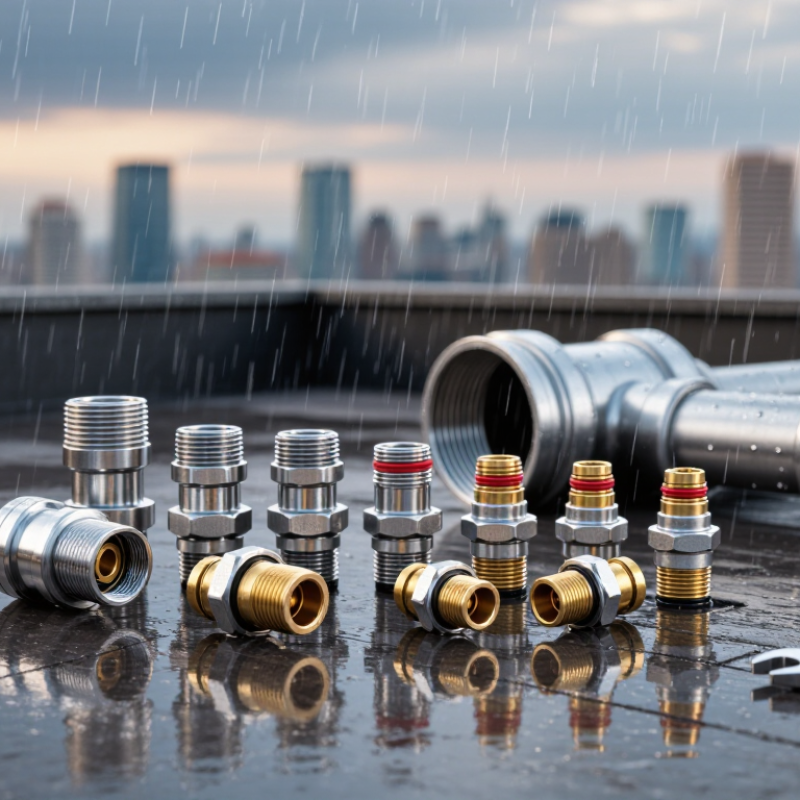
EMT waterproof connectors join electrical metallic tubing to boxes or enclosures while helping keep rain and moisture away from outdoor wiring. The term “waterproof” can mislead: ordinary EMT fittings are not automatically suitable for wet locations. Choose fittings specifically marked for raintight or wet-location use, and match them to the enclosure and conduit. A compressed gasket, correctly seated conduit, and tightened locknut help block water entry at the connection. Small gaps matter.
UL 514B covers conduit, tubing, and cable fittings, so its requirements are a useful reference when selecting listed components. IEC 60529 defines ingress-protection test levels: IPX6 tests resistance to powerful water jets, while IPX7 addresses temporary immersion under specified conditions. These ratings describe tested protection, not a promise that every installed joint will remain dry. Check the fitting’s marking and the complete assembly’s rating. Keep water moving away from boxes, and avoid placing connections where water can pool. Even a sound fitting can fail when its gasket is damaged or installation is rushed. A detail worth rechecking.
Reliable outdoor EMT waterproof connectors begin with a seal designed for the actual exposure. Look for a gasket that compresses evenly around the conduit, plus a firmly threaded body that resists loosening from vibration. Water can enter through a small gap. Check that the connector is rated for the intended wet location, not just described as weather-resistant. A compatible corrosion-resistant metal or durable nonmetallic body also matters near sprinklers, coastal air, or road salt.
Fit is just as important as sealing. The connector should match the EMT trade size and provide a secure connection to the enclosure. A sharp conduit edge can damage a gasket, so cut ends should be clean and deburred before assembly. Follow the manufacturer’s torque guidance; overtightening may distort parts, while a loose locknut can allow movement. Small details, but they matter.
Inspect the installed joint after tightening. The gasket should sit flat, with no visible pinch or gap, and the conduit should not wobble when gently handled. A snug nut feels reassuring, but it does not prove the seal is sound. That is easy to overlook. Check the enclosure entry and connector rating together, especially where water may collect or spray directly onto the fitting. A quick visual check after installation can catch a crooked seal before the wiring is exposed to moisture.
Outdoor EMT waterproof connectors should be judged by their sealing method, fit, and corrosion resistance, not appearance alone. A useful top-ten comparison includes raintight compression fittings, gasketed connectors, and models designed for threaded enclosure entries. Check that each connector matches the EMT trade size and the enclosure opening. EMT alone does not make a complete installation waterproof; the connector and enclosure must be suitable for the exposure.
Look closely at the seal. A compressed gasket should sit flat, without folds or pinches, and the fitting should grip the conduit securely. Stainless or corrosion-resistant finishes can help near coastal air or damp walls, but material choice should match the surrounding metals. Follow the manufacturer’s torque guidance and local electrical requirements, especially for bonding and grounding. Small details matter. I have seen neat-looking entries fail because a gasket was reused or fitted unevenly. That is easy to miss.
Tips: Keep connector and gasket surfaces clean before assembly. Use fittings specifically rated for the intended wet location, and inspect seals after installation. Do not rely on extra sealant to fix a mismatched part. If water can collect inside the conduit, review the full route and enclosure layout; a connector by itself cannot correct poor drainage or exposure.
Top 10 EMT Waterproof Connectors for Outdoor Use
Comparing outdoor EMT connectors starts with material, rating, and fit—not appearance. Zinc-alloy fittings are common, while stainless steel may suit corrosive locations. Nonmetallic options can resist corrosion, but check their temperature and mechanical limits. Small details matter. A connector must match the EMT trade size and its connection style, such as set-screw or compression. For exposed installations, verify the manufacturer’s stated wet-location suitability and the complete assembly’s rating.
IP and NEMA ratings describe different test systems, so do not treat them as interchangeable. IEC 60529 defines IP protection levels; its IPX6 test evaluates resistance to powerful water jets, while IPX7 tests temporary immersion, generally at one meter for 30 minutes. NEMA 250 covers enclosure types, including Type 4X, which addresses corrosion resistance and water exposure. A rating on one component does not automatically rate the assembled conduit run. Check seals, locknuts, box entries, and installation instructions.
Tips: Match the connector to the conduit diameter, box opening, and environment. Look for a clear wet-location marking, then confirm the rating in the product documentation. I would still inspect the gasket after tightening; a reassuring label cannot compensate for a pinched seal or mismatched parts.
Compare connector materials, ingress protection ratings, and EMT compatibility. The chart shows IEC 60529 water-protection levels as a reference—not a ranking of specific products.
How to use this: IPX4 covers splashing water; IPX5 and IPX6 cover water jets at different intensities; IPX7 covers temporary immersion; and IPX8 covers continuous immersion under conditions specified by the manufacturer. Check the fitting’s material, EMT trade size, and listing for the intended wet location. The rating applies to the tested configuration, not automatically to the entire conduit installation.
Selecting an EMT connector for outdoor use starts with the exposure, not the word “waterproof.” Rain, sprinkler spray, condensation, and coastal salt create different risks. Choose a fitting specifically listed for wet locations and compatible with the EMT trade size and enclosure entry. Check its corrosion-resistance information, gasket design, and installation instructions. A raintight fitting is not automatically suitable for every wet-location application. The 2023 National Electrical Code, Article 358, covers EMT; local code and the authority having jurisdiction determine what is acceptable. Small detail, big consequence.
During installation, cut the conduit square, remove burrs, and keep the sealing surfaces clean. Seat the gasket flat against the enclosure, tighten the locknut and fitting to the manufacturer’s specified method, and avoid overtightening. Support the conduit near the box, then check that the assembly cannot rotate or pull loose. Do not rely on sealant to compensate for a mismatched fitting or damaged gasket. NFPA’s Home Electrical Fires report estimated about 24,000 U.S. home fires annually involving electrical failure or malfunction during 2012–2016; it does not attribute those fires specifically to outdoor EMT connectors. Still, it is a useful reminder to inspect connections, especially after storms or maintenance. I recheck the seal. It is easy to miss.
Hi! Simply click below and type your query.
Our experts will reply you very soon.
