Choosing among China’s top Dry Type Transformer Substation manufacturers requires more than comparing catalog prices. A dependable supplier must combine engineering depth, controlled production, and field-proven support. This guide examines manufacturers that design complete substations, including dry-type transformers, switchgear, protection systems, and weather-resistant enclosures. It focuses on evidence rather than promotional claims. Factory experience matters. So does transparent documentation.
Readers will see how to assess rated capacity, insulation class, cooling method, short-circuit strength, noise performance, and enclosure protection. Practical details reveal quality: copper winding alignment, resin casting surfaces, cable termination space, temperature sensors, and clean busbar workmanship. Independent testing, routine test reports, type-test evidence, and compliance with applicable IEC or national standards should support every serious offer. Site references can show whether equipment performs reliably in factories, commercial buildings, renewable-energy projects, and utility networks.
Still, no ranking is perfect. A manufacturer strong in 35 kV systems may not suit a compact urban project. Lead time, spare parts, commissioning, and local service can change the final decision. Some online claims remain difficult to verify. Therefore, this overview compares technical capability, manufacturing consistency, customization, communication, and after-sales responsibility. The goal is a practical shortlist, not a convenient slogan. Ask hard questions. Inspect the evidence.
What Is a Dry Type Transformer Substation?
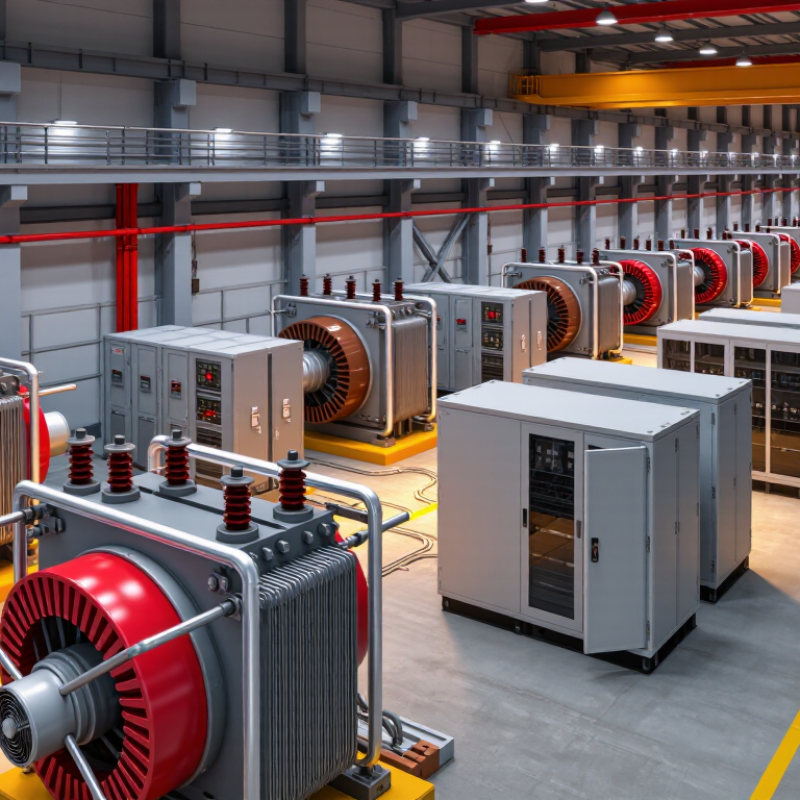
A dry type transformer substation converts medium voltage into usable low voltage without liquid insulation. Its windings use air and solid insulation, commonly cast resin or vacuum pressure impregnation. The transformer sits inside a ventilated enclosure, with switchgear, protection devices, and busbars nearby. It is often selected for hospitals, commercial buildings, factories, tunnels, and crowded urban sites.
The design reduces liquid-leakage and fire concerns, but it does not remove operational risks. IEC 60076-11 covers dry-type transformer requirements, including insulation, temperature rise, and testing. The U.S. Department of Energy estimates that distribution transformer losses consume about 61 billion kilowatt-hours annually in the United States. Better efficiency therefore affects both operating cost and grid demand. Small gains matter.
During specification, engineers should check load cycles, ambient temperature, altitude, enclosure ventilation, noise, short-circuit strength, and harmonics. A compact room can become surprisingly hot. Harmonic-rich loads may increase winding temperature, even when the average load appears acceptable. Dry does not mean maintenance-free. Dust can restrict airflow, and loose connections can create hot spots. Thermal imaging and torque checks remain useful inspection practices. I would also challenge one common assumption: indoor installation is automatically safer. Poor ventilation, moisture, or incorrect clearances can still shorten service life. Reports from the International Energy Agency continue to emphasize efficiency as electricity demand grows, making transformer selection a technical and financial decision.
China Top Dry Type Transformer Substation Manufacturers?
China’s dry type transformer substation manufacturing industry has developed around compact, fire-resistant power systems. These substations often combine a cast-resin transformer, medium-voltage switchgear, a low-voltage cabinet, and monitoring equipment. Factory layouts usually separate winding, insulation, assembly, and testing areas. This separation helps reduce contamination during production.
Experienced manufacturers control copper or aluminum winding tension carefully. They also inspect resin curing, insulation thickness, core clamping, and cabinet clearances. Routine tests may include resistance measurement, insulation checks, temperature-rise testing, and partial-discharge evaluation. Compliance with applicable IEC and Chinese standards supports safer international projects. However, a certificate alone proves little without traceable test records.
Details matter.
A reliable supplier should provide material certificates, routine test reports, enclosure ratings, and clear maintenance instructions. Engineers should review altitude, humidity, load cycles, ventilation, and short-circuit requirements before selecting a unit. Poor airflow can raise operating temperature, even when the transformer appears correctly rated. Installation teams also need enough clearance around cable chambers and inspection doors.
The industry still has weaknesses. Some specifications look complete but omit noise limits or emergency operating conditions. This creates avoidable disputes during commissioning. A stronger procurement process compares drawings, test procedures, warranty terms, and spare-part availability. Factory audits remain useful, but they should examine actual production records rather than polished meeting rooms. Cost is important, yet low purchase prices can hide thinner enclosures, limited monitoring, or difficult maintenance access.
| Industry Dimension | Typical Industry Data | Manufacturing and Selection Relevance |
|---|---|---|
| Main Product Types | Cast-resin dry-type transformers, vacuum-pressure-impregnated transformers, and air-insulated transformers | Cast-resin designs are widely used where fire safety, low maintenance, and indoor installation are important. |
| Common Capacity Range | Approximately 50 kVA to 2,500 kVA for common distribution applications; larger project units can reach several MVA | The required rating depends on connected load, demand factor, starting current, redundancy, and future expansion. |
| Primary Voltage | Typical medium-voltage primary ratings include 6 kV, 10 kV, and 35 kV; other ratings are available for specific systems | The primary voltage must match the utility or industrial distribution network and the required insulation level. |
| Secondary Voltage | Common low-voltage outputs include 400 V, 415 V, and 480 V, depending on the destination power system | Secondary voltage, frequency, phase configuration, and neutral arrangement should be confirmed before production. |
| Cooling Method | AN (air natural) and AF (air forced) cooling | AN cooling is suitable for standard loading; AF cooling can increase available capacity when thermal conditions and noise limits permit. |
| Insulation and Temperature Class | Class F and Class H insulation systems are commonly used; actual temperature rise is specified by the design and applicable standard | Higher thermal-class materials can improve thermal endurance, but system design, ventilation, and loading remain critical. |
| Enclosure Protection | Common enclosure levels include IP00, IP20, IP23, and IP31 | The enclosure should be selected according to indoor or outdoor installation, dust, moisture, access control, and cooling requirements. |
| Applicable Standards | IEC 60076-11 for dry-type power transformers; IEC 60076-1 for general transformer requirements; GB/T 10228 and GB 20052 for applicable Chinese requirements | A qualified supplier should identify the exact edition, test requirements, efficiency class, and destination-market compliance route. |
| Routine Factory Tests | Winding resistance, voltage ratio, phase displacement, no-load loss, load loss, impedance voltage, dielectric tests, and partial-discharge testing where specified | Factory test reports provide evidence that the completed unit meets the approved technical specification. |
| Frequency | 50 Hz is common in China; 60 Hz designs are produced for compatible export and industrial systems | Frequency affects losses, impedance, thermal performance, and compatibility with the connected network. |
| Tap Configuration | Off-circuit tap links are commonly provided, often within a small percentage range around the rated primary voltage | Tap settings should reflect actual utility voltage and must only be changed when the transformer is de-energized. |
| Typical Applications | Commercial buildings, data centers, hospitals, factories, rail systems, renewable-energy facilities, and urban substations | Dry-type equipment is preferred in many indoor and fire-sensitive environments because it does not use liquid insulation oil. |
| Environmental Design Conditions | Standard designs are generally based on specified ambient temperature, altitude, humidity, ventilation, and installation conditions | High altitude, corrosive atmospheres, high humidity, dust, and restricted ventilation may require derating or special construction. |
| Key Purchasing Criteria | Rated power, voltage ratio, insulation level, losses, impedance, noise, enclosure, cooling, dimensions, protection, and certification | A complete technical schedule is more reliable than comparing suppliers by price or rated capacity alone. |
| Supplier Evaluation Focus | Design capability, production traceability, coil and core quality, testing facilities, documentation, after-sales service, and export experience | Manufacturing capability should be verified through drawings, type-test evidence where required, routine test records, inspection plans, and warranty terms. |
Reliable dry type transformer substations combine safe insulation, efficient cooling, and verified factory testing. Leading manufacturers commonly use cast-resin or vacuum pressure impregnated windings. These technologies reduce moisture risks and support stable operation indoors. Temperature sensors monitor each phase and connect with alarm or trip circuits. Partial discharge testing can reveal insulation weaknesses before commissioning.
Heat matters. Designers should also check harmonic currents, enclosure protection, noise, and ventilation space.
Product selection should reference IEC 60076-11 and relevant Chinese standards, including GB/T 10228. Substation switchgear may also require IEC 62271-200 compliance. However, certificates alone cannot prove site suitability. Engineers should compare temperature-rise results, dielectric tests, short-circuit strength, and routine inspection records.
A proper factory acceptance test should match the approved drawings and rated conditions. Small details matter. Cable bending space and sensor calibration are often overlooked.
Tips:
Request test reports with serial numbers and clear measurement conditions. Confirm altitude, ambient temperature, fire requirements, and expected load cycles before ordering. Ask for harmonic derating data when the site includes converters or data equipment. Inspect resin surfaces for cracks, bubbles, or uneven finish. No design is perfect. Even experienced teams may underestimate ventilation during summer peaks, so a thermal review after installation remains worthwhile.
China Top Dry Type Transformer Substation Manufacturers?
Evaluating China’s leading dry type transformer substation manufacturers requires more than comparing prices. Check engineering experience, production capacity, and project references in similar climates. A reliable manufacturer should provide load calculations, temperature-rise data, insulation details, and complete routine test reports. Review compliance with IEC 60076 and relevant local standards. Documents matter, but factory evidence matters more.
Inspect the production line if possible. Look for controlled winding areas, resin-casting equipment, calibrated testing instruments, and clear material traceability. Ask how the manufacturer manages partial discharge, noise, cooling, fire resistance, and enclosure protection. Request sample drawings before signing. Small drawing errors can create expensive installation problems. Delivery promises also need verification through production schedules and previous records.
Tips: Compare at least three technical offers, not only quotations. Ask for independent test certificates and recent customer references. Clarify warranty response times, spare parts, commissioning support, and maintenance training. A polished brochure can hide weak after-sales service. However, even a strict evaluation has limits; factory visits may show ideal conditions, not every shift. Leave room for uncertainty, and record every technical assumption in the contract.
Choosing the Right Chinese Manufacturer for Your Project
Selecting a Chinese dry type transformer substation manufacturer requires more than comparing prices. Review the factory’s engineering records, production capacity, and experience with similar voltage levels. Ask for project references with measurable details, such as delivery dates, operating environments, and service history. A credible supplier should explain insulation systems, enclosure protection, cooling methods, and short-circuit performance clearly.
Request complete technical drawings before signing. Check transformer ratings, temperature rise, noise limits, cable entry positions, and maintenance access. Confirm whether testing follows recognized IEC or applicable national standards. Factory acceptance testing should include insulation resistance, ratio checks, partial discharge where required, and functional inspection of the complete substation. Keep every result traceable.
Visit the facility if the project budget allows. Observe winding areas, assembly cleanliness, test equipment, and material identification. Ask who handles design changes after approval. That question matters. Some suppliers respond quickly before payment, then become slower during commissioning. A detailed warranty, spare-parts plan, and remote support process can reduce this risk.
A low quotation may hide weak documentation or expensive site adjustments. However, a higher price does not automatically prove better quality. Compare total project risk, not only equipment cost. No manufacturer is flawless, and buyer specifications can also be incomplete. Leave room for technical clarification, independent inspection, and a realistic delivery schedule. Better decisions come from evidence, patience, and direct questions.
This procurement scorecard uses practical tender criteria for dry-type transformer substations. The weights total 100% and should be adjusted to match the project’s voltage level, installation environment, applicable IEC requirements, delivery schedule, and service expectations. Manufacturer evaluation should be supported by verified test reports, factory inspection, type-test evidence, and documented after-sales capability.
Hi! Simply click below and type your query.
Our experts will reply you very soon.
