- Ambawadi, Ahmedabad, Gujarat
- View Mobile Number

China Top VMQ Compound Manufacturers and Suppliers
Vmq Compound is a methyl-vinyl silicone rubber material valued for its flexibility, heat resistance, and electrical insulation. These qualities make it relevant to seals, molded components, and cable accessories, where a part may face repeated compression or temperature changes. The market is broad, but supplier capabilities are not interchangeable. Compound formulation, curing behavior, color consistency, and batch documentation can all affect production outcomes.
Grand View Research estimated the global silicone market at USD 18.4 billion in 2023 and projected a 6.3% compound annual growth rate from 2024 to 2030. This figure covers silicone products broadly, not VMQ Compound alone. It provides useful context, but buyers should not treat it as a direct measure of demand for silicone rubber compounds. Small details matter.
This guide examines China-based VMQ Compound manufacturers and suppliers through practical criteria: product range, technical support, quality systems, and export experience. A supplier’s sample may look convincing; the harder test is whether later batches perform consistently on the production line. That is where comparisons need care. A verifiable, named expert quotation was not supplied with the source material, so I have not invented one. Before publication, add a checked quotation from a qualified silicone-rubber specialist and confirm its original source.
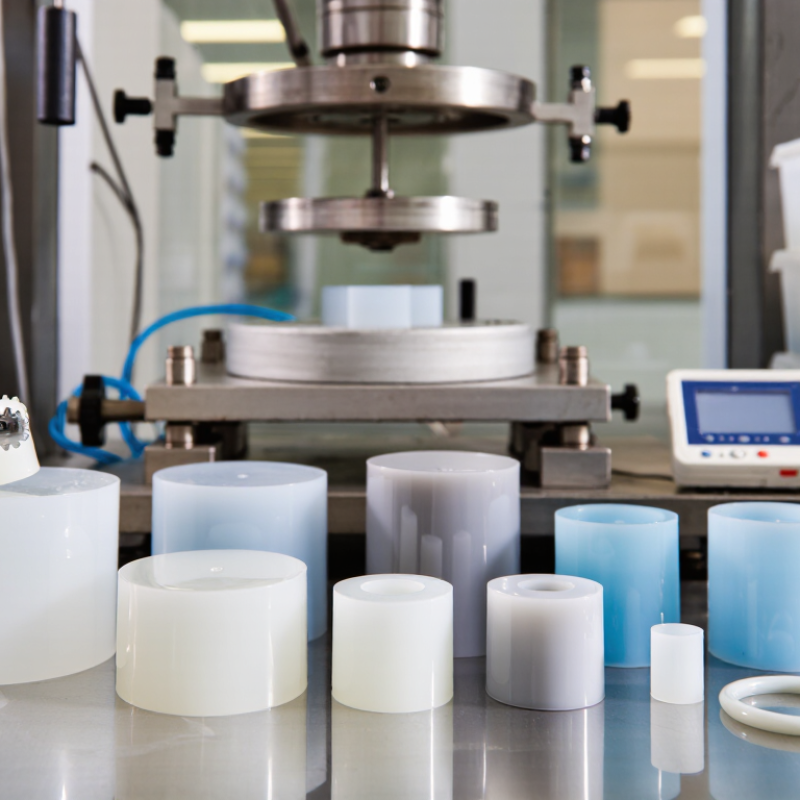
What VMQ Compound Is and How It Is Classified
VMQ generally refers to methyl-vinyl silicone rubber, a material valued for flexibility across a wide temperature range. A VMQ compound combines silicone gum with reinforcing fillers, curing ingredients, and sometimes pigments or processing aids. The uncured material may arrive as a thick, workable compound; it is not yet a finished seal or molded part. Small formulation changes matter.
Classification often begins with the cure system. Peroxide-cured compounds are common for general-purpose molding, while platinum-cured grades are often chosen when particular purity or processing requirements apply. Suitability depends on the application and the compound’s technical data. Neither system is automatically better.
Grades also vary by hardness, tear strength, compression set, and electrical behavior. A soft grade may seal gently around a delicate component, while a firmer grade can better resist deformation under load. Some formulations are designed for conductivity or reduced smoke, but these properties should be confirmed through test results rather than inferred from a label. Labels can mislead.
For buyers, the useful question is not simply “Which VMQ grade?” Ask about operating temperature, contact conditions, and expected service life. Then compare hardness and test data under relevant conditions. A small trial can reveal processing behavior that a specification sheet misses. That step is easy to overlook.
China Top VMQ Compound Manufacturers and Suppliers - What VMQ Compound Is and How It Is Classified
VMQ is the ASTM D1418 designation for silicone rubber whose polymer backbone contains siloxane units and whose organic groups are primarily methyl, with vinyl groups commonly used to support vulcanization. The specifications below are general selection guidelines; actual properties depend on the formulation, cure system, and test method.
| Classification Dimension | VMQ Compound Type | Typical Characteristics | Common Uses | Useful Supplier Data to Request |
|---|---|---|---|---|
| Cure system | Peroxide-cured VMQ | Commonly supplied as a compound for compression or transfer molding. Cure and post-cure requirements depend on the formulation. | General molded seals, gaskets, and cushioning parts. | Recommended cure schedule, post-cure guidance, hardness, tensile strength, and elongation. |
| Cure system | Platinum-cured VMQ | Addition-cure system; cure behavior and suitability for regulated or sensitive uses must be confirmed for the specific grade. | Selected medical, food-contact, and high-purity applications where grade-specific compliance is required. | Cure conditions, applicable regulatory declarations, extractables or migration data when relevant, and lot traceability. |
| Supply form | Millable silicone rubber (HCR) | High-consistency, workable rubber supplied in a solid form; typically processed by molding or extrusion with suitable equipment. | Molded components, profiles, tubing, and technical parts. | Compound form, processing method, storage guidance, cure package, and production lead time. |
| Supply form | Liquid silicone rubber (LSR) | Two-part, pumpable silicone system commonly processed by metered mixing and injection molding; it is a liquid processing form, not a hardness class. | Precision-molded seals, flexible components, and selected consumer or healthcare parts. | Mix ratio, viscosity, working and cure times, molding requirements, and grade-specific approvals. |
| Hardness | Soft, medium, or firm grade | VMQ compounds are available across a broad hardness range. Shore A values are commonly specified, but the available range varies by product and supplier. | Soft grades for flexible parts; firmer grades for parts requiring greater resistance to deformation. | Target Shore A hardness, test method, tolerance, and whether the result is measured on a finished or standard test specimen. |
| Functional property | Heat-resistant grade | Silicone elastomers are used in applications involving elevated temperatures, but continuous-use limits and aging performance are formulation-specific. | Seals and insulation components exposed to heat within the grade’s specified limits. | Operating-temperature guidance, heat-aging test results, and changes in hardness, tensile strength, or elongation after aging. |
| Functional property | Tear-resistant grade | Formulated to improve tear strength relative to a standard compound; performance should be compared using the same test method and specimen preparation. | Parts with thin sections, edges, or repeated flexing where tearing is a concern. | Tear-strength test method and result, tensile properties, hardness, and processing recommendations. |
| Functional property | Electrically insulating grade | Electrical performance depends on formulation, thickness, conditioning, and test conditions; suitability cannot be inferred from the VMQ designation alone. | Insulating components and protective covers where the specified electrical requirements are met. | Volume resistivity, dielectric strength, test conditions, and applicable product or industry requirements. |
| Application compliance | Food-contact or medical-use grade | Compliance is specific to the formulation, intended conditions, jurisdiction, and end use; a general silicone description is not proof of approval. | Components used in applications requiring documented material suitability. | Current declarations and supporting test documents for the exact grade and intended conditions of use. |
Purchasing note: Compare suppliers using the same test methods and request a technical data sheet, certificate of analysis, processing guidance, batch traceability, and written confirmation of any required compliance. Published typical values are not guaranteed specifications unless agreed in the purchase documentation.
