Hydraulic motors turn pressurized fluid into controlled rotation. Their performance shapes excavator travel, winch pulling force, and conveyor speed. Buyers comparing Hydraulic Motor Manufacturers in China need more than a catalog and a price. They need evidence of displacement accuracy, pressure ratings, materials, test procedures, and service support.
Industry data helps explain the market’s scale, though it is not a direct count of motor purchases. The China Construction Machinery Association reported 195,018 excavator sales in 2023, including domestic sales and exports. Excavators rely on hydraulic systems, making this a useful demand signal—but not a motor-market measurement. The National Bureau of Statistics reported that equipment manufacturing value added grew 6.8% in 2023. That broader figure adds context, not proof of any supplier’s quality.
This guide examines ten Chinese manufacturers through practical comparison points: product range, application experience, certifications, production capability, and after-sales support. A polished website is not enough. Ask for test records, model-specific specifications, and references from similar working conditions. Look closely at low-speed torque and heat management. Small details matter. Public company information can also be incomplete, and published ratings may not reflect field performance. The rankings should therefore be treated as a starting point, not a final purchasing decision.
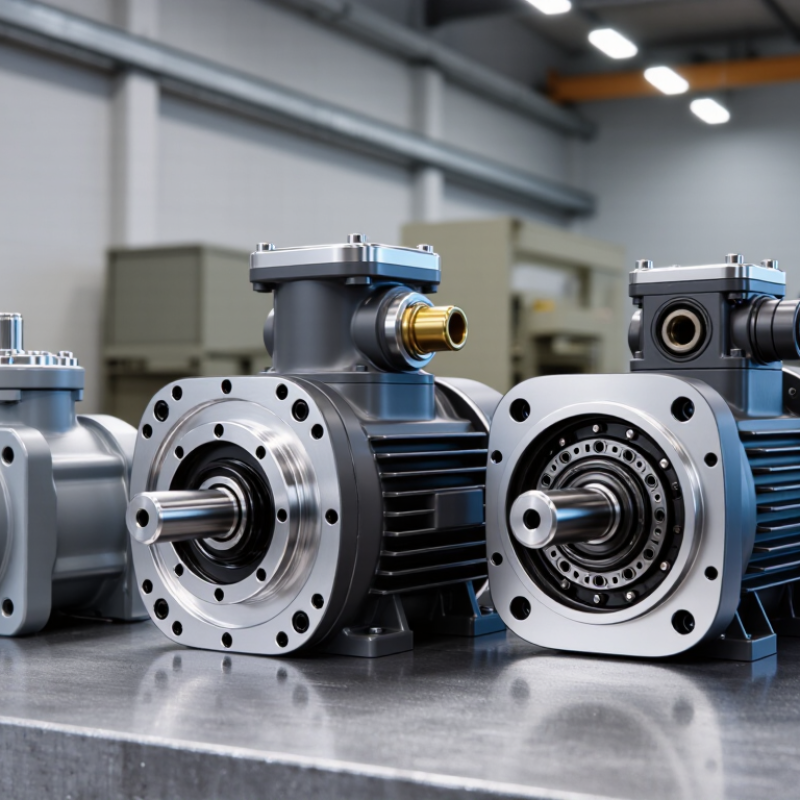
A hydraulic motor turns pressurized fluid into rotary motion. Oil enters through an inlet and pushes against gears, vanes, or a piston assembly. That movement turns the output shaft, which drives a machine such as a conveyor or excavator track. Flow rate mainly affects speed; pressure difference largely determines torque. The basics are simple. Real systems are less tidy: leakage, friction, and heat reduce useful output, especially when fluid is contaminated or too hot.
Tip: Check the motor’s rated pressure, flow, and speed against the machine’s actual duty cycle. A mismatch can cause sluggish movement or excessive heat. Clean oil matters.
Hydraulic motors suit equipment needing high starting torque in compact spaces. MarketsandMarkets’ 2023 Hydraulic Motors Market report estimated the market at USD 13.4 billion in 2023 and forecast USD 17.3 billion by 2028, a projected 5.3% annual growth rate. Market growth does not guarantee reliability, though. Selection still depends on load, operating hours, fluid condition, and maintenance. A specification sheet cannot tell the whole story; field conditions often expose assumptions that looked sound on paper.
China’s hydraulic motor industry is a layered supply network, not a single group of identical factories. Larger manufacturers may control design, machining, assembly, and testing in-house. Specialist producers often focus on particular motor types or pressure ranges. Smaller workshops can supply parts, but their process control may vary.
A motor’s quality depends on more than its housing. Gear accuracy, surface finish, seal selection, and heat treatment all affect performance. Buyers evaluating leading manufacturers should check test data, production capacity, and experience with similar operating conditions. Rankings can be useful, but they may hide differences in product scope.
Tips: Ask for a test report under realistic pressure and speed. Confirm how the supplier handles leakage checks and batch traceability. A clean brochure is not enough.
For a fair comparison, match each supplier’s strengths to the application: continuous duty, frequent starts, or limited installation space. Ask about service parts and technical support before placing an order. Even then, one detail is easy to overlook: operating fluid and temperature can change performance, so factory figures may not reflect field results. Manufacturers that explain these limits clearly are easier to assess.
This table summarizes ten common capability profiles in China’s hydraulic motor industry. It is an industry-structure overview, not a ranked list of companies; company and brand names are intentionally omitted.
| No. | Manufacturer Capability Profile | Common Motor Technologies | Typical Applications | Role in the Industry |
|---|---|---|---|---|
| 1 | Axial-piston motor specialists | Axial-piston, fixed- or variable-displacement designs | Mobile machinery, construction equipment, and industrial hydraulic systems | Serve applications requiring relatively high power density and compatibility with hydraulic pump systems. |
| 2 | Radial-piston motor specialists | Radial-piston, often low-speed, high-torque designs | Winches, drives, heavy-duty equipment, and applications needing high starting torque | Focus on torque delivery at low rotational speeds and performance under demanding loads. |
| 3 | Orbital-motor producers | Gerotor and related orbital designs | Agricultural machinery, conveyors, compact equipment, and auxiliary drives | Supply compact motors commonly selected for straightforward installation and low-speed operation. |
| 4 | Gear-motor producers | External- or internal-gear motors | General industrial machinery, power units, and auxiliary hydraulic functions | Address applications where compact construction and relatively simple hydraulic drive arrangements are useful. |
| 5 | Vane-motor producers | Balanced and unbalanced vane designs | Industrial machinery and systems requiring smooth rotary motion | Provide an alternative motor architecture for suitable pressure, speed, and duty-cycle requirements. |
| 6 | Low-speed, high-torque drive specialists | Radial-piston and high-torque orbital configurations | Heavy-duty drives, material handling, and equipment operating at low shaft speeds | Differentiate through torque, load handling, and integration with the driven machine. |
| 7 | Compact mobile-equipment suppliers | Compact orbital, gear, and piston motor variants | Small construction machinery, agricultural equipment, and municipal vehicles | Prioritize package size, mounting options, and compatibility with mobile hydraulic circuits. |
| 8 | Industrial-duty motor suppliers | Piston, gear, or vane motors selected for stationary systems | Machine tools, production equipment, and industrial power units | Emphasize operating stability, serviceability, and matching motor performance to system requirements. |
| 9 | Application-engineering and customization providers | Multiple motor types configured for specific operating conditions | OEM machinery with particular interfaces, duty cycles, or installation constraints | Support selection and adaptation of displacement, shaft, mounting, and port configurations. |
| 10 | Export-oriented and contract-manufacturing suppliers | Commonly traded orbital, gear, and selected piston motor types | International distributors and equipment makers sourcing hydraulic components | Compete through manufacturing capacity, specification coverage, quality documentation, and delivery support. |
Note: Hydraulic motor selection depends on operating pressure, flow, speed, torque, duty cycle, fluid, mounting, and system compatibility. The profiles above describe product and supplier segments rather than individual manufacturers.
A credible comparison starts with measurable performance, not a polished catalogue. Grand View Research estimated the global hydraulic motors market at USD 12.78 billion in 2023, with projected growth through 2030. That market estimate signals broad demand, but it cannot prove that any individual factory makes dependable motors. Buyers should compare rated pressure, speed range, starting torque, leakage, and efficiency under stated test conditions. Ask for dated test reports, not just headline figures.
Check whether performance testing follows ISO 4409:2019, which specifies methods for testing hydraulic pumps, motors, and integral transmissions. Request results across operating points, including oil temperature and viscosity; these details affect comparisons. Numbers can mislead. A high peak-pressure rating means little if continuous-duty limits, service intervals, or noise data are missing. Inspect production controls too: calibration records, lot traceability, and documented inspection steps help connect a test sample to shipped units. Not enough. Confirm spare-part availability and technical response times for the intended application. A factory visit can help, but one clean assembly line does not establish consistent quality across every batch. That distinction is easy to overlook.
A reliable answer to “Who are the top 10 hydraulic motor manufacturers in China?” depends on what “top” means. A buyer seeking compact motors for agricultural equipment may value different capabilities than one sourcing units for construction machinery. Production volume alone is not enough. Compare working pressure, displacement range, efficiency data, materials, and documented quality controls.
Look for manufacturers that can provide test records, clear technical drawings, traceable components, and practical guidance on installation. Ask how each motor performs under continuous load, changing temperatures, and dusty conditions. Request samples or independent test results when possible. Details matter.
A polished catalogue is not proof of dependable performance. Some specifications may also depend on operating conditions, so confirm the test method before comparing figures. Check delivery consistency, spare-part availability, and response times for technical questions. Then score candidates against the same requirements. The ranking may change with each application, and that is worth acknowledging. A defensible top-ten list should explain its criteria rather than imply one universal order.
The chart compares representative engineering pressure ranges for common hydraulic motor types; it does not rank manufacturers or show company-specific data. Actual operating limits vary by model and application.
When comparing hydraulic motor manufacturers, start with the duty cycle, not the catalogue’s peak-pressure figure. Record continuous and intermittent pressure, required torque, speed range, start-stop frequency, and ambient temperature. A motor that handles a short pressure spike may overheat during steady operation. Fit matters, too: check shaft dimensions, mounting pattern, port locations, and available replacement seals.
Ask for test curves at your operating pressure and oil temperature. Compare starting torque, volumetric efficiency, leakage, noise, and case-drain limits under the same conditions. For example, a motor driving a slow conveyor needs reliable low-speed torque; a winch may need stable performance during repeated reversals. The U.S. Department of Energy’s Improving Pumping System Performance sourcebook reports 20–50% energy-saving opportunities in many pumping systems. That figure concerns pump systems, not a guaranteed motor-efficiency gain. Still, it supports checking the whole hydraulic power unit, not just the motor.
Check material traceability, inspection records, endurance-test methods, and stated tolerances. Request a sample test report and confirm that its conditions match your application. Cleanliness matters. ISO 4406 codes can help specify oil-particle cleanliness, but they do not prove a manufacturer’s motor will last in your circuit. Review service response, spare-part lead times, and warranty exclusions. These are easy to overlook. I would also verify performance after installation; catalogue data cannot capture every pressure loss, alignment issue, or operator habit.
Hi! Simply click below and type your query.
Our experts will reply you very soon.