Maize moves through a vast and varied food system. FAOSTAT records global maize production at roughly 1.16 billion tonnes in 2022, underscoring the crop’s scale and importance. But harvest volumes alone do not tell buyers which mill will perform well. Grain moisture, kernel size, local power supply, and the intended flour grade all affect daily operation.
A Maize Flour Mill Machine should therefore be judged by more than its advertised capacity. Ask suppliers to explain how they measured output, what maize condition they assumed, and how much flour meets your required particle size. Request a practical test using representative grain, if possible. Watch the feed rate, listen for unstable vibration, and check how easily operators can reach screens and bearings. Small details matter.
Look beyond the quotation. Confirm motor power, expected energy use, wear-part availability, cleaning access, and the scope of installation and training. The FAO and OECD-FAO Agricultural Outlook provide useful context on agricultural markets, while FAOSTAT offers historical production data; neither replaces a site-specific equipment test. That distinction is easy to miss. A polished brochure can make every machine sound suitable. It cannot show whether spare screens will arrive promptly or whether local technicians can service the drive system. Some specifications still leave questions unanswered. The right choice depends on your grain, operators, budget, and buyer requirements. These ten buying tips help global buyers compare claims carefully and identify what needs verification before placing an order.
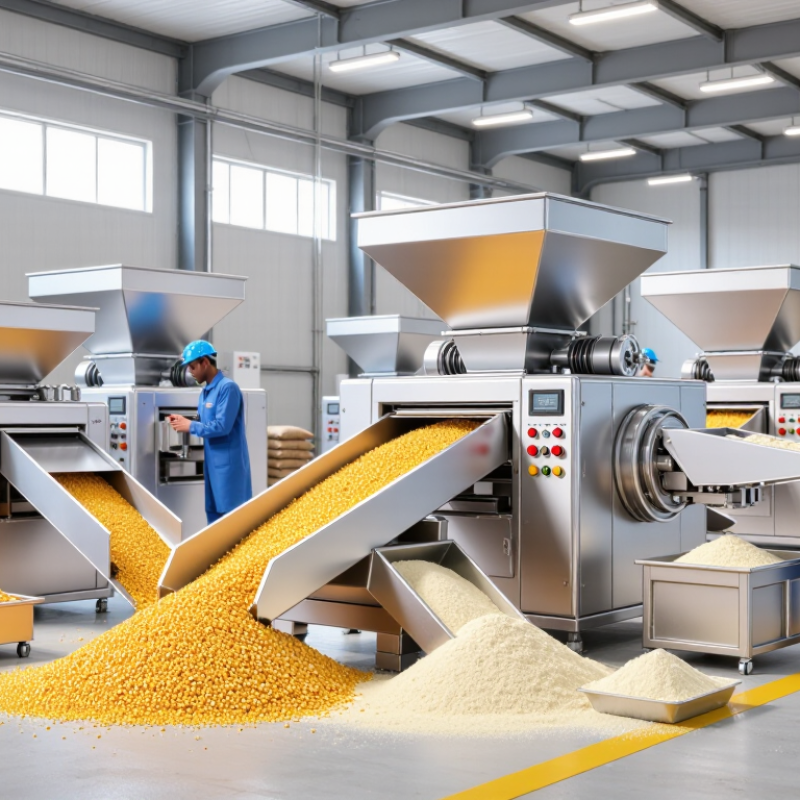
Before selecting a maize flour mill, define the product, daily output, and buyer. Are customers bakeries, retailers, food processors, or local wholesalers? Their needs differ. A bakery may require fine, consistent flour, while a regional staple may favor a familiar texture and affordable sack sizes. Start with the buyer. Then estimate monthly demand, peak seasons, shifts, and expected growth. A machine sized only for a future target can sit underused today.
Raw-material supply also matters. FAOSTAT recorded roughly 1.16 billion tonnes of global maize production in 2022; USDA’s 2024/25 grain outlook estimated world corn production at about 1.22 billion tonnes. These figures describe grain production, not flour demand. That distinction matters. Check local harvest timing, grain moisture, storage losses, and transport costs before setting a mill’s capacity. For each target market, confirm preferred particle size, extraction rate, packaging weight, and acceptable color. Ask buyers to test sample flour; assumptions can be wrong. Record their feedback, even when it complicates the specification. A practical buying brief should connect those findings to cleaning, grinding, sifting, and packing capacity, with room for realistic maintenance and downtime.
Planning note: These are illustrative throughput scenarios, not manufacturer specifications. At one 8-hour shift per day and 22 operating days per month, the scenarios produce approximately 88, 176, and 352 tonnes per month, respectively. Use your target market’s demand and operating schedule to determine the capacity you need.
A maize flour mill’s stated capacity is only a starting point. Ask whether the figure means whole kernels entering the machine or finished flour leaving it. These numbers differ when maize moisture, screen size, and target fineness change. Request a trial using maize similar to your own supply. Weigh the input and saleable flour over a fixed period. Small details matter.
Compare processing technology against the product you need. Hammer mills can handle varied grain sizes and are often straightforward to maintain. Roller systems may offer more controlled particle size, but their setup and servicing needs can be greater. Ask to see flour samples, not just machine specifications. Check for uneven granules, excess heat, and flour collecting around screens. A clean sample is useful evidence.
Energy use deserves a measured comparison. Ask for power consumption in kilowatt-hours per tonne at a stated throughput, then confirm whether the test used a full or partial load. Motors running far below capacity may waste energy. So can worn screens or poorly aligned belts. It is easy to compare motor ratings and miss the operating cost. That comparison is not perfect: local maize, voltage, and maintenance habits all affect results. Request operating data, and check how it was recorded.
Flour quality is easier to judge with a real production sample than with a brochure. Ask for a test run using maize similar to your own supply. Check particle size, color, moisture, and consistency across several bags. A sieve and a calibrated moisture meter can reveal variation quickly. Small details matter. Record the mill settings used, since different settings can change the flour’s texture and yield.
Food safety depends on the whole process, not only the finished flour. Inspect product-contact surfaces for smooth finishes, accessible joints, and areas where flour may collect. Ask how the machine is cleaned and whether parts can be removed without special tools. Request material information for surfaces that touch food, plus cleaning instructions and relevant test documents. These records are useful, but they do not replace your own inspection. A report is only a snapshot.
Regulatory requirements differ by destination and may cover machinery, electrical systems, food-contact materials, labeling, and imported equipment. Confirm current requirements with the relevant local authority or a qualified compliance professional before placing an order. Ask the supplier for drawings, manuals, material declarations, and applicable conformity documents. Check that the documents match the exact machine configuration, not a similar model. It is easy to overlook this when deadlines are tight. Keep copies with your commissioning records, and verify that local inspectors accept the documentation.
A supplier’s brochure can show output figures, but it cannot prove how a mill performs with your maize. Ask for a test using grain similar in moisture and hardness to your own. Record the flour fineness, hourly capacity, and power use from that run. Keep the results in writing. A polished video is useful, but limited.
Check machine reliability through component details, not broad claims. Ask which parts contact grain, how screens and rollers are replaced, and how often bearings need inspection. Request references from buyers processing similar volumes. If possible, inspect a working installation and listen for unusual vibration. A short test may not reveal wear over months. Easy to overlook.
Ask how technicians diagnose faults, what response time is realistic, and which spare parts are stocked nearby. Confirm whether manuals, wiring diagrams, and operator training are included. Clarify warranty exclusions before payment; vague wording can create disputes. Save the names and dates of support contacts. A quick reply before purchase does not guarantee quick help later. Service quality is hard to judge from a contract alone, so speak with recent customers and verify each promise.
A maize flour mill’s quoted price rarely reflects the full cost of getting it running. Compare the machine price with freight, insurance, customs charges, inland delivery, and any site preparation. Small costs add up. Ask suppliers for the packed dimensions and gross weight; these details affect container space and handling fees. Confirm whether the quotation covers export packaging and unloading equipment. A low shipping estimate may exclude delivery to your actual mill site.
Tips: Request an itemized quotation in writing. Check the delivery term, payment schedule, and estimated transit time. Keep a contingency for delays or exchange-rate changes. A spreadsheet helps, though its figures need regular updating.
Before ordering, check the building’s power supply, floor strength, and available space for installation. Ask what technician support includes, how many working days it requires, and who pays for travel and accommodation. Get a parts list with prices and expected replacement intervals. Screens, bearings, and belts may need attention sooner under heavy use or dusty conditions. Keep essential spares on site, but avoid buying parts without confirming compatibility. I would verify the list twice; small specification differences are easy to miss.
| # | Buying tip | What to verify | Cost and planning action |
|---|---|---|---|
| 1 | Compare total landed cost, not just the machine price | List the machine, included equipment, export packing, freight, insurance, import charges, inland delivery, installation, and initial spares. | Use the cost worksheet below. Request separate line items and confirm which costs are included in the seller’s quotation. |
| 2 | Match rated capacity to your actual production target | Specify required output in tonnes per day and operating hours per day. Ask whether the rating refers to maize input or finished flour output. | Request a process-flow description and a written capacity guarantee for the maize and product specification you intend to use. Actual output depends on configuration and operating conditions. |
| 3 | Define flour quality and product yield | Agree on the required particle size, extraction rate, bran separation, and product moisture specifications. Confirm how results will be measured. | Include a sample test or acceptance criteria in the purchase contract; “high quality” alone is not a measurable specification. |
| 4 | Check cleaning and food-contact provisions | Confirm the proposed cleaning stages, such as screening, aspiration, or destoning where required. Ask for material details for product-contact parts and a cleaning procedure. | Compare the complete process line rather than assuming that a mill alone includes grain cleaning, conveying, or flour packing equipment. |
| 5 | Confirm electrical and site requirements | Match motor voltage, frequency, phase, and total connected load to the site supply. Check starting current, cable requirements, floor loading, and required clearances. | Obtain motor nameplates and a layout drawing before ordering. Price any electrical upgrades, foundations, or utility work separately. |
| 6 | Plan shipping around packed dimensions and Incoterms | Request packing dimensions, gross weight, number of packages, lifting points, and loading plan. Confirm the named delivery place and Incoterms® rule in the quotation. | Get a freight quote using the actual cargo details. Clarify who arranges export clearance, main carriage, insurance, import clearance, and final delivery. |
| 7 | Budget installation and commissioning separately | Confirm whether installation supervision, travel, accommodation, commissioning, operator training, and start-up testing are included. | Request a written scope and schedule. Identify work that must be completed by the buyer, such as foundations, wiring, lifting equipment, or local labor. |
| 8 | Price critical spare parts before purchase | Ask for part numbers, recommended stock quantities, prices, and dispatch lead times for wear parts such as screens, belts, bearings, and grinding components, as applicable to the design. | Build an initial spare-parts package around expected operating hours and local replenishment times. Verify that manuals identify parts clearly. |
| 9 | Review documentation, warranty, and support terms | Check for operating and maintenance manuals, wiring diagrams, parts lists, warranty duration, exclusions, and the process for technical support. | Get warranty and support commitments in writing, including how faults are reported and who pays for replacement-part transport. |
| 10 | Set measurable pre-shipment and acceptance tests | Agree on test material, run duration, throughput, product specifications, included components, and how any shortfall will be handled. | Use a signed test report and a clear acceptance procedure. Align payment milestones with inspection and agreed delivery documents. |
The figures below are hypothetical planning examples only, not market quotations. Freight, duties, taxes, and service costs vary by equipment configuration, shipment, destination, and contract terms.
| Cost item | Illustrative amount (USD) | Calculation note |
|---|---|---|
| Machine and listed standard equipment | $48,000 | Example quotation value; verify the scope of supply. |
| Export packing | $1,200 | Confirm packaging type and whether it is suitable for the transport route. |
| International freight | $4,000 | Illustrative only; replace with a current quote based on packed cargo details. |
| Cargo insurance | $300 | Check insured value, coverage, and exclusions with the insurer. |
| Illustrative import duty allowance | $5,000 | Placeholder only; confirm the tariff classification and applicable rate with local customs authorities or a customs broker. |
| Inland transport and handling | $1,500 | Destination-specific; confirm terminal, handling, and final-delivery charges. |
| Installation and commissioning | $3,500 | Example allowance; confirm labor, travel, accommodation, and commissioning scope. |
| Initial spare-parts package | $2,000 | Example allowance; base the final list on the equipment design and expected operating hours. |
| Illustrative total before VAT/GST and other local charges | $65,500 | Add destination-specific taxes, bank charges, financing, and any omitted costs to calculate the final budget. |
Basic budgeting formula: machine and equipment + packing + freight + insurance + applicable import charges + inland delivery + installation + initial spares + destination taxes and other fees.
Hi! Simply click below and type your query.
Our experts will reply you very soon.
