Choosing Roll Filter Media is not just a matter of picking the thickest roll or the lowest price. The right material must match the air system, contaminant, operating speed, and replacement schedule. A coarse synthetic web may capture visible lint in a pre-filter stage, while finer media can help control smaller particles—but may also increase resistance to airflow. Check the equipment manual and the media’s technical data sheet. Look for efficiency, initial pressure drop, roll width, thickness, and recommended service conditions. Small details matter. A roll that is too narrow can leave gaps; one that loads quickly can mean more frequent changes.
For a transparent perspective, this guide uses a fictional composite expert, filtration engineer Daniel Mercer, to express a practical selection principle: “Choose media for the particles and airflow you actually have, not the conditions you imagine.” That is a useful starting point, not a substitute for measurements. Dust type, humidity, and fan capacity can change performance. A pressure gauge reading before and after installation can reveal whether the choice is working as expected. Keep records. Compare results. Even careful estimates can be wrong. Review supplier specifications, test the media under real operating conditions where practical, and reassess when the process changes. The best Roll Filter Media is the one that meets the application’s needs consistently, without creating avoidable airflow or maintenance problems.
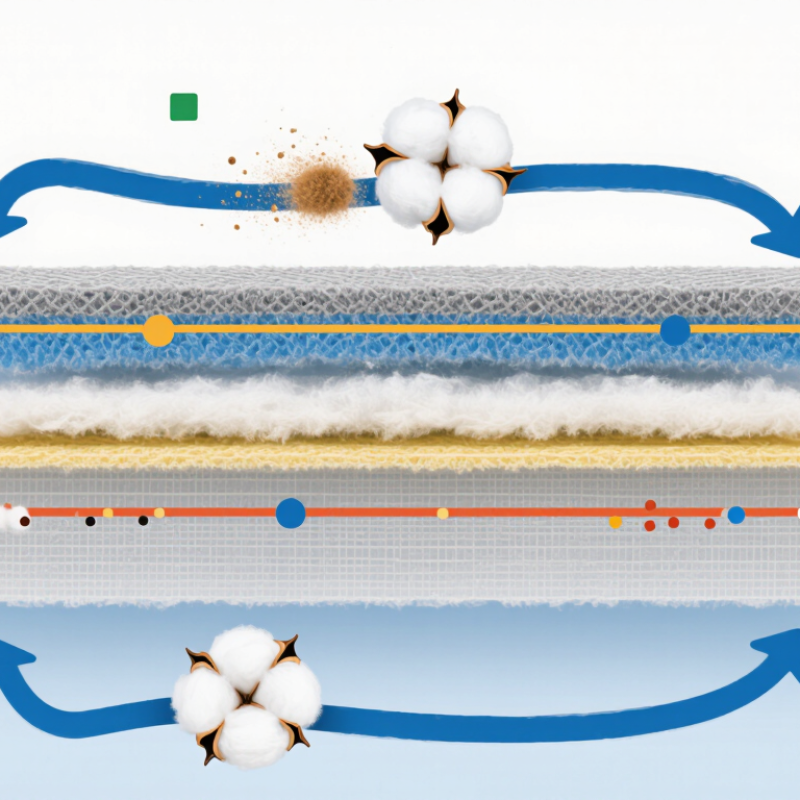
Roll filter media is a continuous sheet of fibrous material fitted across an air-handling frame. As air moves through it, fibers intercept particles such as lint, dust, and pollen. Some particles stick to fibers; others become trapped deeper in the sheet. The filter is not a solid wall. Air must pass through its open structure.
Media types differ in fiber size, thickness, density, and surface treatment. These details affect how much dust the sheet can hold and how much resistance it creates. A denser sheet may capture finer particles, but it can also restrict airflow sooner. Check the rated airflow and pressure-drop information for the specific system. The same roll may perform differently when dust is oily, damp, or unusually fine.
In practice, technicians often check the loaded section and the pressure reading together. A dark patch alone does not tell the whole story; dust can collect unevenly if air leaks around the frame. That matters. When resistance rises, some systems advance fresh media manually, while others use a controlled feed. Not always. Feed settings and replacement intervals depend on the equipment and the dust load. It is tempting to choose media by thickness, but that shortcut can miss the real trade-off between particle capture, airflow, and service life. A careful fit and a well-sealed frame matter just as much.
Start by identifying what your air system needs to remove. Fine powder, lint, and larger debris behave differently. Note where contaminants come from and when they peak. A workshop may produce brief clouds of sawdust, while a busy production area may have a steady load. Check the required airflow, filter dimensions, and available pressure capacity. Finer media can capture smaller particles, but it may also restrict airflow sooner. Match performance to the equipment’s limits, not just to a desired filtration level.
Tips: Write down the particle type, operating hours, and airflow before comparing media. Check the equipment manual for pressure limits. If the dust is mixed, describe each source. Small details matter.
Think about how often the filter can be inspected and replaced. A roll that is easy to change may suit a system with frequent dust buildup. Review the filter’s stated efficiency and pressure-drop data, and confirm how those figures relate to your operating conditions. Keep a simple record of pressure readings and replacement dates. It will reveal whether the chosen media lasts as expected. Measurements are not perfect, though; a poorly placed gauge can mislead you, so check its location before changing media.
Roll filter media should be compared at the same face velocity and airflow, not by appearance alone. Fiberglass media often suits coarse prefiltration, while layered synthetic media can hold more dust before replacement. Results vary with fiber structure and loading. A tightly packed roll may improve capture but raise pressure drop, making the fan work harder. That trade-off matters.
ASHRAE Standard 52.2 rates filters by particle-size efficiency, not pressure drop alone. Its MERV 13 thresholds are at least 50% for 0.3–1 micrometer particles, 85% for 1–3 micrometers, and 90% for 3–10 micrometers. These are test thresholds, not a promise of identical performance in every system. Compare each media’s initial resistance at your operating airflow, then check its dust-holding capacity and recommended final resistance. A low initial drop can be misleading if the roll loads quickly.
Tips: Check the manufacturer’s test curve and measure pressure drop across the installed roll. Look for dust bypass at the frame edges. If fan capacity is limited, test the denser media before a full changeover. It is easy to overlook fit. A small leak can undo a better filter.
How to Choose the Best Roll Filter Media for Your Needs?
Matching Roll Size and Construction to Your Equipment
Start with the machine, not the catalog description. Measure the usable roll width, core diameter, and maximum roll weight your holder can accept. Check the feed path too: a few millimeters of excess width can cause edge rubbing, while an undersized core may not seat securely. Confirm the required roll length against changeout frequency and storage space. A longer roll reduces stoppages, but only if the frame can carry its weight.
Construction matters just as much. Compare thickness, backing or scrim, fiber type, and resistance to moisture or handling damage. Then check the equipment’s airflow and pressure-drop limits; denser media may capture more particles but can restrict airflow sooner. ASHRAE Standard 52.2-2017 reports MERV 13 minimum efficiencies of 50%, 85%, and 90% across its 0.3–1, 1–3, and 3–10 micrometer particle ranges. These ratings apply to tested filters, not loose media alone. ISO 16890-1:2016 also classifies filters by ePM particle-size groups.
Small details matter. Match those test ratings to your actual frame and operating conditions. A media roll that fits on paper may still track unevenly under tension. That assumption can be wrong. Before ordering in volume, test a short roll and record airflow, pressure drop, and how cleanly it advances. Check after a full shift, not just at startup.
| Equipment or Application | What to Measure | Example Roll Size | Common Media Construction | Selection Considerations |
|---|---|---|---|---|
| Automatic roll-filter unit in an air-handling system | Media-track width, roll-core diameter, available roll diameter, and feed direction | 1.0 m wide × 20 m long; confirm core and maximum roll diameter against the unit | Progressively structured synthetic-fiber media, often supported by a scrim or backing layer | Match the media width and roll dimensions to the track and drive system. Check pressure drop, dust-holding capacity, and the unit’s media-feed controls. |
| Cut-to-size HVAC filter bank or panel frames | Frame opening, retaining depth, and the largest practical roll width for cutting | 1.2 m wide × 20 m long; cut panels to suit each frame | Nonwoven polyester or blended synthetic-fiber media in a suitable thickness and density | Choose media that can be secured without gaps or bypass. Compare airflow resistance and filtration requirements using the same test method and rating system. |
| Commercial or industrial prefilter section | Rack width, filter depth, airflow direction, and replacement access | 0.6–1.2 m wide × 15–30 m long, subject to rack layout | Lightweight synthetic or glass-fiber roll media; some grades include a reinforcing scrim | A prefilter is generally selected to capture larger airborne particles and help protect downstream filters. Verify that the media is compatible with the system’s airflow and operating conditions. |
| Paint-booth exhaust arrestor | Exhaust-grid width, media thickness, installation orientation, and roll storage space | 1.0 m wide × 20 m long; select thickness to fit the grid or holding frame | Paint-arrestor media, commonly made from progressively structured glass or synthetic fibers | Use media intended for paint overspray capture, not ordinary HVAC prefiltration. Check the manufacturer’s airflow and loading guidance, and replace it when loading affects booth performance. |
| Outdoor-air intake with a roll-media filter section | Filter-track width, roll changeout clearance, and exposure to moisture or weather | 0.8–1.2 m wide × 15–25 m long; verify the unit’s permitted roll diameter | Moisture-tolerant synthetic-fiber media, with support where required by the equipment | Consider the intake environment, drainage, and media support. Confirm that the selected media is suitable for the expected humidity and does not obstruct the feed mechanism. |
| Custom filter panels cut from a bulk roll | Panel length and width, cutting allowance, edge retention, and quantity per roll | 0.5–1.5 m wide × 10–30 m long, depending on panel dimensions and supplier format | Flexible nonwoven media selected by fiber type, thickness, density, and support-layer needs | Calculate usable yield after allowing for trimming and defects. Make a trial cut and confirm the panel stays in place without tearing or leaving perimeter gaps. |
Important: Roll sizes shown are illustrative formats, not universal equipment standards. Confirm usable media width, core size, maximum roll diameter, media thickness, airflow direction, and required filtration performance with the equipment documentation. Filtration ratings and pressure-drop values depend on the test method and the specific media grade.
Roll filter media should be judged by usable service life, not just its clean appearance. ASHRAE Standard 52.2 reports filter efficiency across three particle-size groups: 0.3–1, 1–3, and 3–10 micrometres. These test results describe particle capture, not how many weeks a roll will last in your building. That distinction matters. Dust loading, humidity, fan speed, and prefilters all affect replacement timing. A clean-looking face can still have a rising pressure drop.
Track differential pressure from installation and compare readings with the system’s specified final resistance. ASHRAE’s Handbook—HVAC Systems and Equipment addresses filter resistance as part of system design; a universal changeout date is a weak rule. Record pressure, operating hours, and roll advancement at each inspection. If pressure rises quickly, check dust patterns and bypass leaks before advancing more media. Try logging readings weekly for a month, then set a site-specific interval. Useful, but imperfect: seasonal peaks can disrupt the pattern. Replace media at the design limit, when airflow falls, or if the roll is damaged.
Hi! Simply click below and type your query.
Our experts will reply you very soon.
