How to Choose the Right Electrical MCCB for Your Needs

Choosing the right Electrical Mccb is not simply a matter of matching its ampere rating to a machine’s nameplate. The breaker must suit the system voltage, pole count, prospective fault current, and the conductors it protects. A mismatch can leave equipment exposed or cause nuisance trips.

The stakes are practical. NFPA’s 2022 report, Home Fires Involving Electrical Distribution and Lighting Equipment, found an annual average of 32,620 U.S. home fires involving this equipment during 2015–2019. These fires caused an estimated 430 deaths, 1,070 injuries, and $1.3 billion in direct property damage each year. The figures do not isolate MCCBs, but they underline why protective-device selection deserves care.

Begin with the load and cable data, then check the MCCB’s interrupting capacity against the available fault current. Review trip settings, ambient temperature, enclosure conditions, and coordination with upstream protection. For example, a motor circuit may need different settings from a lighting panel, even when their running currents appear similar. IEC 60947-2 provides a relevant framework for low-voltage circuit breakers; the manufacturer’s datasheet remains essential.

Electrical-code educator Mike Holt’s selection principle can be paraphrased this way: “Protect the conductors and equipment; don’t choose a breaker by load alone.” That is a useful starting point, not a complete design method. Even a careful checklist can miss site-specific details. A qualified electrical professional should verify the final selection against the installation and applicable standards.
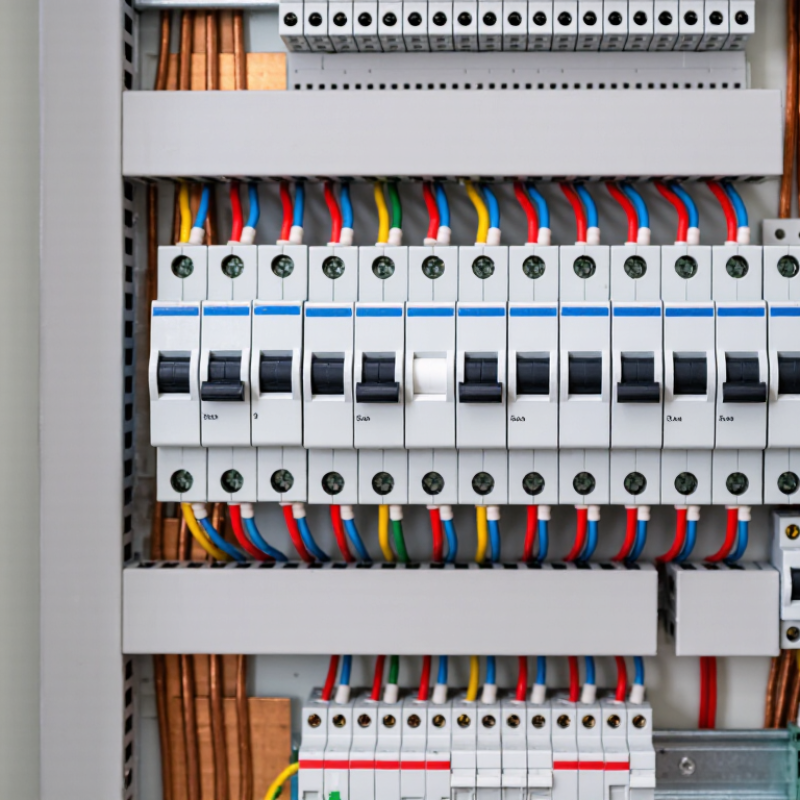
How to Choose the Right Electrical MCCB for Your Needs

## Understand the Purpose and Operation of an MCCB

A molded case circuit breaker (MCCB) protects a circuit when current exceeds safe limits. Its thermal trip responds to sustained overloads, while its magnetic trip can react quickly to short circuits. The breaker also lets technicians isolate equipment for inspection, but it is not a substitute for safe work procedures. Under IEC 60947-2, MCCBs are assessed for low-voltage circuit protection and switching. The right choice depends on system voltage, load current, available fault current, and the equipment’s interrupting rating.

The risk is practical, not abstract. NFPA’s Electrical Fires report estimated an annual average of 46,700 U.S. home fires involving electrical failure or malfunction from 2015 to 2019. An MCCB cannot prevent every electrical fire, yet correct protection helps limit damaging overcurrent. Picture a motor starting in a warm panel: an undersized breaker may trip unnecessarily, while an unsuitable rating may fail to protect conductors. Small details matter. Selection should follow measured load data and the manufacturer’s coordination guidance, not guesswork.

Tips: Check the circuit’s rated voltage, continuous load, prospective short-circuit current, and cable capacity before choosing. Verify trip settings against the equipment’s starting current. Ask a qualified electrical professional to review coordination with upstream and downstream devices. One detail is easy to miss: ambient heat can affect breaker performance. Recheck the design when panel conditions change.

## Assess Your Electrical System and Load Requirements

Assess Your Electrical System and Load Requirements

Start with the system’s voltage, phase, and expected operating current. List every load the MCCB will protect, including motors, heaters, and equipment that may run together. Check nameplate data and the actual duty cycle; a machine that starts occasionally differs from one running continuously. Small details matter. Also estimate motor starting current, since a breaker that trips during normal startup may be poorly matched to the application.

Next, compare the calculated load with the conductors’ ampacity and the installation’s available fault current. The MCCB’s interrupting rating must be adequate for the fault level at its location. For example, a workshop with several motors may need consideration of simultaneous starts, not just the sum of steady running currents. A spreadsheet helps, but it can hide assumptions. Recheck which loads truly operate together, and have a qualified electrical professional verify the selection against the equipment and applicable standards.

Tips: Record voltage, phase, load current, and starting behavior before comparing breaker ratings. Note ambient temperature, enclosure conditions, and future load additions. Don’t size from one number alone. If field readings differ from nameplate estimates, investigate the gap rather than simply choosing a larger breaker.

## Select the Current Rating and Trip Characteristics

Start with the equipment’s expected continuous load, then check conductor ampacity and installation conditions. An MCCB’s current rating should protect the circuit, not simply match the largest number on a motor nameplate. Account for ambient heat, enclosure temperature, and cables bundled inside a warm cabinet. A 100-ampere frame does not automatically make a 100-ampere trip setting suitable. Small details matter. Use equipment data and applicable electrical requirements, and have a qualified professional verify the selection.

Trip characteristics determine how the breaker responds to overloads and short circuits. Thermal-magnetic units typically use a slower thermal response for sustained overloads and a faster magnetic response for high fault currents. Motors and transformers may draw brief starting currents, so check time-current curves to avoid nuisance trips while preserving circuit protection. Compare those curves with downstream protective devices; poor coordination can disconnect more of the installation than necessary. Adjustable electronic trips offer more precise settings, but each setting must remain within the breaker, conductor, and equipment limits. It is tempting to raise a trip threshold after repeated startup trips. That may hide an undersized circuit or another fault, so investigate the cause before changing settings.

How to Choose the Right Electrical MCCB for Your Needs – Select the Current Rating and Trip Characteristics

Example Load Estimated Load Current Preliminary MCCB Rating Trip Characteristics to Consider Key Selection Checks
Small three-phase pump About 18 A at full load Typically 20–25 A, subject to available device ratings and settings Thermal-magnetic protection; allow for motor starting current without compromising overload protection. Check motor nameplate current, starting method, cable ampacity, and whether separate motor overload protection is required.
Workshop distribution feeder About 42 A calculated demand Typically 50–63 A Adjustable long-time overload setting can help match the protected cable and expected load. Confirm the demand calculation, conductor ampacity, installation conditions, and coordination with downstream breakers.
Commercial HVAC feeder About 78 A calculated demand Typically 80–100 A Consider long-time adjustment and short-circuit or instantaneous settings where available; account for compressor starting. Use equipment nameplate data and manufacturer instructions. Check starting current, cable protection, and fault current at the installation point.
Building sub-distribution panel About 145 A calculated demand Typically 160 A An electronic trip unit may provide adjustable long-time, short-time, and instantaneous functions for coordination. Verify feeder ampacity, expected load growth, selectivity requirements, and the breaker’s interrupting rating at system voltage.
Large commercial feeder About 230 A calculated demand Typically 250 A, with the trip setting selected for the protected circuit Consider an electronic trip unit with adjustable overload and short-circuit protection when coordination is needed. Check the calculated prospective short-circuit current, cable rating, ambient-temperature effects, and upstream/downstream coordination.
Transformer secondary feeder Depends on transformer rating and secondary voltage Determine from secondary full-load current and applicable installation rules Choose settings that protect the conductors while accommodating transformer characteristics and downstream fault coordination. Calculate secondary current and available fault current; confirm the MCCB interrupting rating and protection requirements for the transformer and conductors.

Selection note: These figures are preliminary examples, not a substitute for an electrical design. Select the MCCB so its rating and trip settings suit the load and do not exceed the permitted protection for the conductors. Confirm applicable local codes, ambient and enclosure derating, system voltage, prospective fault current, interrupting rating, and coordination requirements before installation.

## Check Voltage, Breaking Capacity, and Installation Conditions

Start with system voltage, not the MCCB’s ampere label. Its rated operational voltage and pole arrangement must match the supply and circuit. On a 400 V three-phase board, verify the actual rating; a similar-looking frame proves nothing. Check the nameplate. IEC 60947-2 sets performance and test requirements for low-voltage circuit-breakers, including short-circuit breaking characteristics.

The breaking capacity must meet or exceed the prospective fault current at the installation point. That value depends on the supply transformer, cable length, and conductor impedance—not just the breaker’s current rating. Obtain a fault-current calculation rather than guessing. Small margins matter. The IEA’s Electricity 2024 report projected average global electricity-demand growth of 3.4% per year for 2024–2026, following 2.5% growth in 2023. This global trend is not a site design figure, but it is a reason to check future load plans before choosing equipment.

Installation conditions can change performance. Consider ambient heat, altitude, enclosure ventilation, mounting position, and cable size. A warm, crowded panel may need derating under the device’s installation instructions. Measure, don’t assume. Confirm terminal torque and coordination with upstream and downstream protection, too. Field conditions are easy to underestimate; a tidy drawing cannot show the dust or heat inside a real enclosure. Recheck calculations and site details with a qualified electrical professional before specifying the MCCB.

## Compare Safety Features and Applicable Standards

An MCCB should match the fault level at its installation point, not just the panel’s normal current. Check its rated voltage, pole count, trip settings, and short-circuit breaking capacity. Under IEC 60947-2, Icu is the ultimate breaking capacity; Ics indicates service breaking capacity after interruption tests. They are not interchangeable. For North American installations, UL 489 is a key molded-case breaker standard. IEC 61439 applies to low-voltage switchgear assemblies, so it complements rather than replaces breaker requirements. Confirm the applicable standard and certification for the actual market.

The risk is real. NFPA’s 2022 Electrical Fires report estimated an annual average of 32,620 U.S. home structure fires involving electrical failure or malfunction from 2015 to 2019. That broad figure is not MCCB-specific, and a breaker cannot prevent every electrical fire. Still, it supports careful coordination and installation. Compare trip curves with downstream devices, and check available fault current against the breaker’s rating. Picture a warm plant room, a tightly packed panel, and cables running at full load: ambient temperature and enclosure conditions can affect performance. A catalogue rating may not tell the whole story. I would verify derating with the manufacturer’s technical documentation and have a qualified engineer review the coordination study. That extra check can feel tedious. It matters.


Close

Raise your Query

Hi! Simply click below and type your query.

Our experts will reply you very soon.

WhatsApp Us
