Choosing the right Upvc Door Hinges in 2026 means looking beyond finish and price. A hinge must carry the door’s weight, fit its profile, and allow precise adjustment after installation. A poorly matched hinge can leave a visible gap, cause the sash to drop, or make the handle harder to operate. Small details matter.
This guide compares hinge types, materials, load ratings, adjustment ranges, and security features. It also explains how to check compatibility with your door and frame. Measure carefully. Note the hinge’s fixing positions, dimensions, and adjustment points before ordering. If the door is unusually heavy or its specifications are unclear, ask a qualified installer to assess it. Product labels alone may not tell the whole story.
A named expert quotation needs a verifiable source, and none was provided, so I won’t invent one. Insert a confirmed statement here: “[Exact, sourced quotation about choosing UPVC door hinges]” — [Verified expert’s name and role]. That evidence matters. A useful quote should reflect practical experience, not merely repeat a product claim. Even the best hinge cannot correct a warped frame or poor fitting. This guide offers a careful way to compare options, while leaving room for a professional inspection when the door’s condition raises questions.
A UPVC door’s weight is only the starting point. Check the full door assembly, including glazing, locks, and any added panels. Then compare its mass with the hinge set’s documented EN 1935 classification. EN 1935:2002 assigns door-mass classes from 0 to 7, corresponding to tested door masses up to 160 kg. The class describes a tested configuration, not a simple per-hinge allowance. Do not guess.
Hinge layout changes how that load reaches the frame. Measure the distance between hinges, note the door’s height, and check whether the top hinge sits near the upper corner. A heavy glazed sash with widely spaced hinges may stress fixings differently from a lighter, compact door. The standard also grades durability; its highest category covers 200,000 test cycles. That figure indicates laboratory endurance, not a guarantee of service life in every home. A tidy spreadsheet can still mislead if it ignores frame condition or installation quality.
Before choosing, record the door’s actual mass and hinge positions, then match them to the manufacturer’s tested EN 1935 data. Confirm that the rating applies to the hinge size and number being installed. If the documentation is unclear, ask a qualified installer to assess the frame and fixing points. One detail is easy to miss: corrosion resistance matters on exposed doors, even when the load rating looks adequate.
Assess door weight and hinge layout against EN 1935 load ratings.
The bars show the door-mass class associated with each EN 1935 hinge grade. Choose hinges whose certified rating suits the complete door assembly, and follow the door and hinge manufacturers’ guidance on hinge quantity, positioning, fixings, and maximum door weight. Do not multiply a hinge’s rating by the number of hinges; the rating applies to the tested hinge arrangement.
When comparing UPVC door hinges, EN 1935 Grade 7 offers a useful durability benchmark: the hinge is tested for 200,000 opening-and-closing cycles. That is substantial. In a busy home, repeated use can loosen weak fixings or reveal poor alignment long before the door looks worn. Still, a laboratory cycle test does not promise the same service life on every door. Door weight, installation quality, weather exposure, and maintenance all matter.
Check that the test applies to the exact hinge model, not merely a related product or material. Also confirm its permitted load and suitability for your door’s size and configuration. A heavy door with several hinges may distribute weight differently from a smaller door, so matching the hardware to the manufacturer’s fitting guidance is sensible. Look closely at screw positions and fixing depth; secure attachment to the frame matters. Grade 7 is reassuring, but it is not the whole decision. I would also inspect the hinge periodically for movement, uneven gaps, or a door that begins to catch. That small check is easy to postpone.
When choosing UPVC door hinges in 2026, check corrosion resistance alongside load rating and adjustment range. EN 1670 Grade 5 indicates performance in a 480-hour neutral salt-spray test. That is a useful benchmark for exposed entrances, coastal homes, and doors frequently washed by rain. It is not a promise of a particular service life. Real conditions vary.
Tips: Ask for test documentation that identifies the hinge finish and components tested. Check pins, screws, and bearing areas too. A strong coating cannot protect a poorly matched fixing.
Look closely at the hinge after installation. Water can collect around screw heads or in sheltered joints, even when the outer surface looks sound. Salt spray is controlled laboratory evidence, not a perfect copy of a windy seaside doorway. That distinction matters. Also confirm the hinge suits the door’s weight and profile; corrosion resistance cannot correct sagging or poor alignment. I would compare the stated grade with the actual test report, rather than relying on a label alone. Some specifications remain unclear, and that deserves a question before purchase.
| Selection factor | What to check | Practical guidance |
|---|---|---|
| Corrosion-resistance grade | Ask for the EN 1670 corrosion-resistance grade and supporting test documentation. | Grade 5 is the highest EN 1670 classification and covers 480 hours of neutral salt-spray testing. It is a useful specification for exposed or coastal locations. |
| EN 1670 test-hour scale | Compare the declared grade with the standard’s salt-spray exposure categories. | Grade 0: no defined resistance; Grade 1: 24 hours; Grade 2: 48 hours; Grade 3: 96 hours; Grade 4: 240 hours; Grade 5: 480 hours. |
| Meaning of the salt-spray result | Confirm the test method, reported results, and the scope of the supplier’s claim. | Salt-spray hours describe a controlled laboratory test, not a direct prediction of years in service. Actual durability also depends on installation, maintenance, local exposure, and the hinge’s materials and finish. |
| Door weight and hinge capacity | Check the maximum door weight and configuration stated for the specific hinge model and number of hinges. | Do not assume that all hinges with the same appearance have the same load capacity. Follow the door-system and hinge maker’s instructions, including any limits for door width or height. |
| Compatibility with the door profile | Verify the hinge type, fixing positions, stack height, sash profile, and frame profile. | UPVC door profiles vary. Confirm the hinge is designed for the particular profile system and that the fixings engage the intended reinforcement or fixing points. |
| Adjustment range | Check whether the hinge allows adjustment in height, compression, and lateral position. | Adjustment features can help correct alignment and maintain an even seal. Confirm the available directions and range in the product instructions rather than relying on appearance alone. |
| Security and fixing | Inspect the fixing method and any anti-lift or tamper-resistant features required for the door design. | Security depends on the complete door assembly, including the frame, locking points, hinges, and fixings. Choose features appropriate to the door’s intended use and applicable local requirements. |
| Materials and finish | Request clear information about exposed components, coatings, and any corrosion-resistant components. | Material and finish details can help assess suitability, but they do not replace a relevant test classification. Pay particular attention to exposed metal parts and the condition of the coating. |
| Maintenance | Check the manufacturer’s instructions for cleaning, inspection, and lubrication. | Keep hinges clean, inspect them periodically for wear or coating damage, and use only lubricants recommended for the product. In exposed locations, regular inspection is especially important. |
| Documentation before purchase | Request the product specification, installation instructions, load guidance, and corrosion-test evidence. | Match the documents to the exact hinge model and intended door configuration. A general statement about corrosion resistance may not confirm the performance of every component or finish. |
Selection note: For a UPVC door exposed to frequent rain, high humidity, or coastal air, prioritize documented corrosion resistance such as EN 1670 Grade 5, while also checking profile compatibility, load guidance, installation requirements, and maintenance instructions.
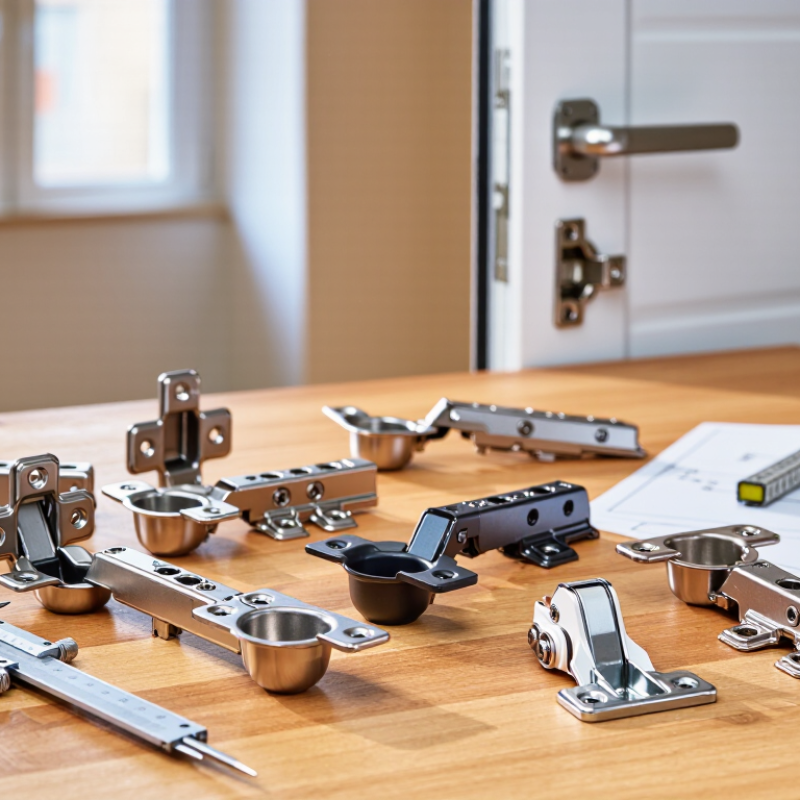
Choosing UPVC door hinges starts with the door profile, not a catalogue photo. Identify whether the sash is flush, rebated, or has a projecting edge. Flag, butt, and rebated hinges suit different geometries, so appearance alone can mislead. Check the fixing pattern against existing screw positions. Measure leaf length, width, stack height, and screw-centre spacing in millimetres. Small details matter. If the door is heavy or glazed, check the hinge load rating and recommended hinge count in the technical guidance. A paper template helps, but it will not show hidden reinforcement inside the profile.
Look closely at the adjustment range. Lateral adjustment shifts the door toward the lock or hinge side; vertical adjustment raises or lowers it. Compression adjustment changes how firmly the sash meets the weather seal. Compare these ranges with the correction needed, rather than counting adjustment directions. Measure gaps at the top, middle, and bottom, and check whether the frame is square. A hinge cannot reliably correct a twisted frame or worn fixing points. Measure twice. A matching screw pattern may still be the wrong fit. Confirm compatibility with the door system’s technical information, and seek qualified help if the profile or load rating is unclear.
Choosing UPVC door hinges in 2026 means checking more than appearance. Start with the door’s weight, height, width, and opening direction. Then compare these details with the hinge manufacturer’s stated limits. A hinge that looks substantial may still be unsuitable. Check for security features such as hinge-side protection pins or concealed fixing points, especially on outward-opening doors. These details matter.
Installation requirements can change the result. Confirm the hinge suits the door profile and frame, including the rebate shape and available fixing space. Check whether adjustment is possible after fitting; small alignment changes can prevent rubbing and uneven gaps. Use the specified screw type and length, and make sure fixings engage with the reinforced section rather than only the outer UPVC skin. Measure twice. It is easy to miss a few millimetres.
Do not treat a listed load limit as a simple per-hinge allowance. Manufacturers may base ratings on a specific hinge count, door size, or installation method. Read the technical sheet, and ask for clarification if those conditions are unclear. Include the glass and hardware when estimating total door weight. If the door is unusually heavy or exposed to strong wind, seek advice from a qualified installer. A specification can still leave gaps; record your measurements and confirm the setup before ordering.
Hi! Simply click below and type your query.
Our experts will reply you very soon.
