How to Choose the Best Mining Dredge for Your Project

Choosing a Mining Dredge is not just a matter of comparing pump sizes or purchase prices. The right machine must match the material, water depth, production target, and conditions at your site. Fine sand behaves differently from compacted clay, while gravel can increase wear on pumps and pipelines. Small details matter. A narrow access channel, changing water levels, or long discharge route can affect daily output. Before comparing models, gather reliable site data, including sediment samples, water depth, expected operating hours, and the distance material must travel. Estimates help, but measured conditions are better.

This guide explains how to assess dredge types, capacity, power requirements, mobility, maintenance needs, and total operating costs. Compare manufacturer specifications carefully, and ask how performance figures were tested. A stated production rate may depend on material and site conditions that do not match yours. Request references from projects with similar sediment and operating environments. Check access to wear parts and local service support, too. A lower initial price can become expensive if repairs cause long delays. No choice is perfect. A model that looks ideal on paper may struggle with a variable feed or limited water depth. Leave room for uncertainty, and confirm key assumptions with qualified suppliers or engineers before committing. The goal is a dependable fit, not the biggest machine or the boldest promise.
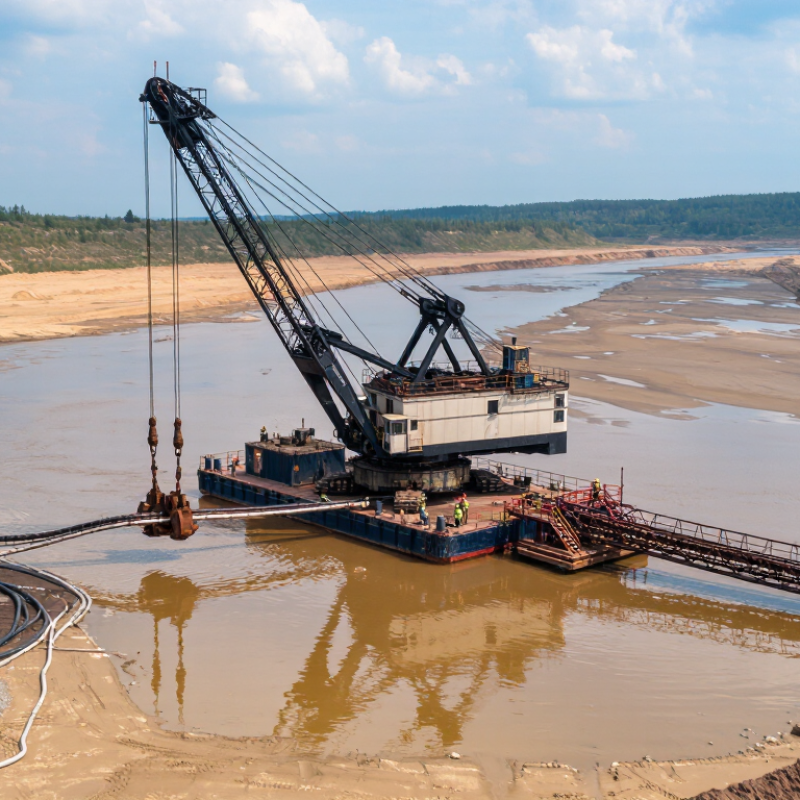
How to Choose the Best Mining Dredge for Your Project

Define the Mining Project’s Requirements and Site Conditions

Before comparing dredges, define the material, target production rate, and required operating depth. Fine sand behaves differently from compact gravel or clay. Estimate how much material must move per hour, not just per day. Include expected downtime for maintenance and changing water levels. Small details matter.

Map the site conditions where the equipment will actually work. Record water depth, channel width, bottom slope, and distance to the discharge area. Note whether access is limited by narrow banks, soft ground, or overhead structures. Measure seasonal changes too. A calm survey in dry weather may not reflect the wet season.

Check the material with samples from several locations. A single test pit can miss buried cobbles, debris, or layers of dense sediment. These differences affect cutter choice, pump capacity, and wear-part life. Consider power availability, fuel delivery, crew skills, and space for pipes or support equipment. Put these needs in writing. Then compare them with realistic operating limits, rather than a supplier’s best-case figures. One uncertainty will remain; mark it clearly and plan a site test before making a final selection.

Compare Dredge Types and Their Operating Principles

Mining dredges move sediment through different mechanisms, so compare how each handles your material and site. A suction dredge uses a pump to draw loose sand, silt, or fine gravel through an intake pipe. It can work efficiently in relatively uniform deposits, but large stones may block the line. Check particle size, water depth, and the distance to the discharge area before choosing one.

A cutter suction dredge adds a rotating cutter head that loosens compacted material before pumping. This can help with dense layers, though the cutter needs room to work and may disturb the bed more than a simple suction intake. Bucket-ladder dredges use a chain of buckets to excavate material mechanically, then lift it for discharge. They can handle firmer deposits, but their moving parts need regular inspection. Trailing suction dredges draw material while the vessel moves slowly across a deposit, making them useful for broad, shallow areas with loose sediment. Not every site fits neatly into one category. A short test run can reveal unexpected clay, oversized gravel, or changing water levels. Estimates can be wrong. Compare production needs with access, maintenance demands, and sediment samples, not just rated capacity.

How to Choose the Best Mining Dredge for Your Project

Compare dredge types by their typical suitability for different site conditions

Indicative qualitative suitability only: 1 = limited, 5 = strong. Actual performance depends on sediment, water depth, required production, transport distance, and site constraints.

Operating principles:Cutter suction dredges loosen material with a rotating cutter and pump the slurry; Trailing Suction Hopper Dredges drag suction pipes while moving and store material in a hopper; bucket ladder dredges excavate with a continuous chain of buckets; clamshell dredges lift material with a grab bucket; plain suction dredges pump loose material through a suction pipe.

Evaluate Production Capacity, Power, and Material Handling

A mining dredge should match the volume your project needs, not just the largest figure on a specification sheet. Estimate daily production from the deposit’s thickness, access conditions, and planned operating hours. Then check whether the rated capacity assumes easy, uniform material. A brochure rarely shows the whole picture. Real deposits vary.

Power affects both output and operating cost. Compare engine or electrical capacity with the pump, cutter, and any auxiliary equipment running together. Ask for expected fuel or energy use under conditions similar to your site. A dredge may move plenty of water but too little solid material. That matters. Leave room for changing ground conditions, but avoid paying for capacity your crew cannot use.

Material handling deserves equal attention. Consider particle size, slurry density, and how far the material must travel through pipelines or onboard equipment. Coarse gravel can wear components quickly; sticky clay may slow flow and clog screens. Check access points for clearing blockages and routine maintenance. It is easy to overrate a clean test run. Site estimates can also be wrong, so compare assumptions with sample data and revise them when field results differ. A practical choice balances steady production, available power, and a handling system suited to the deposit.

Assess Mobility, Safety, and Environmental Constraints

How to Choose the Best Mining Dredge for Your Project

A dredge must fit the site, not just the production target. Check water depth, current, shoreline access, and how far equipment must travel between work areas. A compact unit may navigate narrow channels, while a larger dredge can be difficult to launch or turn. Measure ramp width and bearing strength before delivery. Mobility has costs. Relocation time can quietly reduce productive hours.

Tips: Walk the access route before choosing a dredge. Note soft banks, overhead lines, turning space, and launch conditions. Ask the operator to demonstrate setup and emergency shutdown procedures. A site sketch helps, though it may miss seasonal water changes.

Safety and environmental limits should shape the equipment choice from the start. Look for guarded moving parts, stable walkways, clear controls, and practical flotation equipment. Confirm that operators can communicate during work and reach an emergency stop quickly. Plan for fuel or hydraulic leaks, and monitor discharge water for visible sediment changes. Noise and wildlife disturbance may also matter. Check site-specific permit conditions before mobilizing. Some details are easy to underestimate; even a short access route can become awkward after rain.

Match Equipment Costs and Support to Project Needs

Choosing a mining dredge by purchase price alone can distort the project budget. Compare transport, installation, fuel, wear parts, and crew costs over the expected operating period. A unit with a lower initial price may consume more fuel or need frequent pump repairs. Check the quoted production rate against your actual material, water depth, and discharge distance. Fine sand and sticky clay behave differently. Ask for assumptions behind the estimate, including operating hours and maintenance intervals. Small details matter.

Support can protect both schedule and budget. Confirm how quickly technicians can reach the site, which spare parts are stocked nearby, and whether operators receive practical training. A remote project may need a larger onboard inventory than a site close to a service hub. Review what support costs after commissioning; it may not be included in the initial offer. Request clear response times and written coverage for major components. I would still test those promises against the project’s location and access conditions. Paper plans can look tidy. A muddy access road can change everything. Compare the support plan with your likely downtime costs, not just the service fee.

How to Choose the Best Mining Dredge for Your Project — Match Equipment Costs and Support to Project Needs
Dredge Type Best-Fit Material and Conditions Typical Project Fit Relative Equipment Cost Key Operating Cost Drivers Support and Site Requirements
Plain suction dredge Loose sand, gravel, or other unconsolidated material with limited oversize content. Projects needing straightforward hydraulic excavation and transport through a discharge pipeline. Low to medium; generally simpler than cutter-equipped or mechanical systems. Pump power, pipeline length and diameter, discharge elevation, wear-part replacement, and water management. Requires a suitable pipeline route, water supply, access for routine maintenance, and a plan for managing discharge or process water.
Cutter suction dredge Sand, gravel, and moderately compacted deposits that need to be loosened before pumping. Versatile choice where material conditions vary or the deposit cannot be excavated efficiently by suction alone. Medium to high; cutter equipment adds complexity and maintenance needs. Cutter and pump power, tooth and liner wear, fuel or electricity, pipeline setup, and operating hours. Needs trained operators, spare cutting and pump components, access for repairs, and enough working space for pipeline and anchoring arrangements.
Bucket ladder dredge Dense, abrasive, or variable deposits that are difficult to handle consistently with suction methods. Projects where mechanical excavation and controlled feed to onboard or shore-side processing are priorities. High; the mechanical digging system and associated handling equipment can increase capital and maintenance requirements. Bucket and chain wear, mechanical drive maintenance, fuel or power, crew requirements, and material handling. Benefits from experienced mechanical maintenance staff, lifting and repair capability, critical spare parts, and a reliable method for moving excavated material.
Auger suction dredge Loose to moderately consolidated material where a rotating auger can help feed material into the suction system. Projects that need controlled excavation, including some shallow-water and environmental remediation settings. Medium to high; cost depends on auger size, dredge configuration, and required positioning systems. Auger wear, pump power, positioning, pipeline distance, and maintenance of the feed and suction systems. Requires operators familiar with positioning and feed control, access to auger wear parts, and suitable water-depth and site-access conditions.
Modular or portable dredge Material and excavation method depend on the installed pump or cutting equipment; modularity mainly affects transport and setup. Remote, temporary, or multi-site work where equipment must be shipped in sections and assembled on site. Low to high; transport may be easier, but assembly, lifting, and site setup can add cost. Mobilization, cranes or other lifting equipment, assembly labor, connection of pipelines, and repeated teardown and transport. Check road, port, or air access; lifting capacity; assembly space; local repair resources; and availability of power, fuel, and spare parts.
Tailings or process-water dredge Fine, water-rich sediment or tailings; suitability depends on solids content, particle size, chemistry, and any hazardous constituents. Reclaiming material from ponds or basins and transferring it to processing, dewatering, or containment facilities. Medium to high; monitoring, containment, and material-specific controls can add substantial project cost. Pumping and pipeline energy, abrasion or corrosion, water treatment, containment, sampling, and process compatibility. Requires site-specific environmental review, water-quality controls, compatible wetted materials, monitoring procedures, and a verified destination for the dredged material.
Selection checkpoint Confirm deposit composition, particle size, density, hardness, abrasiveness, and the presence of oversized material. Use a representative site investigation and, where needed, material testing before selecting a dredge configuration. Compare total project cost rather than purchase price alone: mobilization, operation, maintenance, processing, and demobilization. Estimate production using site-specific pump and pipeline conditions; account for downtime, operating hours, fuel or electricity, and wear parts. Verify operator availability, maintenance response time, spare-parts access, permits, water management, and emergency procedures before mobilization.
Planning note: Relative cost ratings are comparative, not quotations. Actual dredge selection, production, and project cost depend on deposit testing, water depth, pipeline layout, required discharge conditions, local labor and logistics, and applicable environmental and safety requirements. Obtain a site-specific proposal and confirm performance assumptions before procurement.

Close

Raise your Query

Hi! Simply click below and type your query.

Our experts will reply you very soon.

WhatsApp Us
