How to Choose the Best Electric Bikes and Scooters?
Choosing the right Electric Bike Scooters is no longer a simple matter of comparing motor wattage and paint colors. Buyers now face different batteries, braking systems, frame designs, and local riding conditions. A lightweight scooter may feel agile on smooth streets, yet its small wheels can struggle over potholes. An electric bike may provide better stability, but its larger frame can be difficult to store in a small apartment.
Industry data supports closer evaluation. The International Energy Agency’s Global EV Outlook 2024 identifies electric two- and three-wheelers as one of the fastest-electrifying road transport categories. Its findings also show especially strong adoption in Asian markets, where charging access and daily commuting patterns support frequent use. In Europe, the Confederation of the European Bicycle Industry reported more than five million e-bikes sold in 2023. These figures suggest durable demand, but they do not prove that every model offers equal value.
This guide examines range, battery quality, motor behavior, safety equipment, comfort, repair support, and total ownership cost. Manufacturer range claims can look impressive. Real riders may see less distance in cold weather, heavy traffic, or steep terrain. That gap matters. We will also consider independent certification, warranty terms, replacement parts, and practical storage. Some popular models still provide limited documentation, which should encourage careful buyers to pause. The best choice is not always the fastest or most expensive. It is the vehicle that fits your route, body, budget, and charging routine with the fewest unpleasant surprises.
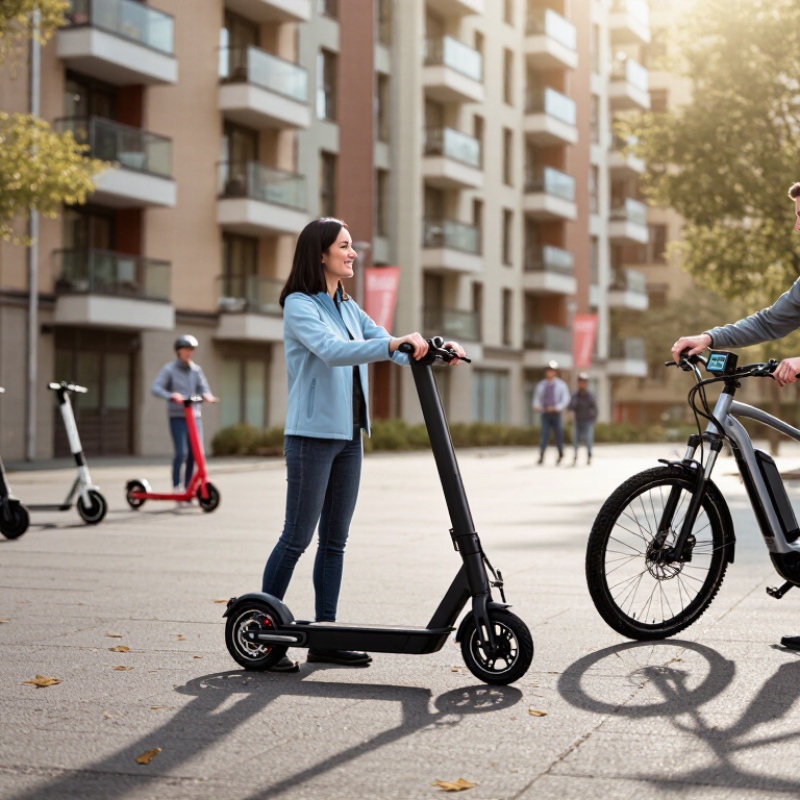
Define Your Daily Travel Needs and Riding Environment
Your best electric bike or scooter should fit your ordinary day, not an imagined adventure. Track your route for one week. Note the distance, hills, road surfaces, traffic, and available parking. A short, smooth commute may suit a compact scooter. Rough paths or longer rides often require larger wheels, stronger suspension, and a stable frame.
Storage matters more than many buyers expect. Measure your doorway, elevator, hallway, and charging area before choosing a model. Measure it. If you must carry the vehicle upstairs, weight can quickly become a daily problem. I once underestimated a narrow apartment entrance, and moving the vehicle indoors became frustrating. That mistake changed how I compare portability.
Your riding environment also affects battery planning. Cold weather, steep slopes, heavy loads, and frequent stops can reduce practical range. Treat advertised distance as a laboratory estimate, not a promise. Leave a comfortable reserve for delays and unexpected detours. Check whether replacement batteries, repair services, and safety equipment are available locally. Test the brakes. Notice steering stability at walking speed. Listen for rattles over uneven ground. You may discover that maximum speed matters less than comfortable control. Check local traffic rules before riding, especially where paths and road access differ. A careful trial ride in your real environment reveals more than a polished specification sheet.
Evaluate Motor Power, Battery Range, and Charging Requirements
How to Choose the Best Electric Bikes and Scooters?
Evaluate Motor Power, Battery Range, and Charging Requirements
Motor power affects how confidently a bike or scooter accelerates and climbs. Compare rated power, not just peak figures, and consider your route, rider weight, and any cargo. A steep hill or a heavy backpack can make a modest motor feel strained. Test it loaded. If possible, ride the vehicle on a slope similar to your daily commute; a short showroom loop may not reveal much.
Battery range estimates depend on speed, hills, temperature, tire pressure, and frequent stops. Treat the advertised distance as a best-case reference, not a promise. Check the battery’s capacity and compare it with independent test results when available. Think about your round trip, then leave a practical reserve for detours or colder days. Charging matters, too: confirm how long a full charge takes, whether the battery is removable, and if you have a safe, convenient place to charge. A quick recharge sounds useful, but it may not fit your schedule.
Tips: Track your actual route distance for a week. Choose enough range for your longest regular trip, with extra room. Plan for slack. Recheck range after a few weeks; real-world use can be less tidy than the estimate.
How to Choose the Best Electric Bikes and Scooters? — Evaluate Motor Power, Battery Range, and Charging Requirements | Vehicle Type | Typical Motor Output | Typical Battery Capacity | Estimated Range per Charge | Typical Charging Time | Charging Requirements | Best Suited For |
| Compact electric scooter | 250–350 W nominal | 250–350 Wh | 15–30 km (9–19 mi) | 4–6 hours | Standard household outlet; use the supplied charger and charge in a dry, well-ventilated area. | Short urban trips, last-mile travel, and riders who need a portable option. |
| Commuter electric scooter | 350–500 W nominal | 400–600 Wh | 25–45 km (16–28 mi) | 5–8 hours | Standard household outlet; check charger voltage and connector compatibility before charging. | Regular city commuting and moderate daily distances. |
| City electric bike | 250–500 W nominal | 400–600 Wh | 40–80 km (25–50 mi) | 4–7 hours | Removable batteries can usually be charged indoors with the approved charger; follow the battery manual. | Daily commuting, errands, and paved urban routes. |
| Utility or cargo electric bike | 250–750 W nominal | 500–800 Wh | 30–70 km (19–44 mi) | 5–9 hours | A larger battery may take longer to recharge; confirm the charger is rated for the battery’s voltage and capacity. | Carrying groceries, equipment, or passengers, especially on frequent short trips. |
| Electric mountain bike | 250–750 W nominal | 500–750 Wh | 25–70 km (16–44 mi) | 4–8 hours | Charge the battery at a moderate temperature and keep it away from moisture, heat, and direct sunlight. | Hilly routes and off-road riding; demanding terrain can reduce range substantially. |
| Folding electric bike | 250–500 W nominal | 250–500 Wh | 25–60 km (16–37 mi) | 4–7 hours | Check whether the battery can be removed for indoor charging and storage. | Mixed transit journeys, compact storage, and shorter commutes. |
| Figures are typical illustrative ranges, not guaranteed specifications. Actual range depends on rider and cargo weight, speed, terrain, temperature, tire pressure, assist level, and battery condition. Motor-output limits and vehicle classifications vary by location; check local regulations and the specific product’s technical documentation. |
Check Safety Features, Comfort, Controls, and Build Quality
Choosing an electric bike or scooter starts with safety, not speed or appearance. A short test ride reveals problems that photos cannot show. Check the brakes on a quiet, dry surface. They should stop smoothly without pulling to one side. Look for bright front and rear lights, reflectors, a working bell, and secure battery placement. The frame should feel stable when you turn slowly. Small details matter. I once ignored a loose folding latch, and the repeated rattle became distracting after ten minutes.
Comfort affects control during everyday trips. Test the handlebar height, deck space, saddle shape, and reach to the controls. Your wrists should remain relaxed, not sharply bent. Controls need clear labels and easy access without removing your hands completely. Try the lowest assistance setting before using stronger power. It helps you judge acceleration and balance. A screen can be useful, but too much information may distract you in traffic. The manual should explain charging, braking, maintenance, and warning signals in plain language.
Build quality appears in the less attractive places. Inspect welds, cable routing, hinges, tires, and fasteners for uneven gaps or movement. Lift the vehicle briefly; excessive flex may suggest poor support, though weight alone does not prove durability. Check the battery casing for damage and confirm that the charger fits firmly. Reliable sellers should provide clear specifications, service information, and verifiable safety documentation. Be skeptical of dramatic range claims. Wind, hills, rider weight, and tire pressure change real performance. My own mistake was trusting a display estimate without testing a full route. A longer trial would have exposed that weakness earlier.
Assess Legal Rules, Maintenance Needs, Price, and Overall Value
Choosing an electric bike or scooter starts with local rules, not color or display. Check where it may be ridden, required lights, speed limits, helmet rules, age limits, and parking restrictions. Rules can differ between roads, cycle paths, and private land. Ask the local transport authority when wording seems unclear. Do not rely on a seller’s short description. That shortcut can become an expensive mistake.
During a test ride, listen for brake rubbing and feel for loose steering. Examine tire condition, cable routing, folding hinges, and battery connections. Ask how often brakes, tires, chains, and suspension parts need inspection. Battery care matters too. Extreme heat, deep discharge, and unsuitable chargers can shorten its useful life. A nearby repair shop may be more valuable than a slightly lower purchase price. I once focused too much on range and ignored replacement-part availability. That was poor judgment.
Compare total ownership cost, not only the ticket price. Include insurance, safety equipment, charging electricity, servicing, storage, and possible battery replacement. A cheaper model may have weaker brakes or limited repair support. A costlier option may offer stronger components and better daily reliability, but only if those features match your route. Consider hills, rain, carrying weight, and commuting distance. Short rides need less range. Heavy use demands stronger maintenance planning. No choice is perfect. Recheck your assumptions after a week of realistic riding.
How to Choose the Best Electric Bikes and Scooters?
Typical U.S. purchase-price ranges (USD) for electric bikes and kick scooters
Broad retail price ranges are shown for comparison; actual prices vary by model and location. Before buying, check local rules for speed limits, permitted riding areas, and equipment requirements. Compare battery and tire upkeep, replacement-part availability, warranty, and expected riding range to judge overall value.

