How to Choose the Best Acid Storage Cabinets?

Choosing the right Acid Storage Cabinets is not just a matter of finding a box that fits the available space. The cabinet must suit the acids being stored, the container sizes, and the way staff access them during routine work. A narrow shelf may hold small reagent bottles but leave larger containers unstable. Details matter.

Start by checking chemical compatibility. Review each product’s safety data sheet and confirm cabinet materials with the cabinet manufacturer; “acid-resistant” does not mean suitable for every acid or mixture. Look closely at the liner, seams, shelves, and spill tray. These are the surfaces most likely to meet leaks or drips. Fit is not enough.

Capacity deserves equal attention. Measure the tallest bottle, allow room for clear labels, and check that shelves can support the intended load. Consider door clearance, aisle space, and whether containers can be moved without awkward lifting. A cabinet that is technically large enough may still be difficult to use safely. That is easy to overlook.

Ventilation, warning labels, and separation from incompatible materials also need careful review. Requirements can vary with the chemicals, facility, and local workplace rules, so avoid relying on a generic product description alone. Ask for written compatibility guidance when details are unclear. A small uncertainty is worth resolving before installation.

The best choice is the one that matches actual storage conditions, not just a checklist or a low price. Compare specifications, inspect maintenance needs, and plan how spills will be handled. Even a well-chosen cabinet needs regular checks. It is not a substitute for sound handling practices.
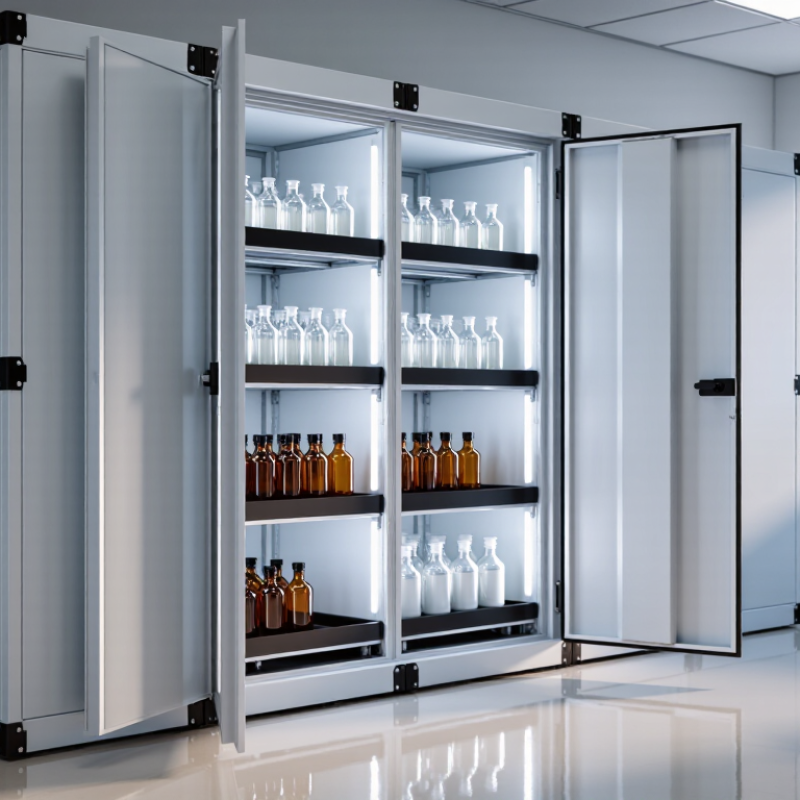
How to Choose the Best Acid Storage Cabinets?

Classify Acid Hazards Using SDS Sections 2, 7, and 10 and GHS pH ≤2

How to Choose the Best Acid Storage Cabinets?

A reliable cabinet choice starts with the Safety Data Sheet, not the bottle label alone. In Section 2, check the hazard classification, pictograms, and precautionary statements. Aqueous products with pH ≤2 deserve careful review: this is a useful GHS screening flag for possible corrosivity, not a complete classification by itself. Concentration and other test evidence matter. Small clues matter.

Section 7 describes safe handling, storage conditions, and incompatible materials. Section 10 adds details on stability, hazardous reactions, and substances to avoid. Compare these sections across every acid you plan to store. If one SDS warns against contact with metals, for example, confirm that the cabinet’s interior, shelves, and fittings suit that chemical. Cabinet materials vary. Do not assume every “acid cabinet” handles every acid equally well.

Choose a corrosion-resistant cabinet whose construction is compatible with the specific products and their containers. Keep incompatible substances apart when the SDS calls for separation; oxidizing acids, for instance, may need separation from organic materials. Use secondary containment that can withstand the stored liquid, and follow the manufacturer’s capacity and ventilation guidance. I would recheck the SDS after a product or formulation changes. It is easy to overlook a small revision. A qualified safety professional can help resolve unclear compatibility or storage requirements.

Match Cabinet Materials to Each Acid’s SDS Compatibility Information

An acid cabinet is only as dependable as the material touching the chemical. Start with each product’s Safety Data Sheet, not a generic “acid compatible” label. Check storage guidance in Section 7 and stability and reactivity details in Section 10. Then compare the cabinet’s liner, shelves, seams, and hardware with the acid’s name, concentration, and temperature range. Small details matter.

Different acids can behave very differently. Hydrochloric acid vapors can corrode exposed metal, while nitric acid is an oxidizer and needs its own compatibility check. Hydrofluoric acid is especially demanding: glass is not a safe universal choice, and every surface that may contact it needs verification. Polyethylene or other polymer linings may suit some products, but no plastic works for every concentration or exposure period. Read the exact SDS. Check the fine print.

A practical review compares SDS information with chemical-resistance data for the cabinet, including its gaskets and spill tray—not just the outer shell. Consider where splashes could land and whether a leak could reach a seam. If the information is unclear, request written guidance from the supplier or a qualified safety professional. Avoid storing incompatible acids together. A label alone can be misleading, and even a sound material choice can fail when conditions change. Recheck compatibility when products, concentrations, or storage conditions change.

Size Cabinet Capacity to Maximum Inventory and Applicable Local Codes

Size an acid storage cabinet for the largest quantity you may keep on site, not just today’s usual stock. Count every container, including partially used bottles and incoming deliveries that may overlap with existing inventory. A cabinet’s stated capacity can refer to liquid volume, container count, or shelf load, so check the manufacturer’s specifications. Measure twice. Leave enough room to place and remove containers without forcing them together.

Then compare your planned inventory and cabinet location with applicable local fire, building, and workplace requirements. Rules can vary by location and facility type. Ask the local authority having jurisdiction or a qualified safety professional which limits apply. Review each chemical’s safety data sheet for storage compatibility, and keep incompatible materials separated as required. A spreadsheet can miss a temporary delivery or an oddly sized bottle; that is easy to overlook.

Check shelf dimensions, door clearance, and the cabinet’s permitted load before ordering. For example, several tall bottles may fit by volume but block a shelf or prevent the door from closing properly. Avoid treating the cabinet’s maximum capacity as a target. Keep a clear inventory record, and reassess it whenever purchasing patterns or local requirements change.

Acid Cabinet Sizing: Match Capacity to Peak Inventory

Illustrative planning example: an 18-gallon peak inventory compared with a 22-gallon nominal-capacity cabinet. Confirm the cabinet’s rated capacity, chemical compatibility, and applicable local fire and building codes before selecting a cabinet; this example is not a code limit.

Segregate Incompatible Chemicals, Including Acids, Bases, and Oxidizers

How to Choose the Best Acid Storage Cabinets?

Segregate Incompatible Chemicals, Including Acids, Bases, and Oxidizers

Choosing an acid cabinet starts with chemical compatibility, not capacity. Keep acids separate from bases; accidental contact can generate heat and cause splashing. Store oxidizing acids, such as nitric acid, apart from organic acids and combustible materials. Oxidizers also require separation from reducers. The U.S. Chemical Safety Board’s 2002 report, Improving Reactive Hazard Management, reviewed 167 reactive-chemical incidents from 1980 to 2001, reporting 108 fatalities and about 1,500 injuries. A cabinet cannot fix a poor segregation plan.

Select corrosion-resistant construction and compatible secondary-containment trays. Use separate, clearly identified cabinets or approved compartments for incompatible groups; do not assume separate shelves provide enough protection. Keep containers closed, labels visible, and acids below eye level where practical. Check the safety data sheet and your site’s compatibility chart before assigning a storage location. Small details matter. A leaking bottle can turn a tidy shelf into a reaction hazard.

Tips: Mark each cabinet by chemical class, not just “corrosives.” Keep oxidizers away from organic materials, and check trays for cracks or residue during routine inspections. If a chemical’s compatibility is unclear, pause and verify it. Guessing is not a storage method.

Check Labels and Safety Procedures Against OSHA 29 CFR 1910.1200

Choose an acid storage cabinet by checking the chemical’s current Safety Data Sheet (SDS), not by relying on the cabinet’s color or a generic “corrosive” label. Under OSHA 29 CFR 1910.1200, shipped-container labels identify the product, signal word, hazards, pictograms, precautions, and supplier. Workplace labels must remain legible, and workers need access to SDSs and hazard training. Match cabinet materials and secondary containment to the acids stored; keep incompatible chemicals separated as specified by their SDSs. A cabinet alone does not make an unsafe combination safe.

The Bureau of Labor Statistics recorded 786 fatal work injuries involving harmful substances or environments in 2023. This broad category is not acid-specific, but it underscores why clear hazard communication matters. Check labels during receiving and routine inspections. If a bottle’s identity is unclear, pause and follow your site’s response procedure rather than guessing. A small handwritten note can fade or detach; that detail is easy to overlook.

Tips: Keep labels facing outward, dry, and readable. Post the site’s spill and exposure procedures nearby, and verify workers know where the SDS is stored. Review cabinet contents after process changes. One weak spot: inspections can become tick-box exercises, so ask staff to explain the actual hazards and response steps.

How to Choose the Best Acid Storage Cabinets? — Check Labels and Safety Procedures Against OSHA 29 CFR 1910.1200
Selection Check What to Verify OSHA 29 CFR 1910.1200 Connection Practical Cabinet Guidance
Identify each acid and its hazards Check the product label and Safety Data Sheet (SDS) for the chemical’s identity, hazards, storage guidance, and incompatible materials. Section 1910.1200(f) addresses shipped-container labels; section 1910.1200(g) addresses SDSs. Choose cabinet materials and fittings compatible with the specific chemicals and containers. Do not assume every acid has the same storage requirements.
Keep workplace containers identifiable For hazardous chemicals transferred into workplace containers, ensure the container is labeled, tagged, or marked with the required identity and hazard information, unless a regulatory exception applies. Section 1910.1200(f)(6) covers workplace labeling. The standard allows certain portable-container exceptions when specified conditions are met. Keep labels legible and facing outward where practical. A cabinet label does not replace required labels on individual containers.
Make SDS information accessible Confirm employees can readily access the current SDSs during each work shift, including the sections describing hazards, handling, storage, and incompatibilities. Section 1910.1200(g)(8) requires SDSs to be readily accessible to employees during their work shift. Use SDS storage guidance to determine whether a cabinet is suitable; keep emergency and spill-response information accessible to employees.
Separate incompatible chemicals Review SDS storage and reactivity information for each chemical. Determine whether acids must be separated from bases, oxidizers, reactive metals, or other incompatible materials. Hazard communication requires communicating chemical hazards and safe handling information; the SDS provides chemical-specific information. Section 1910.1200 does not prescribe a universal acid-segregation layout. Use separate, clearly identified storage areas or cabinets when indicated by the SDS or a site risk assessment. Avoid relying on a single “acid” category for all chemicals.
Check cabinet and container compatibility Verify compatibility of the cabinet lining, shelves, seams, hardware, and any secondary containment with the chemicals and their concentrations. Section 1910.1200 communicates hazards but does not set a general construction specification for acid-storage cabinets. Follow the cabinet manufacturer’s material-compatibility information and the chemical SDS. Inspect for corrosion, leaks, and damaged coatings.
Plan for leaks and spills Assess container size, stored quantity, spill potential, and the site’s spill-response procedures. Section 1910.1200(h) requires information and training on chemical hazards and protective measures. Other requirements may apply depending on the workplace and chemicals. Consider compatible secondary containment where appropriate. Keep containers closed when not in use and avoid overloading shelves.
Decide whether ventilation is appropriate Check SDS instructions, chemical properties, and applicable workplace or fire-code requirements before selecting a vented cabinet. Section 1910.1200 does not generally require acid cabinets to be vented. Do not vent a cabinet by default. Venting can affect cabinet performance or other code requirements; obtain qualified review when ventilation is being considered.
Confirm the written program and employee training Ensure the workplace hazard communication program explains labeling, SDS access, chemical hazards, and protective measures, and that affected employees receive required training. Section 1910.1200(e) addresses the written hazard communication program; section 1910.1200(h) addresses employee information and training. Train employees on the site’s cabinet locations, segregation rules, label system, and procedures for leaks or damaged containers.
Review other applicable requirements Determine whether the stored chemicals, quantities, facility, or activities trigger requirements beyond the Hazard Communication Standard. 29 CFR 1910.1200 addresses hazard communication; it is not a complete cabinet-design or chemical-storage code. Check applicable OSHA standards, fire and building codes, and local requirements. For example, flammable-liquid storage may be subject to 29 CFR 1910.106.

Important: Select a cabinet based on the actual chemicals, their concentrations and quantities, SDS instructions, and applicable site requirements. OSHA 29 CFR 1910.1200 governs hazard communication; it does not itself prescribe a single cabinet type or a universal acid-storage cabinet specification.


Close

Raise your Query

Hi! Simply click below and type your query.

Our experts will reply you very soon.

WhatsApp Us
