- Ambawadi, Ahmedabad, Gujarat
- View Mobile Number

Why Choose Steel Square Pipe for Global Projects?
Why Choose Steel Square Pipe for Global Projects?
Steel Square Pipe remains a practical choice for infrastructure, industrial buildings, transport facilities, and modular construction worldwide. Its four equal sides provide predictable strength, clean connections, and efficient space usage. Engineers can calculate loads clearly, while fabricators can cut, drill, weld, and assemble sections with familiar equipment. A 100 mm square section can support framing needs without wasting valuable installation space.
No material is perfect.
Steel industry leader Lakshmi Mittal has described steel as “the backbone of modern society.” That view remains relevant when projects demand dependable performance across different climates and supply chains. Steel Square Pipe can be hot-dip galvanized, painted, or specified with weather-resistant protection. These choices help defend against coastal salt, seasonal rain, and industrial moisture. However, coating alone cannot fix poor drainage or careless site handling.
Global projects also need documented quality. Buyers should check grade, wall thickness, dimensional tolerance, mill certificates, and applicable standards before shipment. A small deviation may cause alignment problems at a crowded connection. Correct packaging matters too. Bundles need secure strapping, edge protection, and moisture control during long transport. These details are easy to overlook.
From project experience, the strongest design is not always the heaviest one. It balances structural demand, local fabrication skills, transport limits, and lifecycle maintenance. That balance requires qualified engineers and verified suppliers. Some specifications still assume identical conditions everywhere, which is unrealistic. Soil, labor, climate, and regulations differ. A careful review may reveal that another section is better for one location, but Steel Square Pipe often offers the clearest starting point.
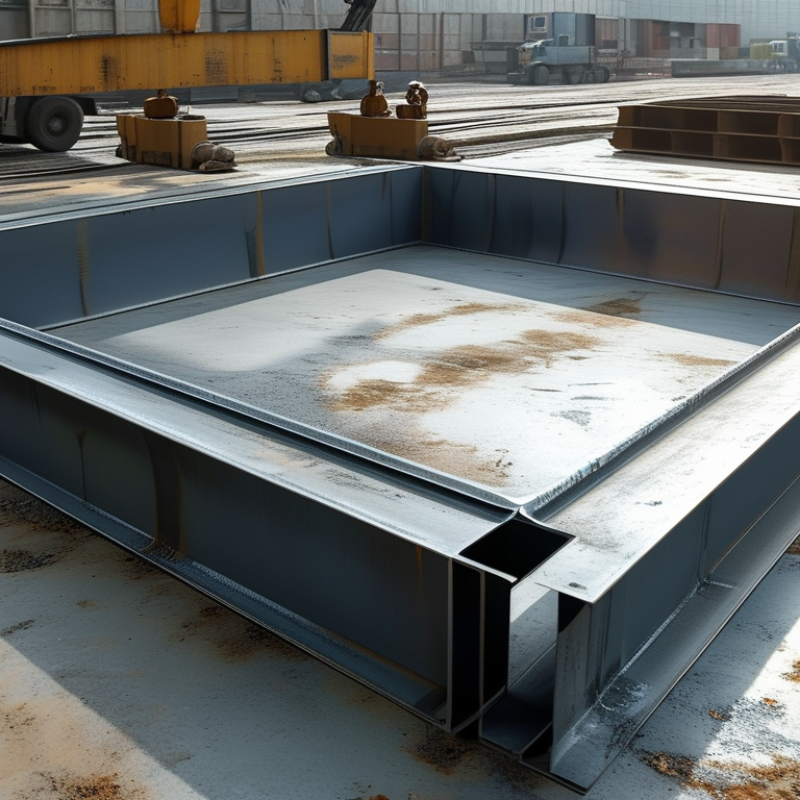
Steel Square Pipe Defined: ASTM A500 Grade B, 46 ksi Yield Strength
Why Choose Steel Square Pipe for Global Projects?
Steel square pipe, more precisely structural square tubing, offers predictable strength and efficient geometry. ASTM A500 Grade B specifies a minimum yield strength of 46 ksi, or about 317 MPa. That value helps engineers compare capacity across international project teams. It also supports practical designs for frames, supports, platforms, and exposed structural assemblies.
The square profile simplifies alignment during fabrication. Flat faces provide stable contact for plates, brackets, and connection details. Corners improve handling, but they still require careful inspection. A mill certificate should confirm the grade, chemistry, tensile properties, and heat number. Dimensions and wall thickness must also match the approved drawings. Small deviations can affect fit-up.
Global projects need more than a strong number. Designers should check ASTM A500 requirements against local building codes, seismic rules, and welding procedures. Grade B is not automatically corrosion-resistant. Outdoor members may need galvanizing, paint, or another verified protection system. Freight handling deserves attention too. Open ends can collect water and debris during storage. I have seen specifications look complete while drainage details were missing. That is an uncomfortable gap, but easy to correct early. Suppliers should provide traceable inspection records and clear dimensional tolerances. When drawings, certificates, and site checks agree, square tubing becomes easier to fabricate and easier to trust.
Why Choose Steel Square Pipe for Global Projects? - Steel Square Pipe Defined: ASTM A500 Grade B, 46 ksi Yield Strength
| Data Dimension | Specification or Example | Project Relevance |
|---|---|---|
| Product form | Cold-formed welded or seamless carbon structural tubing | Suitable for structural frames, supports, columns, racks, machinery bases, and general fabrication. |
| Applicable standard | ASTM A500/A500M, Grade B | Provides a recognized North American material specification for structural tubing; project drawings and local regulations should also be checked. |
| Minimum yield strength | 46 ksi minimum (approximately 317 MPa) | Supports strength-based structural design and helps engineers compare material capacity across international projects. |
| Minimum tensile strength | 58 ksi minimum (approximately 400 MPa) | Indicates the minimum ultimate tensile capacity specified for Grade B structural tubing. |
| Minimum elongation | 23% in 2 inches (51 mm), where applicable to the applicable test specimen | Provides ductility for fabrication and helps the material accommodate deformation before fracture. |
| Common cross-section benefit | Equal-width sides with a closed hollow section | Offers efficient resistance in two principal directions and presents four flat faces for easier connections, cladding, and fabrication. |
| Example nominal size | 50 × 50 × 3 mm | Illustrative size for light frames, bracing, guards, and fabricated supports; final selection requires a structural check. |
| Example theoretical mass | Approximately 4.43 kg/m for 50 × 50 × 3 mm | Useful for preliminary shipping, handling, and budget calculations. Actual mass can vary with manufacturing tolerances. |
| Example nominal size | 100 × 100 × 5 mm | Illustrative size for medium-duty posts, frames, platforms, and equipment supports. |
| Example theoretical mass | Approximately 14.92 kg/m for 100 × 100 × 5 mm | Supports preliminary logistics and material take-off calculations; verify delivered mass against purchase documentation. |
| Example nominal size | 150 × 150 × 6 mm | Illustrative size for heavier columns, frames, machinery supports, and load-bearing assemblies. |
| Example theoretical mass | Approximately 27.13 kg/m for 150 × 150 × 6 mm | Helps estimate lifting requirements, transport loads, and preliminary project quantities. |
| Fabrication considerations | Cutting, drilling, welding, and coating may be performed when compatible with the approved design and welding procedure. | The closed section can reduce exposed surface area compared with some open profiles, while flat faces simplify detailing. |
| Quality documentation | Request heat traceability, dimensional inspection results, mechanical test results, and a material test certificate where required. | Improves material verification and supports inspection requirements for international procurement and construction projects. |
| Important design note | 46 ksi is a minimum specified yield strength, not a complete design resistance value. | Engineers must check local codes, wall slenderness, buckling, connections, corrosion allowance, load combinations, and service conditions. |
Note: The example masses are theoretical calculations based on a steel density of 7,850 kg/m³ and nominal dimensions. They are not substitute values for certified product dimensions or project-specific structural calculations.
