How to Choose the Right Steering Cylinder for Your Vehicle?
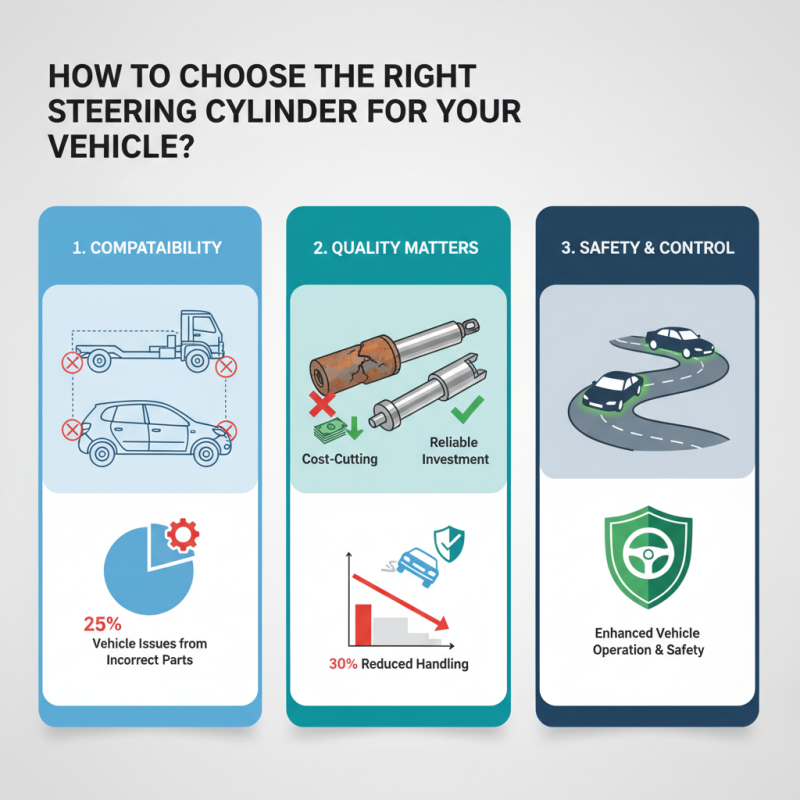
Choosing the right Steering Cylinder is crucial for vehicle performance. A well-functioning steering cylinder ensures safety and control. According to industry reports, improper selection can lead to reduced handling efficiency by up to 30%.
When picking a steering cylinder, consider compatibility. Different vehicles have specific requirements. A mismatch can affect not only performance but also durability. Studies show that 25% of vehicle issues stem from incorrect parts use. This highlights the importance of making informed decisions.
Many overlook the significance of quality. Cost-cutting may lead to subpar components, risking breakdowns. An investment in a reputable steering cylinder pays off in the long run. Reflecting on these points can enhance vehicle operation and safety.
Factors to Consider When Selecting a Steering Cylinder
Choosing the right steering cylinder for your vehicle involves several crucial factors. The type of vehicle matters significantly. For instance, commercial vehicles often require robust cylinders. In contrast, lighter vehicles need more agile steering systems. According to industry reports, the average lifespan of steering cylinders can vary widely based on the material quality and usage conditions.
Material selection is essential. A cylinder made from high-strength steel may excel in durability but adds weight. Aluminum, while lighter, may not withstand heavy loads as effectively. Studies indicate that vehicles with aluminum steering systems report a 20% higher failure rate in harsh environments. It's vital to balance weight and strength.
Sizing is another critical factor. An oversized cylinder can lead to handling issues, while an undersized cylinder may fail under pressure. Many mechanics suggest using a cylinder that aligns with manufacturer specifications. However, customizing based on driving conditions might be necessary. Reflecting on these choices ensures a tailored fit for your vehicle’s performance needs.
Steering Cylinder Selection Factors
Types of Steering Cylinders and Their Applications
When selecting a steering cylinder for your vehicle, understanding the types available is essential. Hydraulic cylinders, for instance, are common in passenger cars. They provide smooth operation and better steering control. These cylinders use fluid pressure to assist in steering, making them suitable for vehicles requiring quick response times. According to industry reports, over 60% of modern vehicles utilize hydraulic steering systems.
Electric steering cylinders are gaining popularity in electric and hybrid vehicles. They offer improved fuel efficiency and reduce the vehicle's weight. These systems, like the EPS (Electric Power Steering), can adjust assistance based on speed and driving conditions. They are more adaptable, yet often criticized for feeling less connected to the road.
Pneumatic steering cylinders are another option. They use air pressure and are typically found in heavy-duty vehicles. While they are powerful, their application is limited due to maintenance needs. Each cylinder type has its unique benefits and drawbacks. Choosing the right one depends on your vehicle’s requirements, driving style, and maintenance willingness. Missing the right match can lead to poor performance.
Measuring Compatibility with Your Vehicle's Specifications
Choosing the right steering cylinder requires careful consideration of your vehicle’s specifications. Proper measurement is essential for compatibility. First, check the mounting dimensions. The distance between mounting holes can vary significantly. This affects how well the cylinder fits in your vehicle.
When measuring, pay attention to the cylinder stroke length. An improper stroke could lead to steering inefficiencies. According to industry reports, many steering system failures stem from incompatible components. Ensure the piston diameter matches your vehicle's requirements. A mismatched diameter could impact responsiveness.
Tips: Use a measuring tape for precision. Always double-check your measurements. Gather data from your vehicle’s manual. Don't rush the process; small errors can lead to costly repairs.
Inspect the pressure rating of the cylinder, too. High-pressure ratings may be necessary for heavier vehicles. Occasionally, even minor inconsistencies in specifications can lead to performance issues. Reflect on your vehicle's needs and ensure all components align correctly for optimal functioning.
How to Choose the Right Steering Cylinder for Your Vehicle? - Measuring Compatibility with Your Vehicle's Specifications
| Vehicle Make | Model | Year | Cylinder Type | Dimensions (mm) | Weight (kg) | Compatibility Notes |
| Toyota | Camry | 2018 | Double Acting | 200 x 50 | 3.5 | OEM compatible, recommends using specific fluid type |
| Ford | F-150 | 2020 | Single Acting | 180 x 45 | 5.0 | Check for new steering fluid specs |
| Honda | Civic | 2019 | Double Acting | 210 x 55 | 4.0 | Ensure compatibility with EPS systems |
| Chevrolet | Silverado | 2021 | Single Acting | 230 x 60 | 6.0 | Verify load ratings against vehicle specs |
| Nissan | Altima | 2017 | Double Acting | 205 x 52 | 3.2 | Consult manual for installation guide |
Evaluating Performance Metrics for Steering Cylinders
When selecting a steering cylinder, performance metrics are crucial. The effectiveness of a steering cylinder can be evaluated through various parameters, such as response time, load capacity, and durability. According to industry reports, a well-designed steering cylinder should exhibit a response time of less than 0.5 seconds for optimal maneuverability.
Additionally, the load capacity is vital. Many vehicles require steering cylinders that can handle dynamic loads of up to 5000 Newtons. Choosing a cylinder with inadequate load capacity can result in steering failure. This can compromise vehicle safety. It's worth noting that some suppliers provide performance data, but not all meet rigorous testing standards.
Durability is another essential metric. Steering cylinders should withstand harsh conditions and temperature variations. A study indicates that a cylinder with an average lifespan of 100,000 cycles may still fail under extreme conditions. Therefore, assessing environmental ratings is essential. A lack of attention to these details can lead to significant safety risks.
Maintenance Tips for Optimal Steering Cylinder Longevity
Proper maintenance of your steering cylinder is crucial for vehicle safety. Regular checks can prevent costly repairs. Inspect the cylinder for leaks or wear. Keeping an eye on these issues aids in longevity.
Tips: Clean the area around the cylinder often. This prevents dirt from entering and causing damage. Use a gentle cloth and avoid harsh chemicals. When steering feels stiff, check the fluid levels. Contaminated fluid can degrade performance quickly.
Another detail to consider is listening for unusual sounds. If you hear grinding or whining, inspect the cylinder immediately. Ignoring these signs can lead to bigger problems. Regularly test the responsiveness of your steering. It should feel smooth, not jerky.