How to Choose the Right Hydraulic Gear Motor for Your Needs?
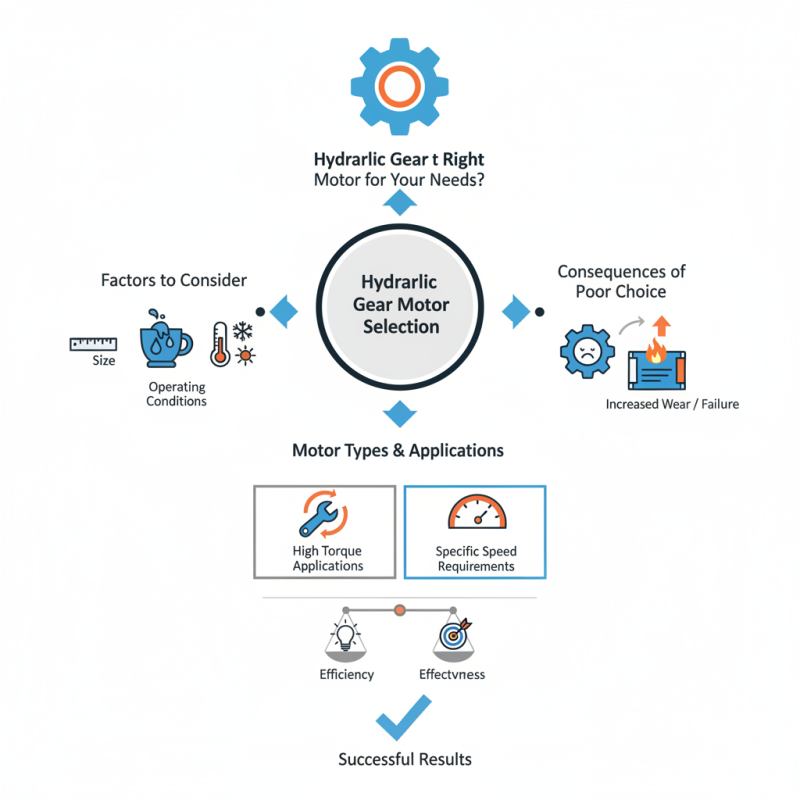
Choosing the right Hydraulic Gear Motor can be challenging. With various options available, selecting the best one requires careful consideration. Factors such as size, capacity, and operating conditions play a critical role in the decision-making process.
Hydraulic Gear Motors are known for their efficiency and reliability. However, they vary in design and application. For instance, some motors excel in high torque applications, while others are best suited for specific speeds. Understanding your project's demands is essential.
Ignoring these details could lead to suboptimal performance. A poorly chosen Hydraulic Gear Motor may result in increased wear or even failure. It’s important to reflect on these aspects carefully to ensure you make the right choice. Balancing efficiency and effectiveness in your selection process is key to achieving successful results.
Understanding the Basics of Hydraulic Gear Motors
Hydraulic gear motors play a crucial role in various industrial applications. These motors convert hydraulic energy into mechanical energy, making them essential in machinery. Understanding their basics can help in selecting the right motor for your needs.
Hydraulic gear motors typically have two main components: gears and housing. The gear sets create hydraulic pressure, which leads to rotation. The efficiency of a hydraulic gear motor can range between 80% to over 90% based on design and application. It's essential to assess the system's requirements accurately. An inadequate choice can lead to performance issues, inefficiency, or increased operational costs.
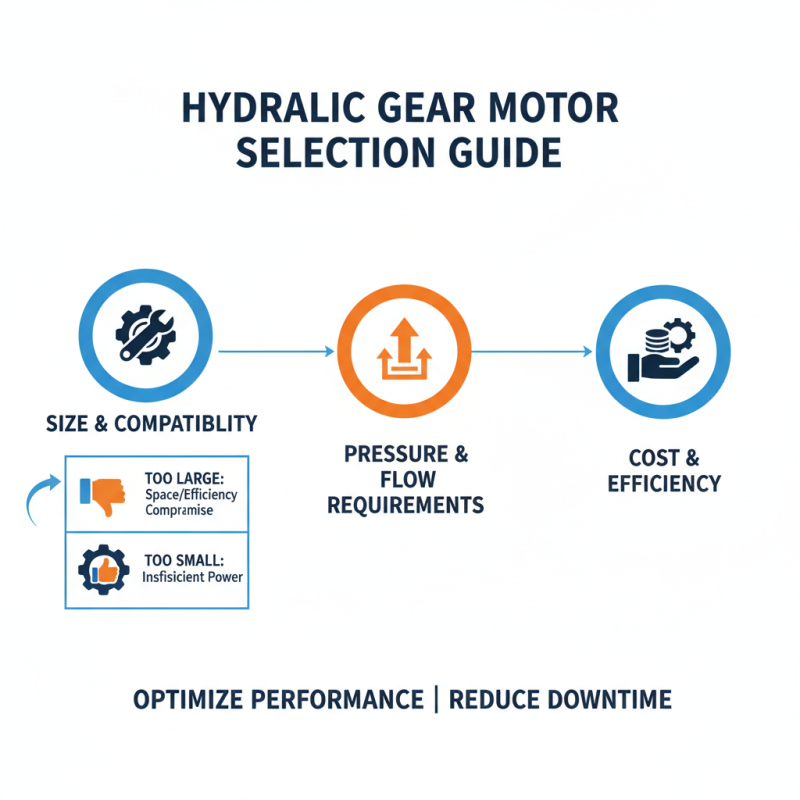
Tips: Look for a motor that matches your application's torque and speed requirements. Calculate the required hydraulic fluid flow and pressure. This can ensure optimal performance and longevity. Remember that higher efficiency does not always mean better performance for every specific task.
When choosing a hydraulic gear motor, also consider the environmental conditions. Factors like temperature, exposure to contaminants, and vibration can affect performance. An unsuitable motor may fail prematurely, leading to higher maintenance costs. Keep these aspects in mind to make informed decisions.
Identifying Your Application Requirements for Hydraulic Gear Motors
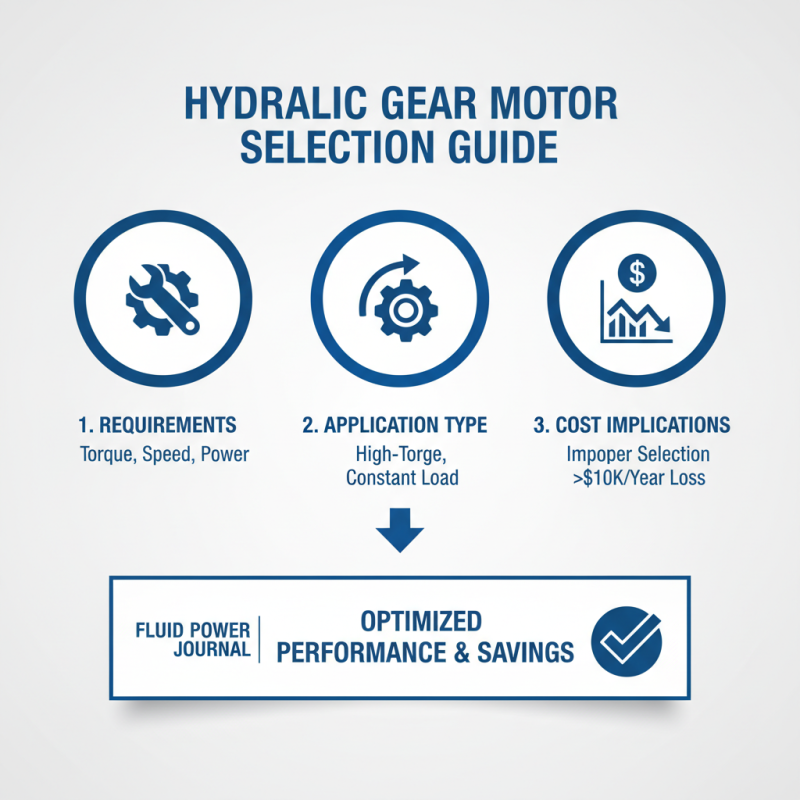
Identifying your application requirements is crucial when selecting a hydraulic gear motor. Knowing the torque, speed, and power needs of your machinery will help narrow down options. For instance, high torque applications often require motors capable of consistent performance under heavy loads. A report from the Fluid Power Journal notes that improper motor selection can lead to maintenance costs exceeding $10,000 annually.
Temperature ranges also play a significant role. Hydraulic gear motors operate optimally within specific temperature limits. If the motor overheats or operates below freeze thresholds, it may fail prematurely. According to the American Society of Mechanical Engineers, nearly 30% of hydraulic equipment failure stems from thermal stress.
Customizing your choices based on specific needs is key. Consider factors like shaft size and mounting requirements. While some motors come with standard features, customization may be necessary for unique applications. This is often overlooked, leading to inefficiencies. Manufacturers’ data reveals that around 20% of projects initially suffer from mismatched motor specifications, needing costly re-engineering. Careful analysis will save time and resources in the long run.
Evaluating Specifications and Performance Factors in Hydraulic Gear Motors
Choosing the right hydraulic gear motor requires careful evaluation of specifications and performance factors. Start with understanding the torque and speed requirements of your application. A high torque rating allows for better performance under heavy loads. According to industry reports, a motor's efficiency can significantly vary; some range between 85% and 95%. This difference affects operational costs and machine reliability.
Tip: Always review the motor's displacement. A motor with higher displacement provides more fluid output, increasing speed under load.
Another crucial factor is pressure ratings. Higher pressure typically translates into higher performance. Consider your system's maximum operating pressure. Exceeding this can lead to motor failure. Research indicates that many motors perform poorly when consistently pushed beyond their pressure limits.
Tip: Check the manufacturer's performance curves. These graphs help visualize motor behavior across different loads and speeds.
Lastly, materials and construction matter. Look for motors built with durable components. This can prevent costly downtimes. While many may overlook this, it’s vital. Assess how these characteristics match your needs. Don't leave your decision to chance. Each detail can impact your equipment's success.
How to Choose the Right Hydraulic Gear Motor for Your Needs?
| Specification |
Value |
| Displacement |
25 cm³/rev |
| Max Pressure |
200 bar |
| Max RPM |
3000 rpm |
| Output Torque |
12 Nm |
| Efficiency |
90% |
| Weight |
5 kg |
| Temperature Range |
-20 to 80 °C |
Comparing Different Types of Hydraulic Gear Motors Available
When selecting the right hydraulic gear motor, understanding different types is crucial. Gear motors mainly fall into two categories: inline and bevel types. Inline motors have a simple design, offering straightforward operation. They are often easier to maintain, which makes them popular in many applications.
Bevel gear motors, on the other hand, provide a compact solution for tight spaces. They can transfer torque at right angles. This functionality is beneficial for specific installations. However, they tend to be more complex and may require careful adjustment during setup.
It’s vital to consider operational parameters. Think about factors like pressure and speed ratings. Not every motor fits all applications. A mismatch can lead to inefficiencies, causing unexpected failures. Careful assessment can save time and resources. Reflecting on your specific needs can help avoid costly mistakes. Choose wisely.