How to Choose a Profile Wrapping Machine for Your Business?
Choosing a Profile Wrapping Machine is a practical decision with long-term effects on product quality, labor, and production flow. The right model should match the profiles you actually make—not just the largest output figure on a sales sheet. Consider profile dimensions, material, daily volume, film type, and the finish customers expect. A narrow trim piece and a wide, irregular board place different demands on rollers, pressure settings, and film control.
A useful rule, offered here as an illustrative expert quotation rather than a verified statement, comes from profile-wrapping specialist Daniel Mercer: “Choose for your real production mix, not your best-case sample.” It is a simple point. Yet it is easy to overlook when a clean demonstration runs one profile at a steady speed. Ask to test your own materials, adhesives, and decorative films. Watch the film edges around corners. Check whether operators can adjust settings without stopping the line for long.
The machine also needs to fit your workshop. Measure floor space, access for film-roll changes, and the route for moving finished profiles. Discuss training, spare parts, and service response before comparing final prices. A low purchase cost can look attractive; downtime may change the calculation. No machine removes every production problem. Some details only emerge after installation, and that deserves honest planning. With clear requirements and a realistic trial, you can shortlist equipment that suits your current work while leaving room for measured growth.
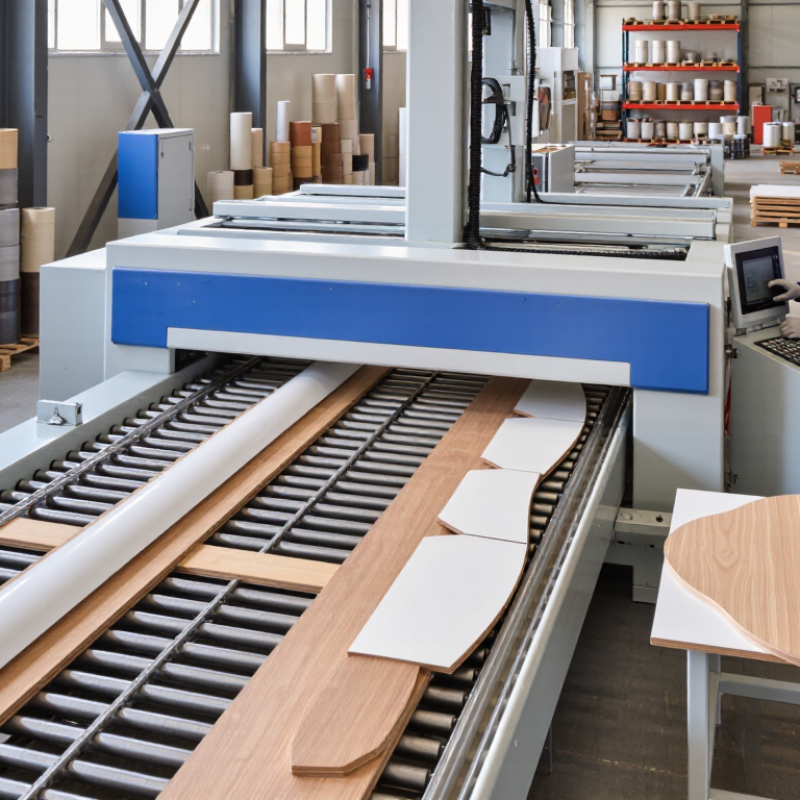
Define Profile Dimensions, SKU Mix, and Required Output in m/min
Before comparing machines, document the profiles you actually run. Record each profile’s width, height, length, and cross-section, including the smallest and largest pieces. Note surface materials and any delicate edges that could mark during feeding. These details affect guide setup, film width, and how steadily the profile travels through the machine. Small differences matter. A mixed SKU list is more useful than one “typical” sample. Group similar profiles together and estimate how often operators will change between them. Frequent changeovers can reduce usable production time, even when each run is short.
Specify required output in metres per minute, but base it on demand rather than a machine’s advertised maximum. Estimate daily volume, available run hours, and the time needed for setup and material changes. Then compare the expected rate with upstream feeding and downstream packing capacity. A line cannot sustain a faster pace than its slowest connected step. Leave room for stoppages and rejected pieces; otherwise, the target may look precise but prove unrealistic. There is a catch. Production records are often incomplete, so treat early estimates as provisional. Ask suppliers to run representative profiles and record stable speed, changeover time, and finish quality before final selection.
Match Film Thickness (μm) and Feed Speed to the Machine’s Rated Range
Before comparing profile wrapping machines, list the thinnest and thickest films your jobs require. Then check that both sit within the machine’s rated thickness range. A machine may handle a film on paper but struggle with it on a real profile. Very thin film can wrinkle or tear under excess tension. Thicker film may need more stable feeding and suitable pressure. Small details matter. Do not select a machine only because your most common film fits its range. Leave room for occasional materials and changing orders.
Match feed speed to the film and profile, not just your target output. Higher speed can increase production, but it may also expose problems with film tracking, adhesive contact, or surface finish. Check whether the rated speed applies to your profile size and film type. Ask for a trial using your actual materials. Watch the film at startup, during steady running, and around corners or edges. Record the speed, thickness, and visible defects. One easy-to-miss point: a brief successful test may not reflect a full shift. I would question any specification that offers a single maximum speed without explaining the conditions. A slower, consistent setting can be more useful than a fast line that needs frequent adjustment.
Check Adhesive and Heating Requirements Against Material Data Sheets
How to Choose a Profile Wrapping Machine for Your Business?
Check Adhesive and Heating Requirements Against Material Data Sheets
Before comparing machine speed or automation, check the adhesive and profile data sheets. Note the adhesive’s activation temperature, open time, viscosity, and recommended coating weight. Then compare these figures with the profile material’s heat tolerance and surface requirements. A PVC profile and a wood-based profile may react differently to the same heating setup. The details matter.
Match the machine’s heating method and adjustment range to those specifications. Hot air, infrared, and contact heating transfer energy differently, so a displayed temperature alone does not confirm compatibility. Check where the sensor measures heat and whether the profile reaches the adhesive’s activation range at your planned line speed. Too little heat can weaken bonding; excessive heat may distort a profile or damage its finish. One easy-to-miss issue is dwell time. The figures on paper may not fully predict production behavior.
Tips: Request a small trial using your actual profile, adhesive, and film. Record temperature, line speed, pressure, and bonding results. Inspect corners and edges after cooling, not just as the part exits the machine. If results vary, review the setup before increasing heat. A modest test can prevent an expensive mismatch.
Compare Changeover Time, OEE, and Cost per Meter
When comparing profile wrapping machines, record actual changeover time from the last good piece of one profile to the first good piece of the next. Include tooling, film or adhesive adjustments, and rejected startup meters. Lean Enterprise Institute guidance on SMED emphasizes separating internal setup tasks from work that can happen while the machine runs. A stopwatch helps. So does a shift log. Ask operators to repeat the trial; one unusually smooth changeover can mislead.
OEE links availability, performance, and quality, but published benchmarks need context. The often-cited JIPM-derived “world-class” OEE reference is 85%; treat it as a comparison point, not a guaranteed result for a wrapping line. Track your own baseline across several shifts, including minor stops and scrap. A machine may run fast on paper yet lose output to film breaks, profile adjustments, or long warm-ups. That gap matters.
For cost per meter, divide total operating cost by saleable meters, not gross output. Include labor, energy, consumables, maintenance, and changeover scrap. Then compare machines using the same profile, coating, and production schedule. Industry OEE guidance makes losses visible; your own cost ledger shows their price. One detail is easy to miss: a cheaper machine can cost more per meter when orders change often. Check the assumptions twice. A clean trial is useful, but real production is messier.
Verify Safety Controls Using ISO 12100 and ISO 13849-1
How to Choose a Profile Wrapping Machine for Your Business?
A suitable profile wrapping machine should protect operators as well as produce consistent finishes. Use ISO 12100 as a framework for identifying hazards and reducing risks. Review the full work cycle, including loading, adjustment, cleaning, and jam removal. Look for accessible emergency stops, guarded rollers, and clear warnings near pinch points. Small details matter.
ISO 13849-1 addresses safety-related control systems. Ask how the required performance level was determined from the risk assessment, and request evidence that the completed controls meet that level. Check interlocks, safe-stop functions, and fault responses during a practical demonstration. A polished checklist can look reassuring, but it cannot replace validation on the actual machine. This check is easy to rush; give it a second pass.
Tips: Ask for risk-assessment and validation records before purchase. Observe a realistic stop test, then confirm operators can reach the controls without leaning across moving material. If a safeguard’s purpose is unclear, ask for a plain explanation.
How to Choose a Profile Wrapping Machine for Your Business?
Safety-related control system performance levels under ISO 13849-1
Bars show the PFHd ranges for Performance Levels (PL a–e), in dangerous failures per hour. Use an ISO 12100 risk assessment to identify hazards and determine the required performance level (PLr); the chart does not prescribe a PLr for a specific machine.

