How to Choose a Night Vision Device Manufacturer

Choosing a Night Vision Device Manufacturer involves more than comparing product photos or advertised specifications. The right partner should explain how its devices perform in real conditions, from dim indoor spaces to open areas with uneven lighting. Ask about image clarity, field of view, focusing range, battery life, and performance when ambient light changes. These details shape practical use.

Look for clear product documentation and consistent quality-control procedures. A manufacturer should be able to describe its inspection process, component sourcing, and recommended operating conditions without relying on vague promises. Ask whether devices undergo environmental testing for factors such as temperature, vibration, or moisture, and request relevant reports where available. Numbers need context. A specification sheet is only a starting point.

Build quality also matters. Examine housing materials, controls, lens protection, and how easily the device can be maintained. If possible, request a demonstration or sample unit and check whether the menu, focus ring, and battery compartment feel intuitive. Small frustrations become noticeable after repeated use. They are easy to overlook.

After-sales support deserves equal attention. Confirm warranty terms, repair options, software or firmware update practices, and expected response times. Ask how replacement parts are handled and whether technical guidance is available for setup and routine care. A dependable Night Vision Device Manufacturer will give specific, verifiable answers and acknowledge limitations. No device suits every setting. Compare several suppliers against your actual needs, then review the evidence—not just the sales language—before making a decision.
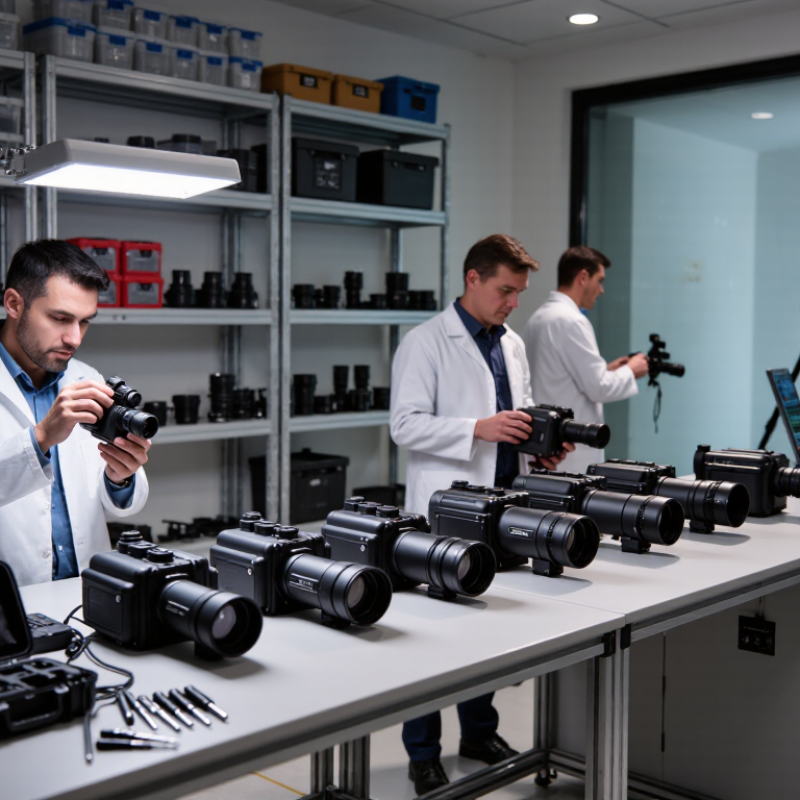
How to Choose a Night Vision Device Manufacturer

Define Operational Requirements for a Night Vision Device

How to Choose a Night Vision Device Manufacturer

Define Operational Requirements for a Night Vision Device

Start with the task, not the specification sheet. Will the operator detect movement, recognize a person, or read a marker? Set the expected distance, viewing time, and movement speed. A device that reveals a fence at 40 meters may not show useful detail on a moving subject. Small differences matter.

Light conditions need equal attention. CIE technical report 191:2010 places mesopic vision roughly between 0.005 and 5 cd/m², a thousand-fold range. This describes human vision, not device performance, but it shows why “low light” is too vague. Record whether use occurs under starlight, moonlight, or mixed artificial lighting. Note rain, fog, and dark clothing, too.

Then convert the task into testable requirements: useful recognition distance, field of view, image clarity, startup time, battery runtime, and acceptable weight. Test a representative unit outdoors, with the same gloves and headgear operators will use. Measure runtime in cold conditions if those conditions are expected; advertised figures may not reflect them. I would not let resolution dominate the decision. A sharper image can still be tiring to scan. There is no perfect spec sheet. My first draft of requirements is usually too optimistic, so leave room for operator feedback before finalizing it.

Assess the Manufacturer’s Experience and Technical Capabilities

A manufacturer’s experience is more than the number of years it has operated. Ask how many product generations its team has developed and what problems appeared during field testing. Look for evidence, not only confident sales language. A dated test report, clear revision history, and documented quality checks can show how the company handles real production work. Small details matter.

Technical capability should be visible in the people, equipment, and process behind each device. Ask whether engineers can explain image quality, focus behavior, and performance in changing temperatures. Check how units are calibrated and how production defects are recorded. If the answers stay vague, request specific examples, such as a test procedure or sample inspection record. Specific answers build confidence, but paperwork alone cannot prove consistent results.

When possible, examine a sample device in a dim room and note edge clarity, controls, and focus adjustment. Ask how the manufacturer tests units before shipment and handles design changes. No supplier is flawless. A checklist can miss the practical feel of a device, and one sample cannot represent every production run. The willingness to discuss limits and explain corrective steps may be more useful than polished claims. If an answer remains unclear, record it and ask for supporting evidence before making a decision.

Evaluate Device Performance, Quality, and Regulatory Compliance

When evaluating a night vision device manufacturer, request performance data gathered under stated test conditions. Compare resolution, low-light sensitivity, field of view, and detection distance; range claims mean little without target size and ambient-light details. If the device is digital, ask about display latency and performance in cold weather. Check that sample units feel solid, controls work with gloves, and battery access is practical. Small details matter.

Quality and compliance need evidence, not confident wording. Ask how production units are inspected, whether test records can be traced to a model or batch, and what warranty support covers. Review available electrical, electromagnetic compatibility, and environmental test reports. Confirm that product labeling and documentation meet the requirements that apply in your location and intended market. A polished brochure can still leave gaps. That is a reason to ask more, not assume failure.

Tips: Request a written specification sheet and a sample report. Compare the same test conditions across suppliers. Ask who handles repairs, how long parts remain available, and what happens when a unit fails outside warranty. Keep answers on file; verbal assurances are easy to misremember.

Review Production Capacity, Customization, and Support Services

How to Choose a Night Vision Device Manufacturer

Review Production Capacity, Customization, and Support Services

A manufacturer’s stated capacity matters less than its ability to deliver consistent units on schedule. Ask how it manages component sourcing, assembly, and quality checks across a full production run. Request sample inspection records, not just a polished demonstration unit. Small details matter. Check whether testing covers image clarity, focus, and performance under different low-light conditions. A factory visit can be useful, but it may not reveal every bottleneck. Paperwork can also look stronger than the process behind it. Compare promised lead times with actual delivery data, and ask how delays are communicated.

Customization should be specific and practical. Discuss options such as lens configurations, mounting interfaces, controls, and packaging, then confirm which changes affect cost or delivery time. Ask for a written specification and approval sample before production begins. Avoid assuming every requested feature is easy to scale. Not all changes translate cleanly. Support services deserve equal scrutiny. Find out who handles setup questions, replacement parts, and troubleshooting after delivery. Ask how quickly the team responds and whether guidance includes clear manuals or remote training. A useful supplier explains limitations plainly, including what it cannot customize or repair. That honesty may be imperfect, but it gives buyers a firmer basis for planning.

How to Choose a Night Vision Device Manufacturer — Review Production Capacity, Customization, and Support Services
Evaluation Area What to Review Evidence to Request Positive Indicator
Production Capacity Available production volume, current utilization, staffing, equipment, and ability to handle repeat orders. Capacity statement showing standard and peak output, current lead times, and the assumptions behind quoted volumes. Capacity figures are clearly defined and supported by a production plan rather than an unqualified promise.
Lead Time and Delivery Sample, pilot, and production timelines; component availability; and procedures for communicating delays. Written schedule covering design approval, procurement, assembly, inspection, and shipment. Milestones and dependencies are identified, with a named contact and an agreed process for schedule changes.
Quality Management Incoming inspection, in-process checks, final inspection, nonconformance handling, and corrective actions. Quality-system documentation, sample inspection records, defect-handling procedures, and traceability examples. Inspection criteria are documented, results can be linked to production lots, and corrective actions are tracked.
Performance Verification How the device is tested against agreed specifications, including optical, electronic, mechanical, and environmental requirements. Test plans and sample reports identifying methods, equipment, acceptance limits, and test conditions. Tests reflect the intended operating conditions, and acceptance criteria are agreed before production.
Customization Capability Options for housing, mounting, controls, power, optics, user interface, accessories, and packaging. Configuration list, engineering workflow, sample drawings, and details of any minimum order quantities or added costs. Custom features are assessed for feasibility, cost, schedule, and impact on reliability before commitment.
Engineering Change Control How design, component, software, or supplier changes are reviewed and approved. Change-control procedure showing notification, impact assessment, approval, and revision-history practices. Changes are documented and customers are informed before a change affects an approved configuration.
Compliance and Export Review Applicable product, electrical, environmental, and market-entry requirements, as well as export restrictions relevant to the device and destination. Available declarations, test records, product classification information, and a process for checking destination requirements. Requirements are assessed for the intended market and configuration; documentation is specific to the product being offered.
Warranty and Repairs Warranty coverage, exclusions, repair process, spare-parts availability, and expected service turnaround. Written warranty terms, repair instructions, service contact details, and a parts-support plan. Coverage and service expectations are stated clearly, including how faults are assessed and resolved.
Technical Support Access to engineering assistance, user documentation, troubleshooting, and training where required. Sample manuals, support-channel details, response targets, and training or onboarding materials. Support is available through defined channels, and documentation matches the delivered configuration.
Supplier and Component Continuity Dependence on key components, alternate sourcing options, and notification practices for discontinued parts. Supply-risk overview, component lifecycle approach, and any approved-substitution process. Potential supply disruptions are identified, substitutions require review, and product performance is revalidated when needed.

Use these criteria as a due-diligence checklist. Confirm specifications, compliance obligations, and acceptance limits for the intended device configuration and destination market.

Compare Costs, Delivery Terms, and Long-Term Reliability

A night vision device’s quoted price rarely tells the whole story. Compare the complete cost: core unit, lenses, batteries, protective cases, training, and service. A lower offer may exclude useful items. Ask for a written breakdown, then check whether the quoted performance matches your actual conditions, such as wooded trails or dim indoor spaces. Test a sample when possible. Numbers on a sheet can feel reassuring, but they do not replace hands-on checks.

Delivery terms deserve the same scrutiny. Request a realistic production schedule, including inspection and shipping time, and confirm how delays are handled. Clarify whether the stated date means dispatch or arrival. Ask how damaged units or missing accessories are reported and replaced. Small details matter. A vague promise can leave a team waiting, even when the order itself was placed correctly.

Long-term reliability depends on more than a rugged-looking housing. Review operating-temperature limits, battery availability, repair options, warranty exclusions, and expected service turnaround. Ask whether replacement parts will remain available and what maintenance records the supplier recommends. Compare these answers with documented test results, not just sales claims. No manufacturer can prevent every failure, and a comparison table may still hide practical differences. That is worth admitting before committing to a large order.

How to Choose a Night Vision Device Manufacturer

Compare costs, delivery terms, and long-term reliability using a consistent 1–5 evaluation rubric.

How to use this chart: Scores are illustrative rubric examples, not manufacturer or market data. Score each shortlisted supplier against verified quotations, written lead times, warranty terms, service commitments, and reliability records. Higher scores indicate more favorable terms.


Close

Raise your Query

Hi! Simply click below and type your query.

Our experts will reply you very soon.

WhatsApp Us
