Choosing a material can affect a project long after installation. Profiled Aluminium offers a practical option when a design needs formed sections, manageable weight, and consistent dimensions. It is used in applications such as wall cladding, roofing, partitions, and equipment enclosures, though the right profile depends on the job.
Its shape can add stiffness without relying on a flat sheet alone. That may help span a space or create a defined edge. But results depend on alloy, thickness, profile geometry, finish, and how the section is supported. Small details matter. A section that looks suitable in a sample may behave differently across a long roof or exposed façade. Check load requirements, fixing points, drainage, and compatibility with nearby materials before specifying it. Manufacturer data and project-specific engineering review are more dependable than appearance alone.
There is no universally best profile. Still, aluminium’s low mass and formability can make handling and installation easier in some settings, while cost, finish durability, and thermal movement deserve careful consideration. This guide explains the main reasons project teams choose Profiled Aluminium, the properties to compare, and the questions to raise with suppliers. It also looks at limitations, because a balanced material choice starts with knowing what may not work. A clear specification can prevent avoidable changes once fabrication or installation has begun.
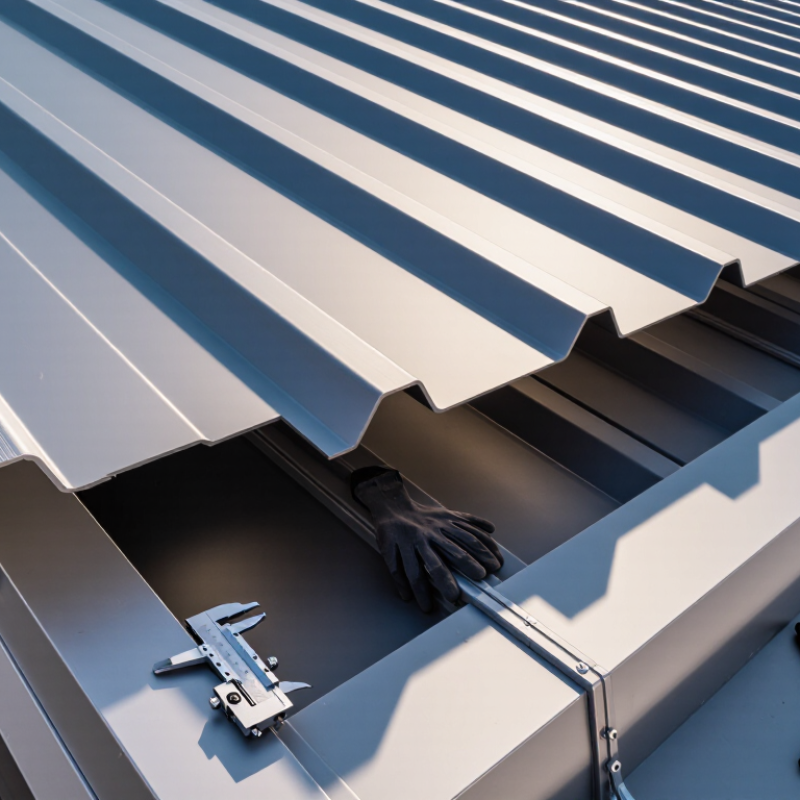
Profiled aluminium is aluminium shaped into a consistent cross-section, such as a channel, angle, rail, or hollow frame. The geometry can combine thin walls with ribs or grooves, helping parts fit together without extra machining. Simple in principle. The chosen alloy, wall thickness, and profile shape affect strength, finish, and cost, so a drawing that looks efficient may still prove difficult to extrude.
Most profiles are made by extrusion. A heated aluminium billet is pressed through a steel die, which forms the required cross-section. The emerging length is cooled, straightened, cut, and, when required, heat-treated to reach specified properties. Surface treatments can improve appearance or corrosion resistance. The details matter: uneven wall thickness or sharp internal corners can complicate production. The Aluminium Extruders Council describes die design and process control as key factors in achieving consistent profiles; in practice, early design review can prevent costly revisions.
Material sourcing matters too. The International Aluminium Institute reports that recycling aluminium uses about 5% of the energy required for primary production. That figure does not make every recycled profile identical; alloy composition and quality still need checking. The Institute has also projected global aluminium demand to grow by nearly 40% by 2030, increasing attention to efficient material use. The less glamorous work is specifying tolerances and finish clearly. That is easy to overlook.
Profiled aluminium combines low weight with useful structural strength, making it easier to handle than many solid metal sections. Its extruded shape can place material where loads occur, while grooves and channels accommodate fasteners, cables, or sliding parts. That flexibility is practical on site. The natural oxide layer helps resist corrosion, though salt, chemicals, and trapped moisture can still cause problems. It is not indestructible.
Tips: Check the alloy, temper, wall thickness, and finish against the actual load and environment. A profile that looks sturdy may flex if its unsupported span is too long. Ask for dimensional tolerances before designing close-fitting joints.
Aluminium also conducts heat well, which can help with heat transfer but may be unwelcome near temperature-sensitive components. It expands as temperatures rise, so long profiles need room to move. This detail is easy to overlook. Anodising or coating may improve surface durability, but cuts and drilled holes can expose untreated edges. Consider how parts will be joined, cleaned, and maintained, not just how they appear in a drawing. In my experience, the best profile is rarely the most complicated one; a simpler section can be easier to source and install.
A comparison of typical material densities shows why aluminium profiles are a lightweight choice for structural and fabrication projects.
What this means: 6061-T6 aluminium has a typical density of 2.70 g/cm³—about one-third that of mild carbon steel and 30% that of copper. Lower density can help reduce component weight. Values are typical and may vary by alloy and specification.
Aluminium profiles support different project needs through adjustable shapes, wall thicknesses, and connection details. A narrow channel can guide a sliding panel; a deeper, ribbed section can help carry loads across a wider span. Designers can also specify slots or grooves for brackets, cables, and glazing seals. This reduces on-site cutting, though it does not remove the need to check deflection, load, and fit. Small details matter.
Thermal performance needs equal care. In a window frame, a thermal break can limit heat flow through the metal, while drainage paths help manage rain around seals. For long frames, expansion and installation tolerances deserve attention; otherwise, neat drawings can meet awkward site conditions. Material choice also affects resource planning. The International Aluminium Institute reports that roughly 75% of all aluminium ever produced remains in use. The Aluminum Association’s report Aluminum: The Element of Sustainability states that recycled aluminium takes about 95% less energy to produce than primary aluminium. That is useful context, not a guarantee: recycled content, finish, and local supply all need verification. Good profile selection starts with the actual load, climate, assembly method, and maintenance plan. A sample section helps reveal issues early. It is not a substitute for testing.
Profiled aluminium appears in machine frames, workbenches, equipment enclosures, and lightweight partitions. Its shaped sections can provide useful rigidity without the weight of solid metal. In workshops, T-slot profiles make it possible to position brackets and panels with basic tools. They also suit display frames and storage systems, where layouts may change over time. Small details matter: a square corner, a sliding panel, or a cable channel can affect how well the finished structure works.
It is also used for solar-panel supports, transport interiors, and architectural features such as door frames. The right profile depends on the load, span, environment, and connection method. A slim section may look neat but flex too much across a wide opening. One limitation is easy to overlook: connectors and fasteners influence the strength of the whole assembly. Check manufacturer load data and consider getting engineering advice for safety-critical structures. Light matters. So does fit.
Tips: Measure the opening and mark fixing points before ordering. Check that the profile, fasteners, and panels are compatible. Leave room for adjustment; real walls and floors are rarely perfectly straight.
Choosing a profiled aluminium section starts with the job it must do. Define the load, span, fixing points, and space available before comparing shapes. A deeper profile may resist bending better, but it can add weight or interfere with nearby parts. Check the supplier’s section data and confirm that its assumptions match your design. Fit matters.
Alloy and temper affect strength, formability, and machining. For an outdoor frame near the coast, corrosion exposure deserves close attention; a suitable finish may also be needed. Specify dimensions and tolerances that work with the planned cutting, drilling, and assembly methods. Tight tolerances can improve alignment, but they may raise cost without helping the finished project. That adds up.
Think through thermal movement, too. Long aluminium sections expand as temperatures rise, so fixed connections may need room to move. A practical selection balances structural performance, appearance, availability, and fabrication limits. I have seen designs focus on strength while leaving too little clearance for installation. That is easy to miss on a drawing. Before ordering, compare a sample section with the actual brackets and adjacent components. A quick fit check can reveal a problem that calculations alone will not.
| Selection factor | What to assess | Practical guidance | Why it matters |
|---|---|---|---|
| Load and stiffness | Loads, span, support points, allowable deflection, and expected service conditions. | Evaluate the complete cross-section, alloy, temper, and wall thickness. Have critical structural applications checked against the relevant design requirements. | Profile shape and section dimensions strongly affect stiffness; alloy strength alone does not determine performance. |
| Alloy and temper | Required strength, formability, surface finish, and applicable material specifications. | 6063 is commonly selected for extrusions requiring good surface finish and complex shapes. 6061 is commonly considered where higher strength is needed. Confirm the required temper and certified properties for the specific product. | Mechanical properties and extrusion characteristics vary by alloy, temper, and applicable standard. |
| Profile geometry and extrudability | Wall thickness, hollow sections, narrow slots, deep cavities, and transitions in section thickness. | Keep the design as uniform and uncomplicated as practical. Review thin walls and complex features with the extrusion supplier before finalizing the drawing. | Complexity and uneven metal flow can affect manufacturability, tolerances, surface quality, and production cost. |
| Weight and material use | Profile cross-sectional area, cut length, and the amount of material needed for the assembly. | Aluminium has a density of about 2.7 g/cm³. Estimate profile mass from its cross-sectional area, length, and the density of the selected alloy. | Weight affects handling, transport, support requirements, and the overall material budget. |
| Corrosion resistance and finish | Indoor or outdoor exposure, moisture, coastal conditions, chemicals, and appearance requirements. | Choose an alloy suitable for the environment and specify a compatible finish, such as anodizing or a coating, when required. Confirm finish requirements for cut edges and assembled parts. | Aluminium naturally forms a protective oxide layer, but exposure conditions and surface treatments influence long-term performance. |
| Dimensional tolerances and fit | Critical dimensions, mating components, clearances, straightness, and assembly method. | Mark critical dimensions and tolerances clearly on the drawing. Identify the applicable extrusion tolerance standard and verify achievable tolerances with the manufacturer. | Extrusion tolerances depend on dimensions, section geometry, alloy, and production requirements; a precise drawing helps prevent fit problems. |
| Thermal or electrical function | Heat transfer, electrical conductivity, operating temperature, and contact surfaces. | Check the selected alloy’s data for the intended function. Consider that coatings, anodized layers, joints, and contact arrangements can affect heat or electrical transfer. | Aluminium alloys differ in conductivity, and the finished assembly may perform differently from the bare profile. |
| Joining and machining | Fasteners, welding, adhesives, drilled features, cut ends, and assembly access. | Design features around the chosen joining process. Confirm alloy suitability for welding or machining, and allow for access to tools and fasteners. | Joining and secondary operations influence profile design, strength, finish, and assembly time. |
| Production volume and total cost | Annual quantity, custom tooling, finishing, machining, packaging, and lead-time requirements. | Compare the full delivered cost, not only the price per unit of raw profile. For custom sections, include tooling and finishing requirements in the quotation. | A design that uses material efficiently and is straightforward to extrude and assemble can reduce total project cost. |
Note: Final profile dimensions, alloy, temper, tolerances, and finish should be confirmed against the project requirements and the relevant material and design standards.
Hi! Simply click below and type your query.
Our experts will reply you very soon.
