Choosing a High Pressure Safety Switch is not just a matter of matching a pressure rating. The switch must protect the equipment under real operating conditions, including pressure surges, vibration, and temperature changes. A unit selected only from a catalog table may look right, yet cycle too often once installed. Small details matter.
Systems-safety scholar Nancy Leveson captures a useful principle: “Safety is an emergent property of a system.” Applied to pressure protection, that means considering the switch alongside the compressor, relief devices, control logic, and maintenance plan. Start by confirming the normal operating range and the maximum allowable pressure. Then check the switch’s setpoint range, reset style, contact rating, connection size, and compatibility with the process fluid. Look closely at the difference between cut-out and reset pressures. A few psi can change how often a system stops and restarts.
Installation details deserve equal attention. Is the sensing port exposed to pulsation? Could moisture, oil, or debris affect the connection? Will technicians be able to test the switch without disturbing nearby equipment? These questions are easy to overlook during purchasing. They should not be.
This guide explains how to compare specifications, assess the application, and verify a switch before commissioning. No single model suits every system. A careful choice reduces nuisance trips and helps preserve a dependable protective layer. Still, a datasheet cannot reveal every site condition. Review the final selection with a qualified engineer when operating limits or consequences are uncertain.
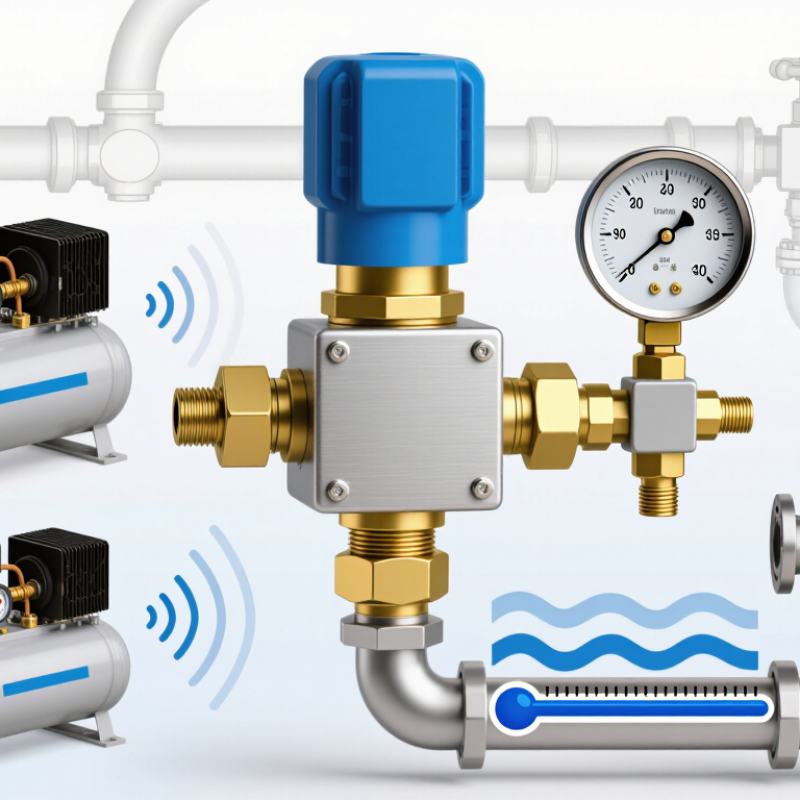
Before selecting a high-pressure safety switch, record the system’s normal pressure range during startup, steady operation, and shutdown. A gauge reading taken once may miss brief spikes. Watch the system through a full operating cycle, and note the highest pressure you actually observe.
Keep normal pressure separate from the switch’s trip setting and the equipment’s maximum allowable pressure. The switch should respond before the protected equipment exceeds its limit, while avoiding nuisance trips during ordinary fluctuations. Confirm the switch’s pressure range, accuracy, reset behavior, and pressure rating against the system’s documented limits. A qualified technician can help verify the setpoint; guessing from a single gauge reading is not a sound method.
Conditions matter. Consider fluid type, temperature, pulsation, vibration, and whether pressure rises quickly. A pump cycling against a closed valve, for example, may create a sharper spike than steady operation suggests. Check that the switch’s materials and pressure connection suit the medium and installation location. Real systems are rarely as tidy as their diagrams. I would recheck the readings after maintenance or process changes, even when the original selection seemed obvious.
Choose a switch from the system’s actual pressure envelope, not just its usual gauge reading. Record the normal operating pressure, startup spikes, shutdown pressure, and the maximum pressure the equipment can safely withstand. The switch’s working range must cover the setpoint, while its maximum and proof-pressure ratings must suit credible surges. Never treat proof pressure as a permitted operating limit. Check the fluid, temperature, port connection, and electrical load against the manufacturer’s technical data sheet. Small margins matter.
Then select the switch type to match the control task. A mechanical switch can suit straightforward on/off control; an electronic model may offer adjustable setpoints, display, or diagnostic features. For cycling control, compare the reset differential, also called hysteresis, with the pressure fluctuations in the line. A narrow differential can cause rapid switching. A wide one may let pressure drift farther than intended. I would not select a type from the setpoint alone.
The U.S. Department of Energy’s Improving Compressed Air System Performance: A Sourcebook for Industry reports that compressed air uses about 10% of electricity in U.S. manufacturing, reaching 30% at some facilities. That figure is not a switch-performance claim, but it shows why stable pressure control can matter to operating efficiency. Verify the pressure range, cycle frequency, and contact rating under real operating conditions. Check the fluid. Then confirm the chosen switch’s limits with the equipment documentation; assumptions from a similar installation can be wrong.
How to Choose a High Pressure Safety Switch
Check Compatibility with the Process Media and Electrical System
A high pressure safety switch must suit the medium it contacts. Check whether the process contains water, oil, refrigerant, or a corrosive chemical. Then verify that the switch’s wetted materials and seals can tolerate that medium at the expected temperature. Small details matter. A seal that performs well in cool water may swell or harden when exposed to hot oil. Review the manufacturer’s material and temperature specifications, and consider cleaning fluids or occasional contamination—not just normal operation. Do not guess. If the medium’s composition is uncertain, ask a qualified supplier or engineer to confirm compatibility before installation.
The electrical side needs equal care. Match the switch’s voltage, current rating, and AC or DC supply to the control circuit. Check whether its contacts are normally open or normally closed, and confirm they provide the signal your system requires. A contact rating for a small control input may not suit a motor load. Use an appropriate relay when needed, and have a qualified professional verify the wiring and circuit protection. Also consider the enclosure’s protection against moisture, dust, and vibration at the mounting location. I have seen compatibility checks focus on pressure alone; that is understandable, but incomplete. Recheck both the process connection and electrical diagram before commissioning.
Check Compatibility with the Process Media and Electrical System
Process media: pH is a useful first screening check, not a complete material-compatibility test. Confirm wetted materials against the actual fluid, concentration, temperature, and operating conditions. Potable-water pH range shown is the U.S. EPA secondary standard; other ranges are approximate examples.
Electrical system: Verify the switch’s rated voltage and current for the circuit, AC or DC operation, and the connected load (including inductive loads). Also confirm the required electrical connection and enclosure protection.
How to Choose a High Pressure Safety Switch
Review Safety Standards, Installation Requirements, and Certifications
A high-pressure safety switch should match the system’s pressure range, fluid, temperature, and electrical load. Check the equipment documentation and applicable standards before selecting a setpoint. For compressed-air receivers, OSHA 29 CFR 1910.169 requires safety valves to open at no more than 10% above the receiver’s maximum allowable working pressure (MAWP). This is a safeguard for the receiver, not a universal switch setting; the switch must be coordinated with the full protection system. Small details matter.
Confirm that the switch’s certification and markings cover its intended use, including the enclosure, connection type, and electrical rating. IEC 60730-2-6 covers automatic electrical pressure-sensing controls, while installation must also meet local electrical and equipment requirements. Mount the switch where vibration, heat, or moisture will not distort readings. Use a suitable pressure port, and check for leaks after installation. A certified part can still perform poorly if installed incorrectly.
Tips: Verify the setpoint against the equipment maker’s limits. Ask a qualified technician to test the trip and reset pressures with a calibrated gauge. Record the results and inspection date. I would not assume a factory setting is right for every system; that assumption is easy to miss.
When choosing a high-pressure safety switch, compare more than its maximum pressure rating. Check the operating range, reset differential, repeatability, and compatibility with the system’s fluid and temperature. A switch that trips consistently can help prevent nuisance shutdowns and missed pressure events. Small differences matter. Review the manufacturer’s test data and confirm that the switch suits the actual operating conditions, not just the system’s peak pressure.
Maintenance needs affect reliability over time. Mechanical switches may need periodic inspection for contact wear, leakage, corrosion, or drift. Electronic models can offer diagnostics, but their sensors and electrical connections still require checks. Ask what testing is recommended, how readily the unit can be isolated, and whether replacement parts are available. Keep clear service records. Not glamorous, but useful. A maintenance schedule that looks simple on paper may become difficult in a cramped, hot equipment room.
Compare total cost of ownership across the expected service life. Include purchase price, installation, inspection labor, replacement parts, downtime, and the cost of carrying a spare. A cheaper switch may cost more if it needs frequent adjustment or causes repeated process interruptions. Conversely, added features are not automatically worth paying for. One judgment call: estimates for service life can be uncertain, so document assumptions and revisit them after operating experience. Have a qualified technician verify ratings and installation details against the system requirements.
| Comparison Factor | Mechanical Pressure Switch | Electronic Pressure Switch | Pressure Transmitter with Safety Controller |
|---|---|---|---|
| How it works | A diaphragm, piston, or similar pressure element operates electrical contacts at a set point. | A pressure-sensing element and electronic circuit detect pressure and switch an output at a configured threshold. | A transmitter converts pressure into a continuous electrical signal; a separate controller evaluates the signal and initiates a safety action. |
| Typical strengths | Simple operation, direct switching, and no separate controller required for a basic switching function. | Convenient set-point adjustment and, depending on the model, local display, diagnostics, or configurable switching behavior. | Continuous pressure monitoring, configurable logic, and the ability to use diagnostics or multiple thresholds when supported by the system. |
| Reliability considerations | Contact wear, vibration, pressure pulsation, corrosion, and mechanical fatigue can affect service life. Suitability depends on the pressure range and switching frequency. | Fewer moving switching parts, but electronics can be affected by heat, moisture, electrical interference, and power-supply problems. | Performance depends on the transmitter, wiring, controller, power supply, and safety design as a complete system. More components create additional potential failure points. |
| Maintenance needs | Inspect connections and the pressure port; verify the set point and contact operation at an interval based on risk, service conditions, and applicable requirements. | Check the pressure port, wiring, configuration, and switching response. Calibration or functional testing may be needed according to the application and manufacturer instructions. | Plan periodic proof testing and calibration as required by the risk assessment, system design, and applicable standards. Include the sensor, logic, output, and final element in test procedures. |
| Set-point changes | May require manual adjustment; some designs use a fixed set point. Confirm the actual trip point after adjustment. | Often adjustable through controls or configuration tools, depending on the model. Protect settings from unauthorized changes where necessary. | Usually configured in the controller or system software. Configuration management and verification are important after changes. |
| Installation considerations | Check pressure-port compatibility, electrical contact ratings, enclosure protection, and whether the device tolerates expected pressure spikes. | Check supply voltage, output type, electrical noise protection, process connection, and environmental ratings. | Check signal compatibility, wiring, power and controller requirements, diagnostics, and the design of the complete safety loop. |
| Relative upfront cost | Often low for a basic switch and straightforward installation. | Often moderate; display, diagnostics, communication, and environmental features can increase cost. | Often highest because the transmitter, controller, wiring, engineering, and validation can all contribute to installed cost. |
| Total cost of ownership factors | Purchase and installation cost, contact replacement, inspection, downtime, and the consequences of an undetected failure. | Purchase and installation cost, configuration and calibration effort, replacement cost, downtime, and the value of available diagnostics. | Hardware and engineering cost, proof-test and calibration labor, software or configuration management, downtime, and the cost of maintaining the complete loop. |
| Often a practical fit when | A simple, independent pressure trip is needed and the operating conditions, switching duty, and required performance suit the selected device. | Adjustable thresholds, local indication, or electronic diagnostics are useful and power and environmental requirements can be met. | Continuous monitoring, more complex logic, or integration into a properly designed and validated safety system is required. |
| Selection check | Confirm maximum working pressure, proof pressure, set-point range, contact rating, process connection, and suitability for the fluid and environment. | Confirm pressure range, overpressure limits, output behavior, electrical ratings, response requirements, and environmental compatibility. | Confirm the required safety function and performance, component suitability, diagnostics, proof-test coverage, and validation of the complete system. |
Important: Reliability, maintenance intervals, and lifecycle cost cannot be determined from device type alone. They depend on the specific model, operating conditions, switching duty, installation, and required safety performance. A pressure switch by itself does not establish that a safety function meets a particular safety standard; assess and validate the complete system for the application.
Hi! Simply click below and type your query.
Our experts will reply you very soon.
