China Top 10 Diamond LED Display Manufacturers
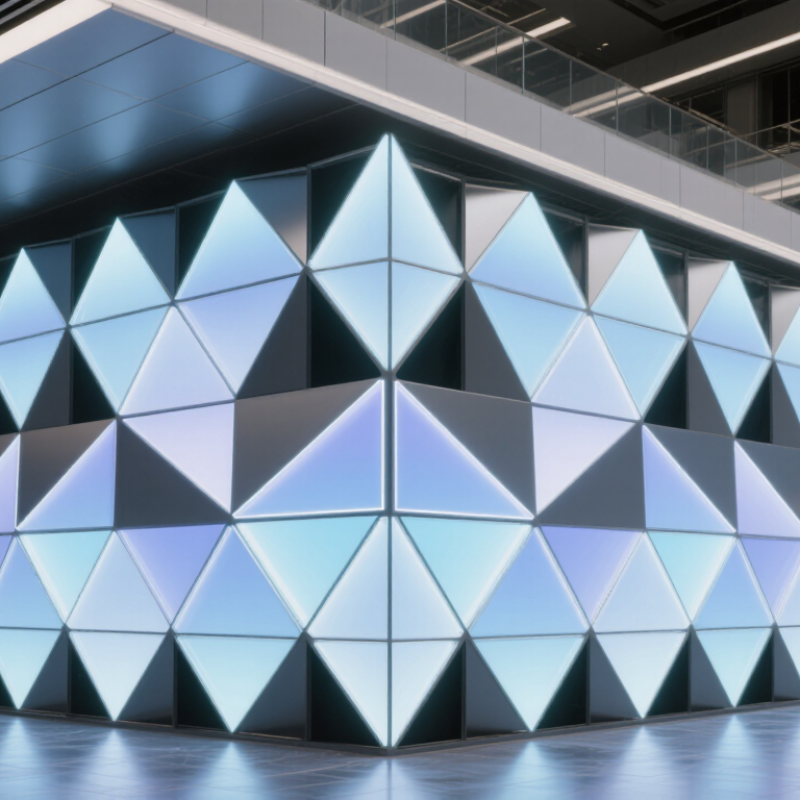
Diamond Led Display technology gives architects and brand teams a way to move beyond flat screens. Faceted cabinets can form geometric walls, retail features, stage backdrops, and striking building interiors. The visual effect is immediate. Yet a bold shape alone does not guarantee a good installation. Pixel pitch, cabinet alignment, brightness, refresh rate, heat management, and access for repairs all matter. Small gaps between angled modules can become obvious under close viewing. That detail is easy to overlook.
Market context helps explain the growing interest. Grand View Research estimated the global LED display market at USD 7.47 billion in 2023, with an expected compound annual growth rate of 8.4% from 2024 to 2030. This figure covers LED displays broadly; it does not isolate diamond-shaped products. That distinction matters. The following overview of China’s top 10 diamond LED display manufacturers should therefore be read as a practical shortlist, not a definitive ranking. It considers product customization, documented project experience, technical support, and the clarity of specifications. Buyers should still request test footage, cabinet drawings, and references for comparable installations. Numbers can look convincing. Real-world performance deserves a closer look.
Understanding Diamond LED Displays and Their Structure
A diamond LED display is usually built from LED modules arranged at an angle, creating a rotated square or a repeating geometric pattern. The visible surface contains pixels, while the modules behind it hold the LEDs and support their electrical connections. Some designs use standard square modules inside angled cabinets; others require custom-shaped parts. The construction varies.
Behind the screen, a frame supports the modules and helps keep their faces aligned. Power supplies and receiving cards sit within or behind the cabinet, distributing electricity and image data. At close range, small differences in module alignment can make diagonal seams noticeable. Check the joints.
The diamond layout changes how a display fits into a space, not how pixels produce light. Pixel pitch, brightness, refresh rate, and viewing distance still matter. A tighter pitch can show finer detail, but it may raise cost and heat output. Installation also deserves care: angled edges can leave awkward gaps against flat walls. Measure the mounting area before choosing a cabinet size. Still, a striking shape does not guarantee easy maintenance; access to cables and replaceable modules should be considered early.
Diamond LED Displays: Pixel Pitch and Theoretical Pixel Density
Smaller pixel pitch allows more pixels per square meter. The chart uses an idealized grid calculation to illustrate this relationship.
Pixel density is estimated as 1 ÷ (pixel pitch in meters)². Actual density and pixel arrangement can vary with a display’s design and module structure.
Key Technologies, Features, and Common Applications
Diamond LED displays arrange modular panels into angled, jewel-like surfaces rather than a conventional rectangle. The “diamond” describes the installation geometry, not a separate light-emitting technology. Fine-pitch SMD or COB packages can create detailed images, while cabinet alignment and pixel-level calibration help keep edges and colors consistent. Geometry matters. A visible seam can still interrupt a moving image, especially when viewers stand close.
Grand View Research estimated the global LED display market at US$7.67 billion in 2023 and projected an 8.2% compound annual growth rate from 2024 to 2030. This broad market estimate does not isolate diamond-shaped installations, so it should not be read as a forecast for them specifically. Typical features include high brightness, wide viewing angles, refresh rates suited to camera capture, and custom panel layouts. Fine pitch helps. But it raises cost and makes maintenance more demanding.
Common applications include retail feature walls, hotel lobbies, exhibition stages, museums, and architectural interiors. A faceted display can frame a product or guide visitors through a space without a standard rectangular screen. For close viewing, check pixel pitch, viewing distance, and content resolution together. I would not treat shape as a performance guarantee. Reflections, heat, and access to rear service panels can all affect the final result.
China’s Diamond LED Display Manufacturing Landscape
China’s diamond LED display manufacturing landscape brings together cabinet fabrication, LED module assembly, control systems, and installation engineering. Manufacturers develop angled panels that form repeating diamond patterns across walls, stages, and public interiors. The geometry demands careful alignment. Even a small gap can interrupt the pattern or make seams stand out under bright lighting.
Capabilities vary between factories. Some focus on standard modules, while others handle custom frames, unusual viewing angles, and project-specific control settings. A practical supplier assessment should examine sample uniformity, pixel pitch, brightness consistency, and cabinet tolerances. Ask for close-up images of panel joints and operating footage at different brightness levels. Useful details matter.
The market is not perfectly uniform. A polished sample may not reflect how a larger installation performs, especially when panels arrive in multiple batches. Review production checks, burn-in procedures, spare-module availability, and documented test results. Site conditions also matter: viewing distance, ambient light, and mounting structure can change the display’s appearance. One overlooked issue is service access. A striking shape is less useful if technicians cannot reach its connectors or replace a module without disturbing neighboring panels.
Profiles of China’s Top 10 Diamond LED Display Manufacturers
China’s diamond LED display manufacturers differ in how they balance cabinet design, pixel pitch, brightness, and installation support. A useful profile looks beyond a product photo. It checks whether the supplier can explain viewing distance, maintenance access, and the display’s intended environment in practical terms.
Some manufacturers focus on lightweight cabinets for retail interiors, where clean edges and straightforward servicing matter. Others develop fine-pitch screens for control rooms or presentation spaces, where close viewing makes uniformity more noticeable. Outdoor-focused producers need to address weather protection, heat management, and readable images in daylight. Details matter. Ask for test reports, installation drawings, and references for projects with similar dimensions. A polished sample alone cannot show long-term performance.
When comparing ten suppliers, buyers should record comparable specifications and confirm what each quotation includes, such as controllers, spare modules, and commissioning. Manufacturing capacity is useful, but response time for technical questions also matters. Not all fit. Some product pages omit operating conditions or use broad claims that are hard to verify; request clarification before treating them as evidence. A careful profile should note both strengths and unanswered questions, since the best choice depends on the site, budget, and service expectations.
China Top 10 Diamond LED Display Manufacturers - Profiles of China’s Top 10 Diamond LED Display Manufacturers
Company-specific facts were not included in the source material provided. To avoid presenting unverified information as fact, manufacturer names and profile details are not supplied below.
| Profile | Manufacturer Name | Diamond LED Product Range | Factory Location | Certifications | Export Markets | Verification Status |
| Profile 1 | Not provided | Not provided | Not provided | Not provided | Not provided | Requires independent verification |
| Profile 2 | Not provided | Not provided | Not provided | Not provided | Not provided | Requires independent verification |
| Profile 3 | Not provided | Not provided | Not provided | Not provided | Not provided | Requires independent verification |
| Profile 4 | Not provided | Not provided | Not provided | Not provided | Not provided | Requires independent verification |
| Profile 5 | Not provided | Not provided | Not provided | Not provided | Not provided | Requires independent verification |
| Profile 6 | Not provided | Not provided | Not provided | Not provided | Not provided | Requires independent verification |
| Profile 7 | Not provided | Not provided | Not provided | Not provided | Not provided | Requires independent verification |
| Profile 8 | Not provided | Not provided | Not provided | Not provided | Not provided | Requires independent verification |
| Profile 9 | Not provided | Not provided | Not provided | Not provided | Not provided | Requires independent verification |
| Profile 10 | Not provided | Not provided | Not provided | Not provided | Not provided | Requires independent verification |
How to Evaluate Manufacturers and Compare Product Capabilities
China Top 10 Diamond LED Display Manufacturers: How to Evaluate Manufacturers and Compare Product Capabilities
Choosing a diamond-shaped LED display requires more than comparing quoted prices. Check pixel pitch, cabinet geometry, brightness, refresh rate, and grayscale performance against your viewing distance and content. A sharp image in a showroom may look uneven across angled edges. Ask for close-up photos and test footage of the actual configuration. Small details matter.
MarketsandMarkets’ LED Display Market report projected global market growth from USD 7.7 billion in 2023 to USD 13.1 billion by 2028, at an 11.2% compound annual growth rate. This covers the broader LED display market, not diamond-shaped products alone. Use it as market context, not proof of any manufacturer’s quality.
Compare sample measurements, production tolerances, calibration records, and spare-module availability. Request a clear warranty scope and references for projects with similar shapes, pixel pitch, and installation conditions. A factory visit helps, but paperwork alone cannot reveal every service issue.
Tips: Ask suppliers to demonstrate the display with your own video, including dark scenes and fast motion. Check whether corner modules can be replaced without dismantling a full panel. Compare power consumption at typical brightness, not only maximum output. No checklist is perfect; record any unanswered question before placing an order.

