China Top Combination Sweeper Scrubber Manufacturers

China’s leading Combination Sweeper Scrubber manufacturers serve facilities that need sweeping and scrubbing in one practical machine. Think of a warehouse aisle with dust near the loading bay and wet tire marks by the entrance. A combined unit can collect loose debris while washing the floor, reducing equipment changes and interruptions. But performance depends on more than a product label. Buyers should compare cleaning width, water capacity, battery runtime, turning radius, parts access, and service support.

The broader market offers useful context. Grand View Research estimated the global commercial cleaning services market at USD 415.93 billion in 2023 and projected 6.6% annual growth from 2024 to 2030. This is not a machine-sales figure; it signals sustained demand for cleaning services, not guaranteed demand for any specific equipment. For a China-based supplier comparison, published specifications should be checked against demonstrations, warranty terms, and local after-sales coverage. A polished brochure is not enough. One detail is easy to miss: a large tank may extend working time, yet also make maneuvering harder in narrow aisles.

A named expert quotation should be included only when its original source can be verified. No source-backed quotation was supplied here, so inventing one would weaken the reliability of this introduction. Buyers should ask manufacturers for test conditions and measurable results. That step is less glamorous. It is also more useful.
China Top Combination Sweeper Scrubber Manufacturers

What Is a Combination Sweeper-Scrubber and How Does It Work?

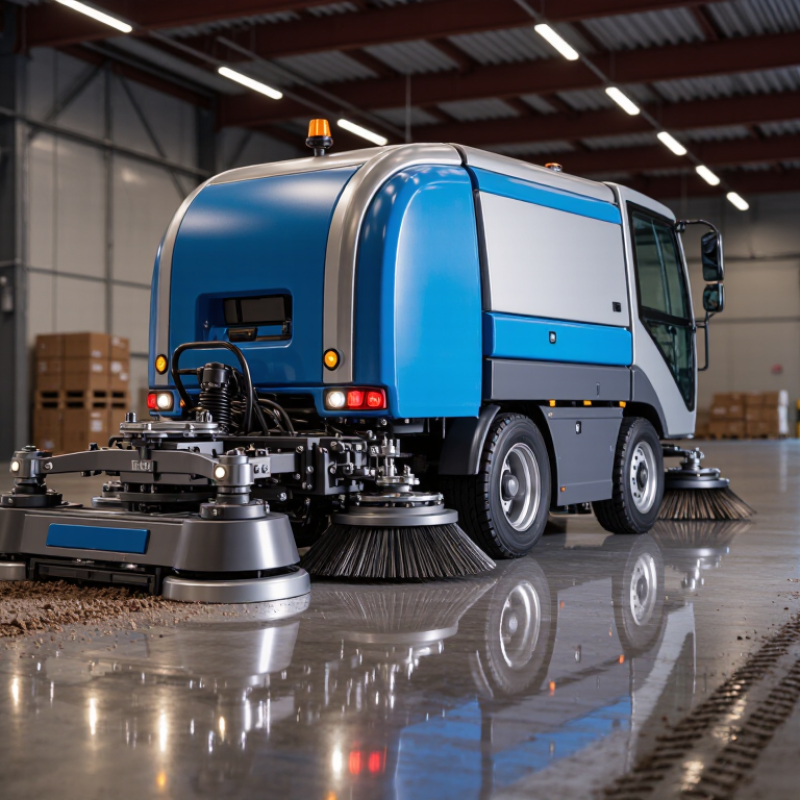
A combination sweeper-scrubber handles dry debris and wet floor cleaning in one pass. A front brush gathers dust, grit, and scraps into a hopper. Behind it, water and cleaning solution reach rotating brushes, which loosen tracked-in soil. A rear squeegee then guides the dirty water into a recovery tank. The result is a cleaner, drier path, with fewer separate machine passes. It is not magic. Very sticky spills or bulky litter may still need attention before the machine arrives.

This setup suits warehouses, supermarkets, and other large hard-floor areas. It can reduce the time workers spend switching between sweeping and scrubbing, though results depend on floor condition, machine settings, and operator training. ISSA’s Value of Clean research reports that

94% of respondents said they would feel more productive in a clean workspace.

That survey describes perceptions, not proof that a particular machine raises productivity. Still, it shows why consistent floor care matters.

Tips: Pick up cables and large debris first. Match brush pressure and solution flow to the floor, then check the recovery tank and squeegee for streaks. A little residue can remain; inspect corners and edges after each pass.

Where Combination Sweeper-Scrubbers Are Used

Combination sweeper-scrubbers suit large, hard-floor spaces where dust and liquid spills appear together. In supermarket aisles, they collect grit before washing away tracked-in marks. At distribution centers, they can cover long concrete lanes while workers and pallet trucks move nearby. Their value is practical: one pass can reduce repeated sweeping and scrubbing.

Airports, hospitals, schools, and manufacturing facilities also use these machines, though each site has different needs. Busy terminals may need quiet operation and quick recovery between passenger peaks. Warehouses often need wide cleaning paths and enough tank capacity for long shifts. Grand View Research estimated the global floor-cleaning equipment market at USD 5.6 billion in 2023. That figure covers more than combination machines, but it reflects broad demand for mechanized floor care. A machine still cannot replace careful route planning; tight corners and cables can be missed.

Tips: Match the machine to floor type, aisle width, and daily soil load. Test a route during a quiet shift. Check pickup quality around edges, not just in open lanes. Small details matter.

Where Combination Sweeper-Scrubbers Are Used

Combination sweeper-scrubbers are commonly used on large hard-floor surfaces in warehouses, manufacturing facilities, retail stores, parking structures, and airports. A value of 1 indicates a common application; it does not represent market share, usage frequency, or facility counts.

How China’s Combination Sweeper-Scrubber Industry Is Organized

China’s combination sweeper-scrubber industry is organized around a practical chain: component suppliers, equipment assemblers, application engineers, and regional service teams. Suppliers provide motors, batteries, brushes, vacuum systems, and control electronics. Assemblers combine these into machines suited to warehouses, factories, transport hubs, and outdoor sites. The product is not just a chassis with two cleaning functions. Water recovery, dust control, turning radius, and safe operation on uneven floors all shape the design.

The scale of China’s manufacturing base supports this structure. World Bank World Development Indicators place China’s manufacturing value added at roughly 30% of the global total in 2022.

China’s National Bureau of Statistics counted about 483,000 industrial enterprises above designated size in its 2023 Statistical Communiqué. These figures describe manufacturing broadly, not combination machines alone. That distinction matters: public data rarely separates sweeper-scrubbers from wider cleaning-equipment categories.

In practice, manufacturers often rely on component networks and local dealers for parts, operator training, and maintenance. A buyer should check brush wear, recovery-tank access, and service response times—not only rated cleaning width.

The supply chain is capable, but uneven after-sales coverage remains a real weakness.

How to Evaluate Leading Chinese Manufacturers

Evaluating a Chinese combination sweeper-scrubber manufacturer requires more than checking its catalogue. Ask for measured productivity in square metres per hour, water use per shift, noise levels, and stopping distance. Then request a live demonstration on your floor type. Watch how the machine handles a tight aisle, a sharp turn, and a wet patch. Ask for test conditions, not just headline figures. A credible supplier should explain battery capacity, brush pressure, tank volume, and how each affects actual runtime. Small details matter.

Grand View Research’s 2024 Floor Cleaning Equipment Market report estimated the global market at about US$10.58 billion in 2023, with projected growth of 8.4% annually from 2024 to 2030. This broad category includes more than combination machines, so treat the figures as market context, not a forecast for one product. Compare factory quality records, component traceability, spare-parts lead times, and operator training. Request sample inspection reports and warranty terms in writing. Ask how defects are logged and resolved. A polished factory tour helps, but it cannot prove long-term reliability. My own checklist would still include a second site visit; that takes time. Worth it.

What to Consider When Choosing a Chinese Manufacturer

Choosing a Chinese combination sweeper scrubber manufacturer starts with the floor, not the brochure. Describe the site’s surface, debris, aisle width, and working hours. Then ask how the machine performs on those conditions. A live demonstration with fine dust and damp residue can reveal more than a polished product video. Check cleaning width, turning radius, water use, and battery runtime together; a large tank is less useful if the machine cannot finish a shift. Small details matter. Ask how brushes, squeegees, and filters are replaced, and whether common wear parts are stocked.

Review build quality and support as carefully as specifications. Look for accessible service panels, tidy wiring, and controls operators can understand after brief training. Request test reports, clear manuals, warranty terms, and realistic spare-parts lead times. Verify that stated safety and quality documents apply to the exact model being quoted. A factory video is helpful, but it cannot show every production variation. No checklist catches every issue. That is worth remembering. Ask for references from facilities with similar floor types, and arrange a sample trial if practical. Compare the full operating cost, including consumables, maintenance, and downtime—not just the purchase price. Some details may remain unclear until the first month of use, so get service responsibilities in writing before ordering.

China Top Combination Sweeper Scrubber Manufacturers - What to Consider When Choosing a Chinese Manufacturer

Evaluation Area What to Consider Practical Checks Why It Matters
Cleaning performance Assess sweeping and scrubbing performance on the floors and debris found at your site. Request a live demonstration using representative dust, debris, stains, and floor surfaces. Record the cleaning result and number of passes. A combination machine must suit the actual task; specification sheets alone cannot establish cleaning results in your working conditions.
Productivity and site fit Compare cleaning width, turning space, travel speed, tank capacity, and access to ramps, lifts, and doorways. Ask for the technical drawing and dimensions. Check the machine in the narrowest aisle and at the tightest turn in your facility. Theoretical coverage depends on operating conditions and does not account for obstacles, turns, refilling, or operator breaks.
Battery and charging Check battery chemistry, usable capacity, charging time, charger compatibility, and battery replacement availability. Request runtime test conditions and a written battery specification. Confirm whether the charger is included and suitable for your local electrical supply. Runtime varies with floor conditions, brush pressure, suction use, battery age, and operating habits.
Water and waste management Review clean- and recovery-water tank access, debris-bin capacity, filtration, drainage, and emptying procedures. Inspect tank openings and filters, and ask operators to demonstrate daily filling, emptying, and cleaning. Easy-to-clean systems help reduce downtime and support routine hygiene and maintenance.
Build quality and safety Examine the frame, guards, controls, visibility, braking, emergency stop, warning devices, and operator access. Inspect a production-representative unit and request risk and safety documentation applicable to the intended market and use. A machine should be appropriate for the operator, workplace hazards, and applicable local safety requirements.
Compliance documentation Confirm that required conformity documents and test reports match the exact model and destination market. Check document scope, model identifiers, issuing body, and applicable regulations. For EU sales, verify relevant CE documentation; requirements depend on the product and market. A certificate or logo should not be treated as proof unless its scope and validity can be verified. ISO 9001 relates to a quality-management system, not product approval.
Quality control Understand incoming-part checks, assembly controls, functional testing, and final inspection procedures. Request the inspection checklist and test records for a sample unit. Agree on pre-shipment inspection criteria in writing. Documented checks make acceptance requirements clearer and help identify defects before shipment.
Spare parts and service Check availability of wear parts, service manuals, troubleshooting support, and technical assistance in your time zone. Request a recommended spare-parts list, part numbers, lead times, and written after-sales response arrangements. Brushes, squeegees, filters, and other consumables need to be obtainable to keep the machine in service.
Warranty terms Review warranty duration, covered components, exclusions, labor, freight responsibility, and claim procedures. Obtain the full warranty document before ordering and clarify how claims are handled for overseas shipments. A clear written policy avoids relying on informal assurances and helps estimate ownership costs.
Customization and compatibility Confirm requested options, accessories, language settings, electrical configuration, and compatibility with local infrastructure. List every agreed configuration item on the quotation and purchase order; approve a sample or drawing where needed. Written configuration details reduce the risk of receiving a unit that differs from the buyer's requirements.
Total cost of ownership Compare purchase price alongside consumables, batteries, maintenance, shipping, import charges, and expected downtime. Request an itemized quotation and calculate costs using your expected operating hours and replacement schedule. The lowest initial price may not represent the lowest cost over the machine's service life.
Supplier verification Establish whether the supplier is the manufacturer or a trading company, and assess its relevant production and export experience. Review business records where available, arrange a factory or video audit, and verify references for comparable equipment. Independent checks help confirm production capability, communication, and the ability to support the order.
Shipping and packaging Clarify delivery terms, packing method, shipment dimensions, loading arrangements, and responsibility for transport and insurance. Confirm the agreed Incoterms® rule and version in the contract. Request packing details and inspect packaging requirements for the route. Clear shipping terms help define costs, responsibilities, and risk transfer during delivery.

Note: Performance, compliance, warranty, and delivery requirements should be confirmed for the specific machine configuration, operating environment, and destination market.


Close

Raise your Query

Hi! Simply click below and type your query.

Our experts will reply you very soon.

WhatsApp Us
