- Ambawadi, Ahmedabad, Gujarat
- View Mobile Number

10 Best Pump Manufacturers for Global Buyers
Choosing among Pump Manufacturers is not a catalog exercise. A pump that performs well on a test bench may struggle with abrasive water, fluctuating demand, or limited service access. For global buyers, the details matter: verified performance curves, material options, spare-parts availability, and local technical support.
The International Energy Agency estimated that electric motor-driven systems use about 45% of global electricity, highlighting the energy stakes of equipment selection (IEA, Energy Efficiency 2023). Pumps are one important part of that picture. IEA Executive Director Fatih Birol has described energy efficiency as “the first fuel.” The phrase is brief, but it captures a practical point: operating costs deserve attention alongside purchase price. Buyers should compare lifecycle assumptions carefully, since real energy use depends on the system, duty cycle, and installation.
This “10 Best Pump Manufacturers for Global Buyers” overview offers a starting point, not a universal verdict. It considers product range, documented standards, global reach, and support after installation. A buyer specifying a stainless-steel process pump needs different evidence from one sourcing a high-volume water-transfer unit. Ask for references from similar applications. Check service coverage before signing. Small details count. No ranking can resolve every site condition, and published specifications do not replace engineering review. Use the list to build a shortlist, then verify each supplier against your own operating data.
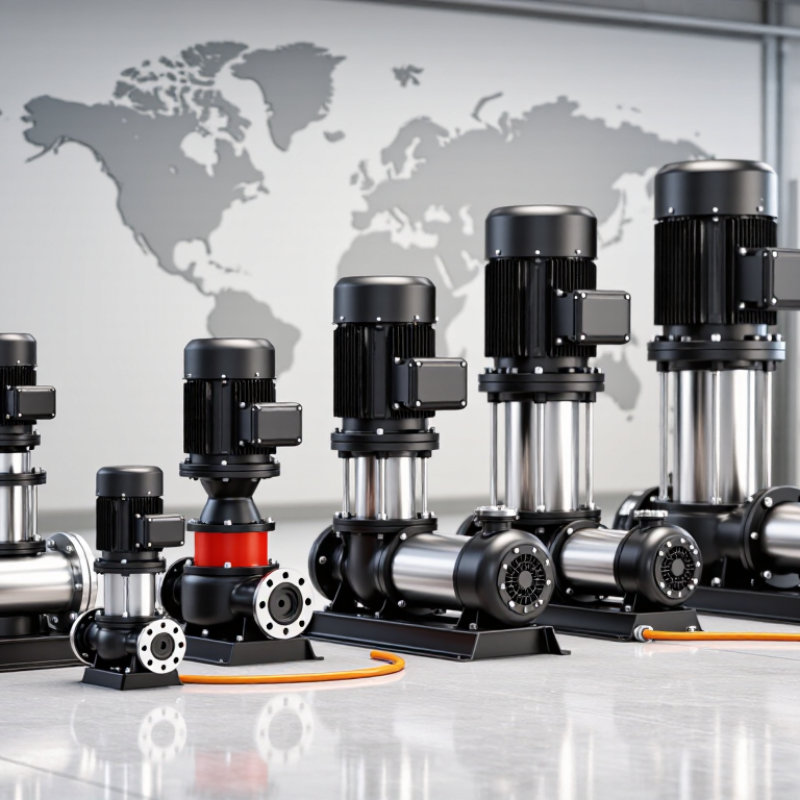
What Pump Manufacturers Do and the Markets They Serve
Pump manufacturers do more than sell equipment. They match hydraulic design, materials, seals, motors, and controls to a site’s flow, pressure, and fluid. A wastewater plant may need solids-handling pumps; a mine may need abrasion-resistant units for gritty slurry. Farms depend on irrigation, while buildings use pumps for heating, cooling, and water supply. Chemical and food-processing facilities add strict requirements for corrosion resistance, cleanability, or temperature control.
Fit matters. The U.S. Department of Energy’s Improving Pumping System Performance: A Sourcebook for Industry reports that pumping systems use nearly 20% of the world’s electricity, and 25–50% of energy in some industrial operations. That makes efficiency and correct sizing consequential, not cosmetic. Manufacturers support buyers through performance testing, installation guidance, spare parts, and maintenance planning. Global markets differ: water infrastructure priorities are not the same as mining conditions or factory utility needs. A pump’s advertised efficiency also cannot predict site performance by itself; pipe layout, throttling, and operating hours matter. Specifications help, but they leave blind spots. Real operating data is better, though buyers do not always have it.
10 Best Pump Manufacturers for Global Buyers - What Pump Manufacturers Do and the Markets They Serve
An overview of ten common pump-manufacturing specialties and the markets they serve; categories are not a company ranking.
| Manufacturer specialty | Typical pump types | What manufacturers provide | Markets commonly served | Key buyer considerations |
|---|---|---|---|---|
| Process and industrial centrifugal pumps | End-suction, between-bearing, multistage, and vertical inline pumps | Hydraulic sizing, material selection, fabrication, testing, and replacement parts for continuous-duty service | Chemical processing, general manufacturing, power generation, and industrial utilities | Required flow and head, fluid properties, efficiency, materials compatibility, and maintenance access |
| Municipal water and wastewater pumps | Split-case, vertical turbine, non-clog, and wastewater lift-station pumps | Pumping equipment for water intake, distribution, sewage collection, and treatment processes | Municipal water utilities, wastewater plants, public infrastructure, and contractors | Solids handling, corrosion resistance, wet-well conditions, energy use, and local standards |
| Submersible pump manufacturers | Submersible drainage, sewage, dewatering, and borehole pumps | Sealed motor-pump assemblies designed to operate underwater, with controls and installation accessories | Construction, mining, buildings, groundwater supply, and wastewater systems | Submergence depth, motor protection, cable length, solids passage, and serviceability |
| Positive-displacement pump manufacturers | Gear, screw, lobe, diaphragm, and progressive-cavity pumps | Pumps that move a measured volume per cycle or rotation, often suited to viscous or shear-sensitive fluids | Food and beverage, chemical processing, oil and gas, and industrial fluid transfer | Viscosity, abrasiveness, sanitary requirements, pulsation, pressure, and dry-running limits |
| Metering and dosing pump manufacturers | Diaphragm, solenoid, piston, and peristaltic dosing pumps | Controlled chemical injection equipment, dosing packages, calibration support, and compatible wetted parts | Water treatment, chemical processing, laboratories, and process control | Dosing accuracy, chemical compatibility, turndown, pressure rating, and control integration |
| Oil, gas, and refinery pump manufacturers | Process, multistage, barrel, and high-pressure pumps | Engineered pump systems for hydrocarbon transfer and demanding operating conditions, with inspection and test documentation | Refineries, petrochemical plants, pipelines, terminals, and upstream facilities | Applicable project specifications, hazardous-area requirements, sealing, materials, and lifecycle support |
| Mining and slurry pump manufacturers | Heavy-duty centrifugal slurry, froth, and dewatering pumps | Wear-resistant equipment and replaceable wet-end components for abrasive or solids-laden fluids | Mining, mineral processing, dredging, and bulk materials handling | Particle size, solids concentration, abrasion, slurry chemistry, and spare-parts availability |
| HVAC and building-services pump manufacturers | Inline, end-suction, circulator, booster, and condensate pumps | Pumping equipment, packaged booster sets, variable-speed options, and system-sizing guidance | Commercial buildings, hospitals, hotels, campuses, and residential developments | System curve, noise, footprint, energy performance, controls, and building-code requirements |
| Agricultural and irrigation pump manufacturers | Centrifugal, submersible borehole, turbine, and engine-driven pumps | Water-lifting and distribution equipment for irrigation, livestock, and farm water systems | Agriculture, horticulture, irrigation districts, and rural water supply | Water source, lift, seasonal demand, power availability, sediment, and local repair support |
| Fire-protection pump manufacturers | Horizontal split-case, vertical turbine, and end-suction fire pumps | Fire-pump assemblies, drivers, controllers, and package options designed for fire-protection systems | Commercial buildings, industrial sites, warehouses, and infrastructure projects | Required flow and pressure, water supply, applicable approval requirements, testing, and maintenance |
Related Posts
-
World-Class Pump Manufacturing: China's Pride in Global Exports
-
7 Strategies from Best Pump Manufacturers to Boost Your Efficiency
-

10 Top High Pressure Pump Innovations Transforming Industrial Efficiency in 2023
-

5 Key Trends Shaping the Future of Pump Motors in 2023: Insights from Industry Experts
-
Critical Issues with Hydraulic Motor Control Valves: An Industry Insight into Performance Failures
-
Why Choosing the Right Piston Pump Can Enhance Your Industrial Efficiency
