10 Best Microgreen Trays for Commercial Growing

Commercial microgreen production relies on consistent sowing, watering, and harvest routines. The right Microgreen Trays can make those routines easier to manage, especially when dozens of crops share a growing space. Tray depth, drainage, material, and footprint all affect daily work. A shallow tray may suit some crops, while others need more room for roots and growing media. Small details matter. A tray that flexes when lifted or holds standing water can slow down a busy harvest day.

This guide to the 10 best Microgreen Trays for commercial growing focuses on practical features growers can compare: dimensions, drainage options, stackability, durability, and cleaning needs. It also considers how tray design fits common setups, from shelves under LED lights to larger production benches. No single tray is ideal for every crop or facility. That part is easy to overlook. A product that performs well in a small test run may feel awkward at scale, and listed dimensions do not always tell the whole story. Before investing in volume, growers should check fit, handling, and supplier specifications against their own workflow. These comparisons are a starting point, not a substitute for testing trays with the crops and equipment already in use.
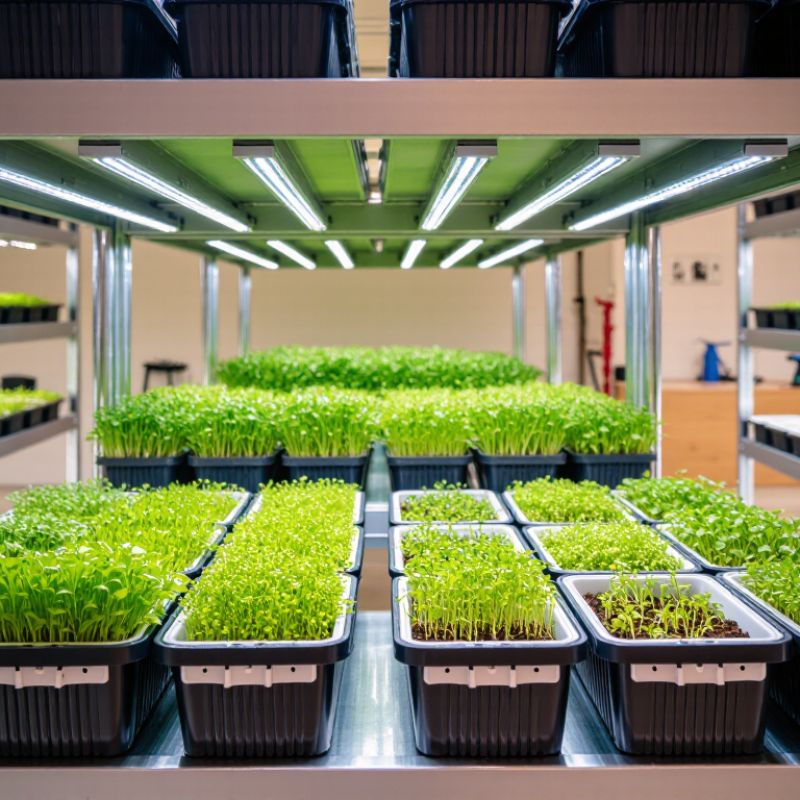
10 Best Microgreen Trays for Commercial Growing

What Commercial Growers Need to Know About Microgreen Trays

For commercial microgreen growing, trays need to fit the workflow as well as the crop. Check their length and width against rack shelves before ordering in bulk. Even a small mismatch can waste shelf space or make trays difficult to slide out. Tray depth should suit your growing medium and irrigation method. Drainage holes help prevent standing water, while solid trays can serve as catch trays beneath them. Choose sturdy, food-contact-rated material, and ask suppliers for documentation. A tray that flexes under wet medium can spill during handling. Annoying, and avoidable.

Tips: Measure one shelf and one filled tray. Test a small batch before scaling up. Check that stacked trays separate without force.

Daily washing and repeated handling put trays under more stress than a quick inspection reveals. Look for cracks, rough edges, and warped corners, especially after trays have been stacked or moved while wet. Keep tray sizes consistent where possible; uniform dimensions simplify watering, harvest timing, and rack planning. Still, standardizing everything can be too rigid. Different crops or production methods may need different tray depths, so test those needs rather than assuming one size fits all. Record which tray type was used for each batch. That simple note can help identify recurring drainage or handling problems, though it will not explain every crop issue.

Key Features That Define a Reliable Commercial Growing Tray

A reliable commercial microgreen tray should have consistent dimensions, firm sides, and a flat base. These details help trays sit evenly on racks and reduce wobbling during watering. If dimensions vary between batches, even slightly, gaps can disrupt shelf use. Check trays against your rack before ordering a large quantity.

Drainage needs to match the growing method. Trays with holes can help excess water escape, while solid trays may suit bottom-watering setups. Either way, watch for standing water around the edges. It can be easy to miss during a busy harvest cycle. Fit matters. Tray depth should support the chosen medium without making handling awkward, and the sides should resist bending when lifted with wet substrate.

Material should tolerate repeated washing without cracking or warping. Smooth corners and edges are easier to clean, though very thin trays may flex when stacked. Small details count. Test a few trays through several grow-and-clean cycles before scaling up. Note how they stack, drain, and release harvested mats. No tray is perfect; a sturdier design may take more storage space, and a lightweight one may need gentler handling. Some trade-offs only become obvious after daily use.

10 Best Microgreen Trays for Commercial Growing - Key Features That Define a Reliable Commercial Growing Tray

Tray dimensions are nominal industry formats; actual outside measurements and depths vary by manufacturer. Confirm food-contact suitability, fit, and drainage-hole layout before ordering.

Rank Tray Configuration Typical Nominal Size Typical Depth Common Material Drainage Best Suited For Key Reliability Features
1 Standard shallow growing tray 1020 format, approximately 10 × 20 in About 1–1.5 in Rigid, food-contact-suitable polypropylene Perforated version available Everyday production of most small- to medium-seeded microgreens Common footprint, easy bench planning, manageable substrate volume, and compatibility with matching solid trays
2 Standard shallow solid-bottom tray 1020 format, approximately 10 × 20 in About 1–1.5 in Rigid polypropylene or similar reusable plastic No holes Bottom watering, catching runoff, or use beneath a perforated tray Leak-resistant base and smooth interior make watering and cleaning easier
3 Deep growing tray 1020 format, approximately 10 × 20 in About 2–2.5 in Rigid polypropylene or similar reusable plastic Perforated or solid versions available Taller crops, deeper growing media, or extended production cycles Higher sidewalls help contain media and water; check that loaded trays remain easy to lift
4 Deep solid-bottom tray 1020 format, approximately 10 × 20 in About 2–2.5 in Rigid, food-contact-suitable plastic No holes Bottom watering and use as a reservoir or catch tray Continuous base reduces leakage; adequate wall rigidity helps prevent bowing when filled
5 Perforated microgreen insert tray Designed to fit a 1020 outer tray Usually shallow Reusable plastic, commonly polypropylene Multiple drainage openings Growing in a nested tray system with a separate solid base Consistent fit, evenly distributed drainage, and openings small enough to retain the chosen growing medium
6 Shallow tray with fine drainage pattern 1020 format, approximately 10 × 20 in About 1–1.5 in Rigid reusable plastic Small, closely spaced openings Small seeds and fine-textured growing media Fine perforations can help limit media loss while allowing excess water to drain; verify drainage rate in practice
7 Shallow tray with larger drainage openings 1020 format, approximately 10 × 20 in About 1–1.5 in Rigid reusable plastic Larger or more widely spaced openings Fast-draining setups and media that retain their structure Open drainage reduces standing water when paired with suitable media and careful irrigation
8 Heavy-duty reusable tray Commonly 1020 format Shallow or deep options Thicker rigid plastic; material varies Solid or perforated options Frequent handling, repeated wash cycles, and busy production rooms Stiffer walls and base can resist flexing; inspect corners, rims, and bases for cracks over time
9 Lightweight production tray Commonly 1020 format Usually shallow Lightweight plastic; confirm food-contact suitability Solid or perforated options High-volume operations that prioritize easy carrying and frequent tray turnover Low handling weight; choose a design that stays flat under wet media and stacks without sticking
10 Stackable nursery-style tray Varies; 1020-compatible models are available Varies by design Reusable rigid plastic Design-dependent Storage, transport, or production systems requiring organized tray stacking Stable stacking rims and consistent dimensions save space; confirm airflow and avoid stacking crops in a way that damages them

10 Best Microgreen Trays for Commercial Microgreen Production

Commercial microgreen production depends on repeatable growing cycles, so tray choice affects more than seed placement. Look for food-safe, durable trays with consistent dimensions. Matching sizes make shelving, watering, and harvesting easier to manage. A shallow tray suits many crops, while a perforated insert can help excess water drain into a solid tray below. Drainage matters. Standing water may encourage root problems, while trays that dry too quickly can leave uneven growth. Small differences become noticeable across a full rack.

Compare trays under your actual growing conditions before buying in volume. Check that edges resist bending when wet and loaded with growing medium. Smooth surfaces are easier to clean between cycles, though corners can still hold debris. Stackability saves storage space, but nested trays should separate without excessive force. I would not assume the most rigid option is automatically best; weight, cleaning time, and replacement cost also matter. That trade-off takes testing.

Tips: Run a small trial with the same seed, medium, and watering schedule. Measure usable growing area, note drainage, and inspect the crop for patchy growth. Keep a few spare trays on hand. They will not solve every problem, but they can prevent a delayed sowing when a tray cracks.

How to Match Tray Types to Crops and Growing Systems

Tray choice should follow crop architecture and watering method, not price alone. Penn State Extension reports that many microgreens reach harvest in 7–21 days, leaving little time to correct poor drainage or uneven moisture. A standard 10-by-20-inch tray suits dense sowings of radish or mustard and fits common shelving. For pea shoots and sunflower, choose a sturdier tray that resists bowing under heavier media and seed loads. They need more support.

Match the base to your irrigation system. Use perforated trays with capillary mats or overhead watering when excess water can drain freely. Pair solid trays with bottom watering, but empty standing water; soggy roots invite crop loss. University of Maryland Extension guidance also emphasizes clean trays and suitable growing media, practical safeguards for repeated production cycles. Shallow trays save space, yet they dry faster under strong airflow. That trade-off is easy to underestimate. Test one crop batch at shelf level before buying a full set, and record tray depth, watering frequency, and germination. The ideal tray can still fail when rack airflow varies or seed density is too high.

How to Clean, Maintain, and Reuse Microgreen Trays Safely

10 Best Microgreen Trays for Commercial Growing

Microgreen trays are easier to reuse safely when cleaning starts right after harvest. Remove roots, growing medium, and plant debris before they dry onto the plastic.

Wash with warm water and detergent, using a dedicated brush to reach corners and drainage holes. Rinse thoroughly. A quick rinse alone is not enough.

After washing, apply a sanitizer labeled for food-contact surfaces. Follow its directions for dilution and contact time, then air-dry trays fully on a clean rack. Do not stack them while damp; trapped moisture can encourage odors and microbial growth.

Check each tray under bright light for cracks, rough edges, and stains that remain after washing. Small cracks matter. It is easy to overestimate how clean a worn tray is. Retire trays that cannot be cleaned reliably, and keep dirty and sanitized trays in separate areas.

Tips: Label storage shelves “washed” and “used” to prevent mix-ups during a busy harvest. Keep sanitizer instructions nearby, and prepare fresh solution as directed. Rotate trays so wear is easier to spot. If a tray still smells after cleaning, pause and inspect it rather than returning it to production.


Close

Raise your Query

Hi! Simply click below and type your query.

Our experts will reply you very soon.

WhatsApp Us
