A Liquid Ring Compressor is chosen for more than its headline capacity. It must handle the actual gas, moisture, temperature, and operating pressure. In chemical plants, paper mills, and vacuum systems, those details shape uptime and maintenance needs. The casing may look simple. The process rarely is.
The U.S. Department of Energy’s Improving Compressed Air System Performance: A Sourcebook for Industry emphasizes measuring performance across the whole compressed-air system, rather than judging equipment in isolation. That guidance matters when comparing manufacturers: buyers should examine duty-point efficiency, materials, seal arrangements, service access, and documented field support. The sourcebook is not a supplier ranking, and it does not claim that one compressor design suits every process. That distinction is important.
Rotating-equipment authority Heinz P. Bloch is known for reliability-centered machinery guidance. A relevant summary of that approach—not a verbatim quotation—is: “Select equipment for its real operating duty and lifecycle reliability, not its catalog promise.” This comparison of 10 Best Liquid Ring Compressor Manufacturers Worldwide uses that practical lens. It considers technical range, application experience, service coverage, and the clarity of published specifications. No ranking can replace process data or a site assessment. Even a respected brand can be a poor fit. Buyers should verify performance claims against their own operating conditions before shortlisting suppliers.
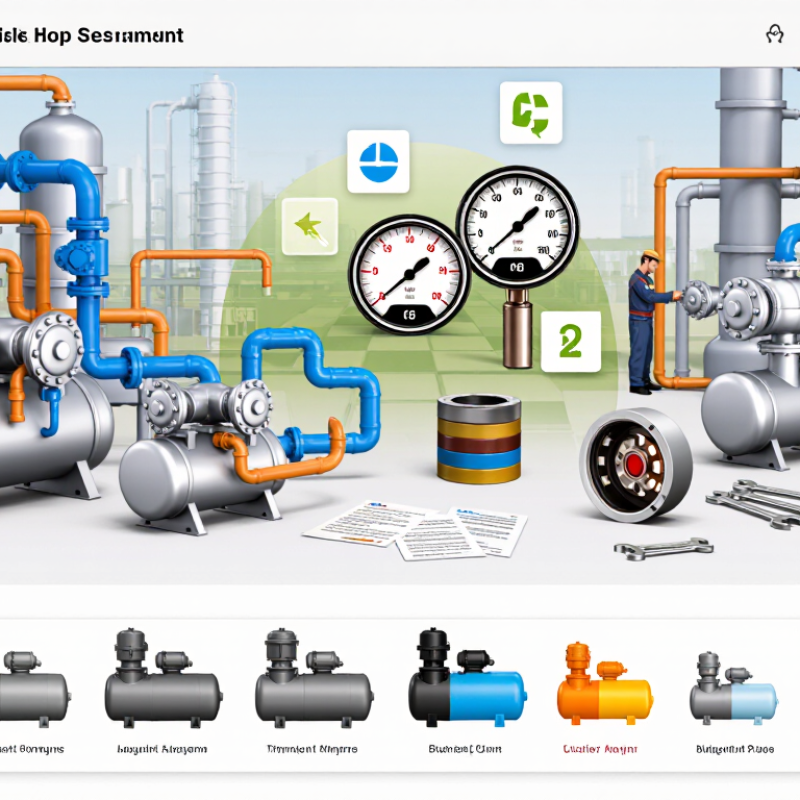
A liquid ring compressor traps gas in chambers formed between an off-center impeller and a rotating liquid ring. As the impeller turns, chamber volume decreases and compresses the gas. The liquid also absorbs heat and can tolerate some moisture or particulates, making this design useful for demanding process streams. The liquid matters. Its type, temperature, and flow rate affect performance and maintenance.
Applications include chemical processing, gas handling, and certain paper and power operations. Operators value the design when gas is wet or carries small amounts of contamination. It is not a universal fix: liquid carryover, corrosion, and seal-fluid disposal need attention. A compressor selected without checking gas composition may underperform, even when its capacity looks adequate on paper.
The U.S. Department of Energy’s Improving Compressed Air System Performance sourcebook estimates that compressed-air systems account for about 10% of U.S. industrial electricity use. That figure covers multiple compressor designs, not liquid ring units alone. Still, it shows why system-level checks matter: review pressure demand, leaks, cooling, and operating hours before comparing equipment. Field conditions rarely match a neat specification sheet.
Comparing liquid ring compressor manufacturers across global markets starts with the duty, not the catalogue headline. Record the gas composition, inlet temperature, required pressure, and expected operating hours. Then check whether published performance data matches those conditions. A curve measured with a different sealing liquid may not predict real output. Numbers can mislead.
Look closely at wetted materials, shaft seals, bearing arrangements, and the manufacturer’s quality-control records. Ask for test procedures, traceable inspection documents, and clear limits on vibration and temperature. Regional service matters, too: confirm local access to trained technicians, critical spares, and practical response times. A low purchase price can lose its appeal when a small seal takes weeks to arrive. Details matter.
Compare energy use and sealing-liquid requirements over the expected service life, not just at one operating point. Also review installation needs, noise, maintenance intervals, and support for commissioning. Local standards and documentation may differ by market, so verify that supplied records suit the project’s location. No scorecard is perfect; forecasts often miss changing workloads or fluid conditions. Leave room for uncertainty, and ask manufacturers to explain assumptions rather than hiding them in a single efficiency figure.
Liquid ring compressors remain a practical choice for processes handling wet gas, vapor, or occasional liquid carryover. Ten notable manufacturers worldwide may offer similar basic designs, yet differ in materials, sealing-liquid options, operating ranges, and service coverage. Those details matter. A unit running near a warm process line may need different corrosion protection and cooling capacity from one handling clean, cool gas.
When comparing manufacturers, buyers should review performance curves at actual suction pressure and temperature, not just headline capacity. Ask how the proposed machine handles startup, changing gas composition, and seal-liquid contamination. Clear maintenance instructions and access to replacement parts can be as important as efficiency figures. A useful technical discussion includes piping layout, noise expectations, foundation loads, and the operator’s routine checks. Small omissions can become costly later.
Worldwide suppliers serve a wide range of industries, but “global” does not always mean nearby support. Check local service response, commissioning options, and the availability of trained technicians. Request references for comparable duties, while remembering that one successful installation cannot prove every application will perform the same way. That uncertainty deserves attention. Some published data may rely on ideal conditions; real plants are messier. A careful shortlist should weigh documented test conditions, warranty terms, and lifecycle service alongside purchase price.
Liquid ring compressor manufacturers differ less by headline capacity than by how they manage wet, variable process gas. A unit handling saturated vapor needs effective liquid separation and stable seal-liquid control; corrosive service calls for compatible metallurgy and carefully chosen elastomers. For chemical plants, buyers should compare materials, allowable inlet conditions, discharge pressure, and recovery options—not just flow rates. Small details matter. API Standard 681 offers a useful technical reference for liquid ring vacuum pumps and compressors in petroleum, chemical, and gas industries, though it does not replace application-specific engineering.
Energy performance also depends on the complete system. The U.S. Department of Energy’s Improving Compressed Air System Performance guide reports that compressed air can account for about 10% of industrial electricity use; it also notes that leaks can waste 20–30% of compressor output in poorly maintained systems. Those figures are not specific to liquid ring machines, so treat them as system-level context. Manufacturers serving continuous-duty plants may emphasize efficiency across operating loads, while suppliers for intermittent or smaller installations may prioritize compact layouts and straightforward maintenance. Yet comparisons are not perfectly clean: test conditions and gas properties vary. Request performance data at your actual suction pressure, gas composition, and seal-liquid temperature.
Choosing a liquid ring compressor supplier starts with the process, not a catalog rating. Share gas composition, inlet pressure, discharge pressure, temperature, and expected operating hours. Ask for a performance curve at your actual conditions. A curve based on clean, dry air may not predict service with condensable vapors. Small detail. Confirm the proposed seal-liquid flow, material compatibility, and discharge temperature, too.
Request documented factory test results and ask how the test conditions compare with your duty. API Standard 681 covers liquid ring vacuum pumps and compressors; check whether the supplier’s design and documentation address its relevant requirements. Also review spare-parts lead times, local service coverage, and the scope of commissioning support. Downtime can be costly. The U.S. Department of Energy’s Improving Compressed Air System Performance: A Sourcebook for Industry notes that compressed-air systems use about 10% of industrial electricity, with some facilities reaching 30%. That figure is not specific to liquid ring machines, but it shows why efficiency assumptions deserve scrutiny. Compare power at realistic load points, not just the best point on a brochure. And be honest: if the supplier cannot explain its assumptions clearly, a polished specification sheet is not enough.
Hi! Simply click below and type your query.
Our experts will reply you very soon.
