- Ambawadi, Ahmedabad, Gujarat
- View Mobile Number

Which Are the Best Hosiery Knitting Machines in China?
Choosing the best Hosiery Knitting Machines in China starts with the factory’s product, not a sales brochure. Fine-gauge dress socks, athletic socks, and patterned hosiery place different demands on needles, feeders, controls, and changeover time. Grand View Research’s Hosiery Market Size, Share & Trends Analysis Report estimates the global hosiery market at about USD 56.4 billion in 2023, with projected growth through 2030. That figure signals demand, but it does not measure machine quality or predict any buyer’s return.
Equipment data needs careful reading. The International Textile Manufacturers Federation’s International Textile Machinery Shipment Statistics tracks textile machinery shipments, including knitting equipment. It offers useful industry context, but broad shipment categories do not rank individual Chinese hosiery-machine models. Buyers should compare verified sample output, stitch consistency, operating speed, energy use, software, and access to spare parts. Ask for a live trial using the yarn and sock design you actually plan to produce. Small details matter. A slow style change can quietly reduce daily output.
This guide examines Chinese machines through practical criteria: product range, automation, build quality, technical support, and total operating cost. It also separates published specifications from performance claims that need factory-level verification. No single ranking fits every workshop. A machine suited to high-volume basic socks may be a poor match for frequent, small-batch designs. And brochures rarely show the whole picture. Use the comparisons as a starting point, then confirm results with references, test runs, and a clear service agreement.
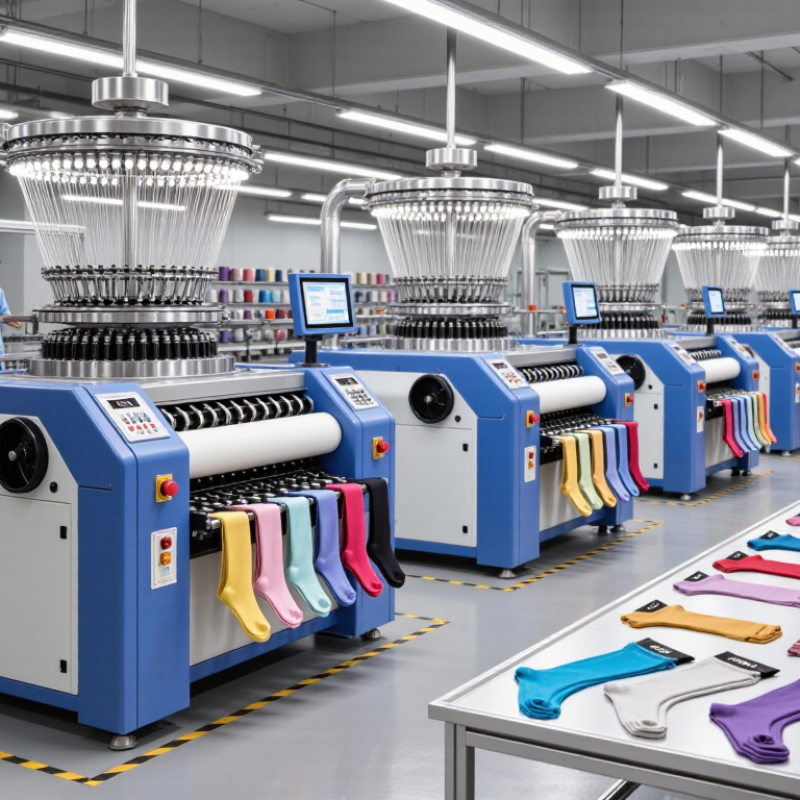
What Defines a High-Quality Hosiery Knitting Machine?
Which Are the Best Hosiery Knitting Machines in China?
What Defines a High-Quality Hosiery Knitting Machine?
A high-quality hosiery knitting machine produces consistent fabric across repeated production runs. Look for even stitches, clean toe closures, and reliable tension control. These details matter when inspecting a finished sock under bright light. A stable machine should also handle the yarn types and sizes your production requires, without frequent adjustments. Ask for sample pieces made with your own yarn; showroom demonstrations may not reflect daily conditions.
Durability is more than a strong frame. Check whether needles and other wear parts are easy to inspect and replace. Clear operating instructions, accessible technical support, and practical operator training also affect long-term performance. Noise, vibration, and setup time are worth checking on the factory floor. One specification sheet cannot tell the whole story. Buyers sometimes focus on output speed and overlook changeover time, which can affect real production schedules.
Tips: Request a trial run and inspect several pairs, not just one. Compare stitch consistency, dimensions, and defect rates. Ask how routine maintenance is performed, and confirm spare-part availability. Keep realistic expectations: even a well-built machine needs skilled operation and regular care.
| Which Are the Best Hosiery Knitting Machines in China? - What Defines a High-Quality Hosiery Knitting Machine? | |||
|---|---|---|---|
| Evaluation Dimension | High-Quality Indicator | How to Assess It | Why It Matters |
| Product suitability | The machine configuration matches the intended products, such as socks, tights, or other hosiery, and the required fabric structures. | Confirm the machine’s cylinder arrangement, needle configuration, supported yarns, and available knitting functions against actual product samples. | Machine capabilities vary; a good choice for one hosiery product may not suit another. |
| Knitting consistency | Produces even stitch formation and repeatable fabric quality across production runs. | Run a representative production trial and inspect several pieces for stitch uniformity, appearance, and dimensional consistency. | Consistent output helps reduce rejects and limits variation between batches. |
| Needle and cylinder condition | Needles, cylinders, and related knitting elements are accurately fitted and move smoothly, with no visible damage or abnormal wear. | Inspect components, check machine operation at the intended settings, and review maintenance and replacement procedures. | Worn or poorly aligned parts can contribute to dropped stitches, fabric defects, and unplanned downtime. |
| Yarn feeding and tension control | Yarn feeds smoothly and tension can be adjusted appropriately for the yarn and fabric being produced. | Test with the intended yarns; check for stable feeding, yarn breaks, and tension-related differences in the finished fabric. | Yarn behavior affects stitch formation, fabric appearance, and production stability. |
| Control system | Controls are clearly organized, settings are repeatable, and operators can identify alarms and adjust production parameters. | Ask for a hands-on demonstration of program selection, parameter changes, alarm handling, and recipe storage where available. | Usable controls support consistent setup and can shorten operator training and changeovers. |
| Production performance | Operating speed is appropriate for the required product while maintaining acceptable fabric quality and machine stability. | Compare demonstrated output under the same product, yarn, and quality requirements; distinguish rated speed from sustained production performance. | A headline speed alone does not show how much conforming product the machine can reliably produce. |
| Product changeover | Routine changes between styles or settings are clearly documented and can be completed without unnecessary adjustment. | Observe a representative changeover and record the setup steps, time, tools, and sample checks required. | Efficient changeovers are valuable where product styles or production batches change frequently. |
| Fault detection and safety | Relevant machine faults are indicated, and guards, emergency stops, and operating instructions are provided and functional. | Check safety devices and fault indications during a controlled demonstration; review the operating and safety documentation. | Appropriate safeguards help protect operators and make faults easier to identify. |
| Maintenance and spare parts | Routine maintenance tasks are accessible and documented, with essential wear parts and replacement guidance available. | Review the maintenance schedule, parts list, recommended consumables, and expected support arrangements before purchase. | Maintainability affects service downtime and the long-term cost of operating the machine. |
| Energy and resource use | Energy consumption is transparent and appropriate for the machine’s production capacity and operating conditions. | Request measured consumption data for a defined operating setup and compare it with usable output under similar conditions. | Comparisons are meaningful only when product, operating conditions, and output are taken into account. |
| Acceptance testing | Performance and quality requirements are agreed in advance and verified using representative materials and products. | Use a written acceptance checklist covering product samples, operating settings, faults, documentation, and operator training. | A documented trial makes purchasing decisions more objective and clarifies expectations. |
Note: The best machine depends on the hosiery product, yarn, production volume, and quality requirements. Compare models using the same materials and a representative production trial.
