Where to Buy the Best Fuse Terminal Block in China?

Choosing where to buy the best Fuse Terminal Block in China starts with matching the part to its actual electrical application. A terminal block may look simple in a catalog, yet conductor size, rated current, voltage, temperature range, and mounting method all affect suitability. Small details matter. Compare the product drawing with the cabinet layout, and confirm that the block accepts the wire type and ferrules used in your installation. These checks can reduce rework, but they do not replace review by a qualified engineer.

China has many manufacturers and distributors, so buyers should compare suppliers rather than rely on price alone. Ask whether the seller makes the product or sources it from another factory. Request a current datasheet, dimensional drawing, model-specific test documents, and a sample for evaluation. Check that markings and model numbers match across the sample, packaging, and documents. Supplier pages can look polished; evidence deserves more weight. Certifications should be relevant to the product and intended market, and their validity should be checked with the issuing organization. Ask about minimum order quantities, production lead times, packaging, and how quality issues are handled. Inspect the sample for clear markings, a sound housing, and secure terminal screws. Still, appearance is not proof of electrical performance. A careful sourcing process takes time, and even a promising supplier may need follow-up questions. That is worth doing before committing to a large order.
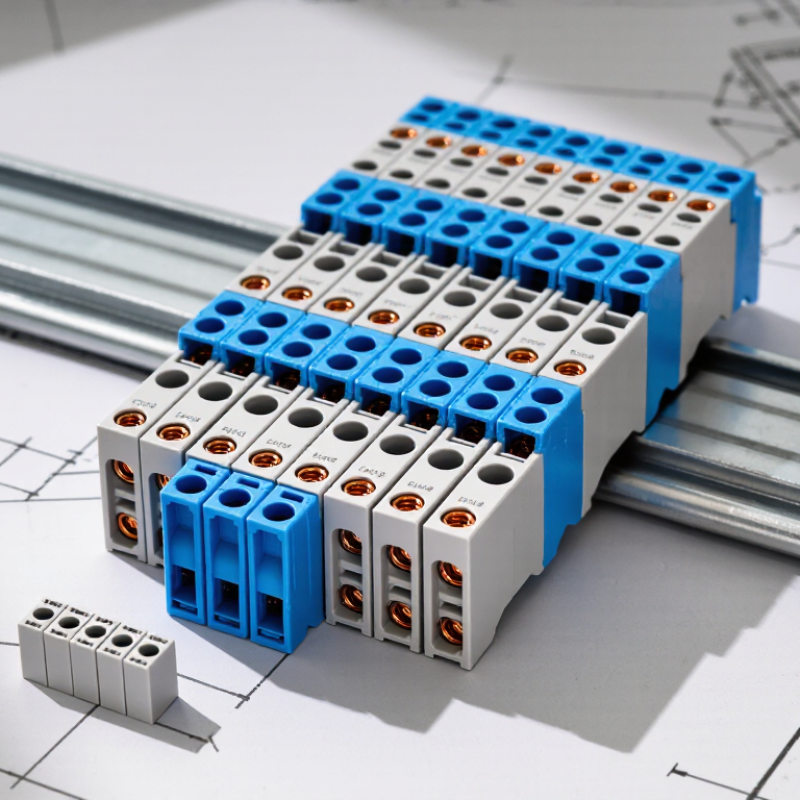
Where to Buy the Best Fuse Terminal Block in China?

What a Fuse Terminal Block Is and How It Works

A fuse terminal block combines a wire connection point with a holder for a protective fuse. It mounts on a control panel or DIN rail, keeping wiring organized and the fuse easy to inspect. Current flows through the fuse element between the incoming and outgoing terminals. If current rises beyond the fuse’s rating, the element melts and opens the circuit. The circuit stops. This helps limit damage to connected equipment and wiring, but it does not fix the cause of an overload.

For a control cabinet, check the block’s rated voltage, current, wire range, and fuse format before ordering. Match the fuse rating to the protected circuit, not simply to the largest load you expect. A common oversight is checking the fuse dimensions but missing the terminal’s wire capacity. That small mismatch can make installation awkward. Also consider available panel space and whether the fuse can be replaced safely and conveniently. When comparing suppliers in China, request a datasheet and confirm material, test details, and packaging specifications. A clear product listing helps, though it may not answer every installation question. Replacing a blown fuse without investigating the fault is tempting, but the same failure may return.

Where to Buy the Best Fuse Terminal Block in China? - What a Fuse Terminal Block Is and How It Works
Topic What It Means Practical Buying or Application Check
What a fuse terminal block is An electrical connection terminal that holds a fuse in series with a circuit. It combines a wire-termination point with a replaceable overcurrent protection device. Confirm that the block accepts the required fuse type and size, and that its rated voltage and current suit the application.
How it works Current normally passes through the fuse element. If current exceeds the fuse’s specified time-current limits, the element melts and interrupts the circuit. Select the fuse rating and characteristic to protect the connected wiring and equipment; do not choose a fuse based only on the terminal block’s maximum rating.
Common fuse formats Fuse terminal blocks are available for different cartridge and miniature fuse formats. Common cartridge dimensions include 5 × 20 mm and 6.3 × 32 mm, but compatibility is model-specific. Check the exact fuse dimensions, fuse category, and replacement access before ordering. A similarly sized fuse is not automatically interchangeable.
Electrical ratings Rated current and voltage vary by design, conductor size, fuse holder, and applicable standards. There is no single rating that applies to all fuse terminal blocks. Compare the product datasheet with the system voltage, expected load, short-circuit conditions, wire size, and required fuse rating.
Mounting and wiring Many designs mount on DIN rails and use screw, spring-clamp, or other connection technologies. Some models include a fuse status indicator. Verify the rail type, terminal wiring range, stripping length, mounting orientation, and whether an indicator is suitable for the circuit.
Standards and documentation IEC 60947-7-3 covers requirements for fuse terminal blocks. The relevant approvals and test requirements depend on the product and destination market. Request the current datasheet, applicable test reports or certificates, and clear identification of the tested product model. Check local project requirements.
Buying channel in China Potential sourcing routes include direct purchasing from a manufacturer, an authorized industrial distributor, or a business-to-business sourcing platform. Compare technical support, traceability, sample availability, lead time, minimum order quantity, export documentation, and after-sales terms—not price alone.
Pre-order verification Product appearance alone does not establish electrical ratings or compliance. Specifications should match the exact model and configuration being supplied. Ask for a model-specific drawing and datasheet, confirm the fuse is included or sold separately, and approve a sample when the application requires it.

Which Specifications Matter When Choosing One

When comparing fuse terminal blocks from suppliers in China, start with the electrical ratings, not the price. Check the rated voltage and current, then match them to the circuit and the fuse type. A block marked for a particular fuse size may not accept another format safely. Confirm the compatible fuse dimensions in the datasheet.

Also check the short-circuit rating, number of poles, and supported wire range. These details affect protection and installation. For a crowded control cabinet, measure the block’s width and height, including any end plates or covers. Verify whether it mounts on a DIN rail and whether the terminals suit your conductors, such as solid or stranded wire. Small details matter.

Ask for test reports, material specifications, and clear product drawings. For copper terminals, confirm the stated plating and check that screw clamping suits your wire size. A sample can reveal rough edges, weak clamping, or labels that are hard to read. It is easy to miss. Compare the supplier’s documents with the exact model being quoted, and request traceability for production batches. Ratings should be backed by test evidence, not just a sales description. Even then, documents do not replace checking the part in your own assembly. That step can catch a mismatch.

Where to Find Fuse Terminal Block Suppliers in China

Where to Find Fuse Terminal Block Suppliers in China

China offers a deep supplier base, but the right factory depends on your application and verification process. UNIDO’s International Yearbook of Industrial Statistics 2024 places China’s share of global manufacturing value added at roughly 31%. That scale creates many options, not automatic quality. Search industrial supplier directories, regional trade fairs, and electrical-component manufacturing areas in Guangdong, Zhejiang, and Jiangsu. Treat listings as leads, not proof.

Ask suppliers for drawings, rated current and voltage, wire-size range, temperature limits, and sample test records. IEC 60947-7-3 covers safety requirements for fuse terminal blocks, so check whether the supplier’s test documentation matches the intended product and application. Inspect the terminal’s clamping mechanism, fuse access, and markings on a physical sample. A tidy catalog is not enough.

I would compare at least three factories. Request the same quotation details from each. Check whether the stated ratings apply to the complete assembly, rather than only one component. Ask about batch traceability, inspection steps, and how design changes are communicated. One detail is easy to miss: a low unit price may exclude tooling, testing, or packaging. I have seen sourcing plans overlook that. Verify it before placing an order.

How to Compare Manufacturers and Verify Product Quality

Where to Buy the Best Fuse Terminal Block in China?
How to Compare Manufacturers and Verify Product Quality

Buying a fuse terminal block in China should begin with a clear comparison, not just a low quoted price. Ask each manufacturer for the same drawing, rated current, voltage, wire range, fuse size, and operating temperature. This makes quotations easier to compare. Check the details. A supplier should explain the conductor material, plating, housing resin, and method used to secure the fuse. Request dimensional drawings and a sample matching the proposed production version. Small differences matter: a loose clip can heat under load, while a cramped cover can slow maintenance. Ask for evidence.

Verify quality through records and direct checks. Review test reports for temperature rise, dielectric strength, and mechanical retention, then confirm that each report matches the exact part number. Inspect sample screw threads, contact pressure, molded edges, and label legibility. Test it with the intended wire and fuse. Keep photos and measurements. If possible, arrange an independent inspection before shipment and compare the production lot with the approved sample. Factory visits can reveal process controls, but a polished showroom proves little. One good sample is not proof of consistent output; that assumption is easy to make and hard to undo. Ask how defects are recorded, how batches are traced, and what happens when test results drift. No single document settles it.

Where to Buy the Best Fuse Terminal Block in China?

Compare manufacturers using a consistent, evidence-based checklist—not price alone.

Suggested buyer-defined evaluation weights (100 points total), not market statistics or ratings of specific suppliers. Request applicable test reports and product documentation; IEC 60947-7-3 covers safety requirements for fuse terminal blocks. Verify that certificates and test evidence apply to the exact model being quoted.

What to Check Before Ordering and Importing】【。

Before ordering a fuse terminal block, match its rated voltage, current, fuse size, wire range, and mounting dimensions to your actual panel design. Ask for the product datasheet and test reports, including details of temperature rise and short-circuit performance. Check which standards apply to your installation; IEC 60947-7-3 covers fuse terminal blocks for copper conductors. A certificate alone may not show that the exact model and configuration were tested. Small details matter. A drawing with terminal pitch and stripped-wire length can prevent costly fitting problems.

Demand is growing, but demand forecasts do not replace product checks. The IEA’s Electricity 2024 report projects global electricity demand growth averaging about 3.4% annually from 2024 to 2026, adding pressure to electrical infrastructure. For imported parts, request a pre-shipment sample and compare its markings, dimensions, and materials with the approved drawing. Confirm packaging, lead time, minimum order quantity, and agreed delivery terms in writing. Ask the supplier to identify the country of origin and provide accurate shipping documents for your customs broker. I have seen specifications look complete while leaving one awkward gap: whether the stated rating applies to the fuse actually being used. Resolve that before production, not after the cartons arrive.


Close

Raise your Query

Hi! Simply click below and type your query.

Our experts will reply you very soon.

WhatsApp Us
