Best Damper Actuator Types for Optimal Indoor Air Quality?
Indoor air quality plays a crucial role in our overall health. One key component in achieving optimal air quality is the Damper Actuator. These devices regulate airflow in HVAC systems, ensuring balanced distribution. The efficacy of a damper actuator can greatly impact both comfort and energy efficiency.
Choosing the right type of damper actuator can be challenging. There are various models, each with distinct features. Some are designed for precise control, while others allow for broader adjustments. This variety can create confusion for users. Misunderstanding the specifications can lead to inadequate performance.
Understanding the best damper actuator types is essential. They must align with system requirements and environmental factors. Correct installation and maintenance are also vital. Even the best actuator can underperform if not properly managed. Awareness of these details can enhance the effectiveness of HVAC systems, improving indoor air quality significantly.
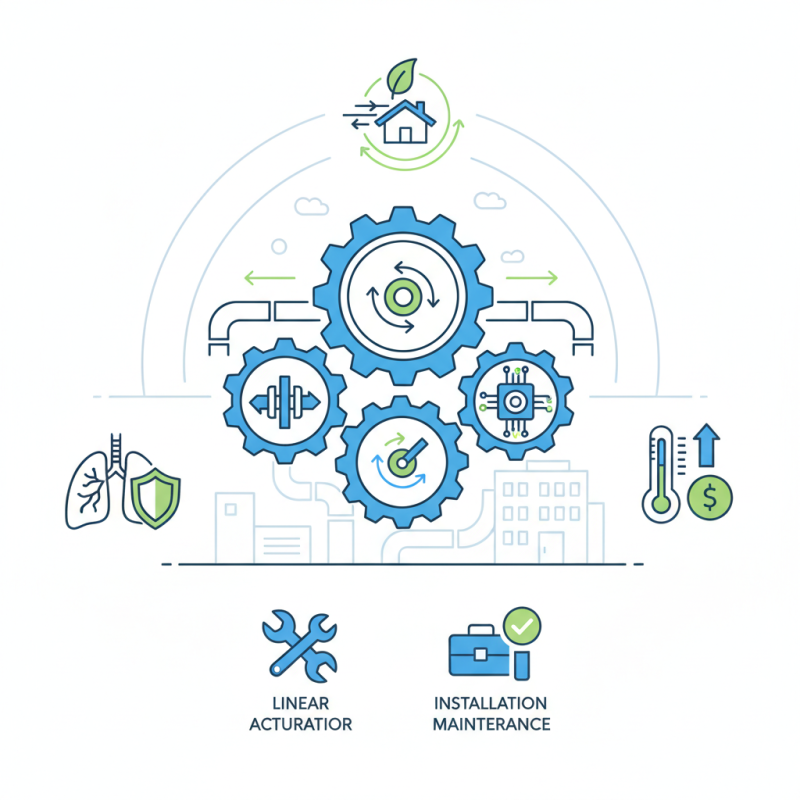
Types of Damper Actuators for Enhancing Indoor Air Quality Systems
When it comes to enhancing indoor air quality, choosing the right damper actuator type is crucial. These devices manage airflow in HVAC systems, ensuring optimal ventilation. There are various types of damper actuators available, including electric, pneumatic, and hydraulic options. Each type offers unique benefits depending on the system design and specific needs.
Electric actuators are popular for their precision. They can modulate airflow with ease and are often more straightforward to integrate into control systems. However, they can be affected by power outages. Pneumatic actuators use compressed air to operate. They are reliable in specific settings but may require regular maintenance to prevent leaks. Hydraulic actuators are less common but can handle larger dampers effectively.
Tips: Regularly check your actuator's calibration for accuracy. It can prevent airflow issues. Consider using a combination of actuator types for flexibility. This can enhance overall system performance while reducing the risk of failures. Air quality is vital for health; ensure your system meets standards. Remember, each setting has its unique challenges and you should adapt your choice accordingly.
Comparative Analysis of Electric and Pneumatic Damper Actuators
When considering damper actuators for indoor air quality, electric and pneumatic types offer distinct advantages and challenges. Electric actuators are gaining traction due to their precise control and energy efficiency. According to a recent study by the American Society of Heating, Refrigerating and Air-Conditioning Engineers (ASHRAE), systems utilizing electric actuators can improve air quality by up to 30% in commercial buildings. They allow for more straightforward integration with automated building management systems.
On the other hand, pneumatic actuators present a less energy-efficient option. They are often less expensive upfront but may incur higher operational costs over time due to air supply needs. In fact, the Air Conditioning, Heating, and Refrigeration Institute (AHRI) estimates that pneumatic systems can be up to 20% less efficient than electric systems. The potential for air leaks in pneumatic systems also raises concerns about long-term effectiveness. While electric actuators excel in precision, their reliance on electricity can be a vulnerability in the event of power outages.
Choosing between these actuator types requires careful consideration of specific use cases. Factors such as installation costs, maintenance, and overall energy consumption impact the decision. Not all environments suit both actuator types equally. Evaluating these aspects can lead to better choices for enhancing indoor air quality. Further research may be necessary to completely understand long-term performance implications in various settings.
Key Features of Modulating vs. On/Off Damper Actuators in HVAC
When it comes to HVAC systems, choosing the right damper actuator is crucial for maintaining optimal indoor air quality. Modulating and On/Off damper actuators serve different purposes. Modulating actuators provide continuous control. They adjust airflow based on real-time conditions. This flexibility can enhance comfort and energy efficiency. Studies suggest that modulating actuators can improve energy savings by up to 30%. They are ideal for spaces that require precise climate control.
On the other hand, On/Off actuators operate in a binary fashion. They either fully open or fully close. This simplicity can lead to issues in maintaining steady airflow and temperature. Systems using On/Off actuators may struggle with humidity control. Data indicates that improper humidity levels can trigger mold growth. This could lead to health issues for occupants. Additionally, homes with fluctuating temperatures may experience uneven comfort.
Choosing the right actuator type involves trade-offs. Each option has distinct advantages and disadvantages. Ensuring the right fit for specific requirements is essential. Despite the available information, many systems continue to operate inefficiently. Reflecting on these choices can lead to better decisions in future installations.
Impact of Damper Actuator Selection on Energy Efficiency and Airflow
The selection of damper actuators plays a crucial role in indoor air quality and energy efficiency. Various studies suggest that the right actuators can significantly improve airflow control. For instance, a report by the American Society of Heating, Refrigerating and Air-Conditioning Engineers indicates that optimizing airflow can reduce energy consumption by up to 30%. Yet, many systems still use outdated actuators, leading to inefficient performances.
Furthermore, the type of actuation—whether electric, pneumatic, or hydraulic—impacts how well air moves through HVAC systems. Electric actuators offer quick response times while pneumatic ones can be less accurate. Inconsistent airflow can create uneven temperatures, straining HVAC systems and increasing operational costs. According to industry data, poorly selected actuators can waste up to 25% of energy needed for heating and cooling.
Many facilities fail to regularly assess their damper actuators. This oversight can hinder optimal performance. Regular checks and adjustments could lead to substantial improvements in energy efficiency. Transitioning to more effective actuator types can make a notable difference in efficiency and indoor air quality. Choices matter significantly; the impact of these small devices is often underestimated.
Standards and Guidelines for Selecting Damper Actuators in IAQ Applications
Choosing the right damper actuator is critical for ensuring optimal indoor air quality (IAQ). Various standards guide the selection process. For instance, ASHRAE (American Society of Heating, Refrigerating, and Air-Conditioning Engineers) recommends evaluating actuator performance based on response time, torque rating, and control precision. The values often cited indicate that precise temperature control can improve energy efficiency by up to 30%. This is significant for both comfort and cost savings.
Consider the environment where the actuator will operate. High humidity or extreme temperatures can affect performance. Many studies show that selecting actuators rated for specific environmental conditions enhances reliability. It's essential to select actuators with features like adjustable settings and feedback systems. This leads to better system adjustments and improved air quality.
**Tip:** Regularly inspect and maintain actuators to prolong their lifespan. Not all systems are maintained equally. Observations have shown that neglected components can lead to a 15% decline in efficiency. Also, consider integrating smart controls for better data monitoring and improved IAQ over time.
Best Damper Actuator Types for Optimal Indoor Air Quality
| Actuator Type | Control Method | Torque Rating (Nm) | Response Time (s) | Common Applications |
| Electric Actuator | On/Off | 15 | 1.5 | HVAC systems |
| Pneumatic Actuator | Modulating | 10 | 2.0 | Industrial applications |
| Spring Return Actuator | On/Off | 12 | 1.0 | Fire & smoke dampers |
| Servo Actuator | Modulating | 20 | 0.8 | Variable air volume systems |
| Hydraulic Actuator | On/Off | 25 | 1.0 | Heavy industrial dampers |

