China Best 10G SFP Copper Modules Supplier?
Choosing the best China-based supplier for 10g Sfp Copper modules requires more than comparing prices. Buyers should verify the exact interface, reach, power draw, and compatibility with their switch. The term can describe an RJ45 10GBASE-T SFP+ transceiver, but it is sometimes confused with a copper direct-attach cable. They are not interchangeable. That distinction matters.
Standards and industry roadmaps help set realistic expectations. IEEE 802.3an specifies 10GBASE-T transmission over suitable twisted-pair cabling, with a channel reach of up to 100 meters on Category 6A cable. However, that standard does not guarantee that every compact SFP+ transceiver supports 100 meters. The module datasheet must state its own reach and cabling requirements. The Ethernet Alliance’s 2024 Ethernet Roadmap also outlines how Ethernet speeds and media continue to evolve. These references provide useful context, not a substitute for product-level testing.
A credible supplier should publish clear specifications, compatibility guidance, and test procedures. Ask for evidence of interoperability with your switch model, operating-temperature ratings, warranty terms, and support for diagnostics such as digital monitoring. Request a sample when deployment conditions are demanding. Small details count. For example, a dense rack may expose heat or power limits that a basic bench test misses. Not every product page explains these trade-offs well. That is worth questioning. This guide compares supplier capabilities and selection criteria, while recognizing that the best choice depends on the network, budget, and required support.
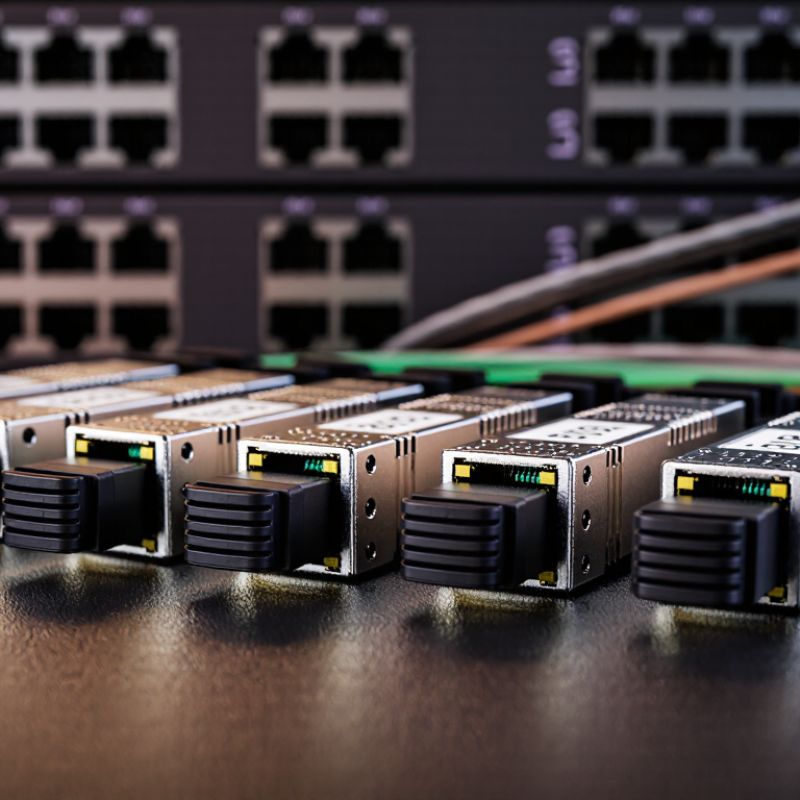
What Is a 10G SFP+ Copper Module? 10 Gb/s Ethernet over RJ45
A 10G SFP+ copper module converts an SFP+ switch or server port into an RJ45 Ethernet connection. It carries data at up to 10 Gb/s over balanced copper cabling, commonly using 10GBASE-T. The module is compact, but it contains active electronics that translate between the host interface and the copper link.
A typical use case is connecting a switch to a nearby server with an RJ45 patch cable. For dependable 10-gigabit performance, Cat6a cabling is a practical choice, especially across longer runs. Some installations use Cat6 for shorter distances, but the actual reach depends on cable quality and module specifications. Check the details. Many copper SFP+ modules support distances up to 30 meters, though this is not universal.
Compatibility deserves careful attention. Not every SFP+ port supports a 10G copper module, and some modules draw more power or run hotter than optical transceivers. That part is easy to overlook. In a dense switch, several warm modules can affect airflow and operating temperature. Before deployment, verify the host device’s supported module list, power limits, and port settings. A quick bench test can reveal link negotiation issues before cables are routed through a rack.
Which Standards Apply? IEEE 802.3an 10GBASE-T and Cat 6A Cabling
IEEE 802.3an defines 10GBASE-T, which carries 10-gigabit Ethernet over balanced twisted-pair copper cabling. For a standards-based 100-meter channel, Cat 6A is the practical choice. It provides the bandwidth and shielding performance needed to manage crosstalk at this speed. The connector may look familiar. The installation details still matter.
A 10G SFP copper module connects an SFP+ port to an RJ45 cable, but module capabilities vary. Some support shorter distances than the full 100-meter channel, and host-device compatibility, power use, and heat can affect performance. Check the module’s stated reach and your switch’s compatibility list before deployment. One point is easy to miss: Cat 6A cable alone cannot guarantee a stable 10G link. Terminations, patch panels, and cable quality matter too. I have seen tidy-looking racks hide a poor connection.
Tips: Use certified Cat 6A runs, keep patch cables within the channel limit, and test the completed link. If a connection drops under load, inspect terminations and module temperature before replacing the cable. Short checks help.
How Far Can It Reach? Up to 30 m over Cat 6A for Many SFP+ Modules
China Best 10G SFP Copper Modules Supplier?
How Far Can It Reach? Up to 30 m over Cat 6A for Many SFP+ Modules
A 10G SFP+ copper module can simplify short rack connections: connect a Cat 6A cable and carry 10GbE without fiber. Many modules specify a maximum reach of 30 m over Cat 6A. That is different from the 100 m often quoted for 10GBASE-T. IEEE Std 802.3an-2006 defines 10GBASE-T operation over up to 100 m of balanced copper cabling; it does not guarantee that every compact SFP+ module can reach that distance. Check the module’s own specification.
Real installations add variables. Cable quality, termination, switch compatibility, and airflow can all affect a link. A warm port in a crowded rack deserves attention. Heat matters. Treat 30 m as a stated limit, not a promise for every cable route. Verify the cable category and module datasheet, then test the connection under normal operating conditions. A quick check is worthwhile.
Tips: Use Cat 6A cable with sound connectors, avoid tight bends, and keep the run within the module’s stated limit. If a link drops intermittently, check temperature and compatibility before blaming the cable. Sometimes, the cause is less obvious.
What Specs Matter? Power Draw, Temperature Range, and Switch Compatibility
A 10G SFP+ copper module can run hot in a crowded switch. Check its maximum power draw, not only its typical figure. Many RJ45 modules specify around 2.5 W, while SFF-8431 defines power levels that help hosts assess module requirements. Confirm the switch cage supports that draw. Heat is real. A tightly packed row of modules may need stronger airflow, especially in a warm closet. Do not assume every port can supply the same power.
Temperature ratings matter just as much. Commercial modules commonly list a 0–70°C operating range; extended-temperature versions may cover wider conditions. Check whether the rating refers to case or ambient temperature. IEEE 802.3an specifies 10GBASE-T over channels up to 100 meters, but that does not guarantee a copper SFP+ module can reach that distance. Many modules specify shorter limits, often around 30 meters. Switch compatibility also depends on supported module types, port speed, and firmware behavior. Review the switch documentation and module data sheet together. One detail is easy to miss: a link may come up at 10G, yet become unstable as the cage heats. A lab test helps, though real rack airflow is rarely perfect.
How to Assess China Suppliers? Verify MSA Compliance, Testing, and Warranty
China Best 10G SFP Copper Modules Supplier?
A capable supplier should explain how its 10G SFP+ copper modules behave in your actual network, not just quote a low price. Ask for the module’s datasheet, supported link distance, power draw, and operating temperature. Check whether it follows the relevant MSA specifications, then confirm compatibility with your switch model and firmware. MSA compliance alone does not guarantee every host will accept a module.
Request recent test records, including link stability and error-rate results, and ask how samples are tested before shipment. Test a sample in your own equipment under realistic conditions. Watch for heat around the module cage during sustained traffic. A polished PDF helps, but it is not proof by itself. I would still want a clear explanation when test conditions are missing; that detail is easy to overlook.
Tips: Get warranty terms in writing. Check coverage length, replacement steps, and who pays return shipping. Ask about dead-on-arrival units and expected response times. Keep the quotation and test report together. A small inconsistency in the paperwork may be harmless, but ask the supplier to clarify it before ordering.

