- Ambawadi, Ahmedabad, Gujarat
- View Mobile Number

7 Best Skin Friendly TPU Suppliers for Global Buyers
The global thermoplastic polyurethane market is expanding across footwear, wearable devices, medical products, and flexible consumer goods. Grand View Research identifies rising demand for lightweight, durable, and flexible polymers as a major growth driver. MarketsandMarkets also reports strong TPU adoption in automotive, healthcare, and consumer applications. These trends explain why global buyers are examining Skin-Friendly Tpu suppliers more carefully.
“Skin-friendly” is not a universal certification. It should describe verified performance, not attractive marketing language. Direct-contact products may require testing for irritation, sensitization, restricted substances, and extractable chemicals. ISO 10993 guidance is especially relevant for medical or prolonged-contact applications. Buyers should also review REACH and RoHS declarations, depending on the destination market. OEKO-TEX requirements may support textile-related applications, but they do not replace product-specific testing.
This guide evaluates seven notable TPU suppliers through practical purchasing criteria. These include formulation control, production capacity, technical support, batch consistency, documentation, and global logistics. A dependable supplier should provide a current technical data sheet, safety data sheet, certificate of analysis, and traceable lot information. Small details matter. Think of a soft phone strap touching damp skin during a long summer commute.
No supplier is perfect. A low-cost grade may fail comfort testing, while a premium grade may strain budgets. Some public claims also need independent verification. The selected companies therefore represent promising options, not automatic approvals. Buyers should request samples, test finished products, and confirm compliance before signing large contracts. This approach supports safer decisions, clearer comparisons, and more reliable long-term sourcing.
What Makes TPU Skin-Friendly and Suitable for Global Applications
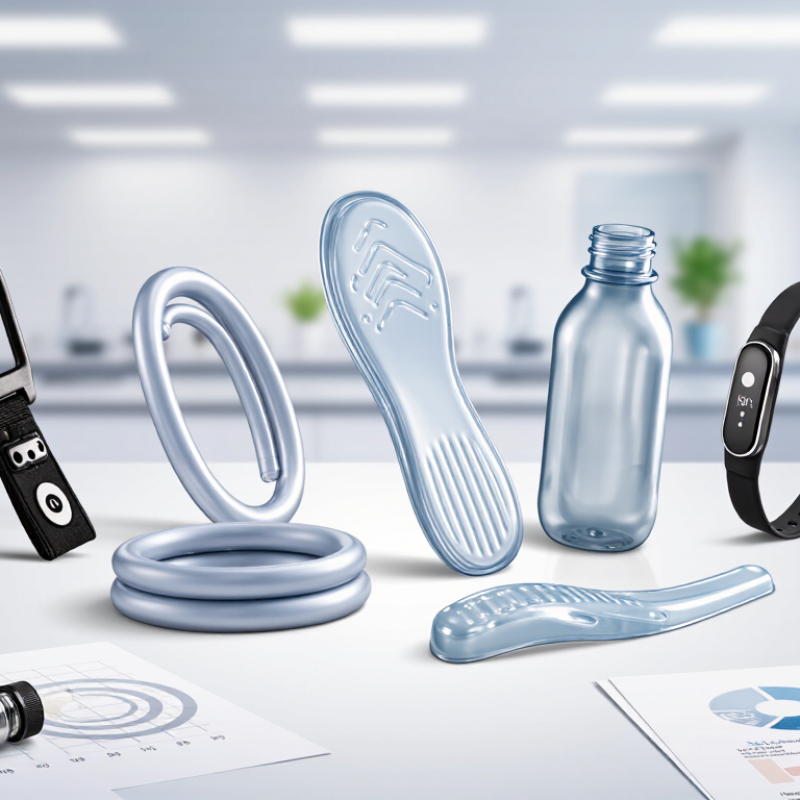
Thermoplastic polyurethane, or TPU, can feel soft, flexible, and smooth against the skin. Its elastic structure helps reduce cracking during repeated bending. This matters in wearable straps, protective films, medical supports, and personal care accessories. A well-designed TPU surface also resists moisture and light abrasion.
Skin-friendly performance depends on more than softness. Formulators must control plasticizers, pigments, residual chemicals, and processing aids. Low-odor grades are often preferred for products worn near the face. However, “skin-friendly” is not an automatic material claim. Contact time, temperature, sweat, friction, and user sensitivity can change the result.
A practical supplier review should include technical data, safety documentation, batch traceability, and independent test reports. Buyers may request irritation and sensitization testing under relevant ISO 10993 methods. For global applications, suppliers should explain regional compliance clearly, without making vague promises. Small production trials are valuable. Test the real product, not only a resin sample.
No material is perfect. TPU may soften under heat or show hydrolysis risks in humid conditions. Some soft grades can attract dust. These weaknesses deserve honest discussion before purchasing. A reliable supplier shares formulation limits, storage guidance, and quality-control records. That transparency often matters more than a polished product brochure.
| Supplier Profile | TPU Chemistry and Product Focus | Typical Hardness Range | Skin-Friendly Advantages | Evidence Buyers Should Request | Global Application Suitability | Recommended Applications |
|---|---|---|---|---|---|---|
| Supplier 1 Medical-Grade Aliphatic TPU Specialist | Aliphatic TPU pellets and medical-compounding grades with strong emphasis on color stability and biocompatibility documentation. | Approximately 70A–95A Shore A, depending on grade and formulation. | Low yellowing under light exposure; soft-touch feel; suitable for products requiring prolonged skin contact when the finished formulation is properly tested. | ISO 10993 test reports for the intended contact type and duration; extractables and leachables data; lot traceability; processing guidance. | Suitable for medical, wearable, and personal-care applications where regulatory documentation and consistent batch quality are important. | Wearable-device straps, medical tubing, soft protective components, and skin-contact seals. |
| Supplier 2 Polyether TPU Supplier | Polyether-based TPU grades designed for flexibility, hydrolysis resistance, and performance in humid or wet environments. | Approximately 75A–98A Shore A. | Flexible surface; good resistance to moisture-related degradation; commonly selected for products exposed to sweat, water, and repeated cleaning. | Hydrolysis-resistance test method and results; ISO 10993 data where relevant; chemical-resistance information; colorant and additive declarations. | A strong option for tropical climates, sports products, outdoor equipment, and reusable items requiring frequent washing. | Fitness bands, waterproof seals, sports accessories, flexible cables, and wash-resistant consumer products. |
| Supplier 3 Polyester TPU Supplier | Polyester-based TPU grades optimized for abrasion resistance, tear strength, and resistance to oils and selected chemicals. | Approximately 80A–98A Shore A. | Smooth, durable surface with good wear resistance; appropriate when skin contact occurs together with high mechanical stress. | Abrasion and tear test results; chemical-resistance chart; restricted-substance declaration; confirmation that the final article—not only the resin—meets applicable requirements. | Well suited to industrial and automotive environments, although continuous wet exposure should be evaluated carefully because polyester TPU generally has lower hydrolysis resistance than polyether TPU. | Protective covers, abrasion-resistant grips, industrial seals, conveyor components, and durable wearable parts. |
| Supplier 4 Soft-Touch TPU Compounder | Pre-compounded TPU grades with controlled color, texture, friction, and surface feel for consumer products. | Approximately 60A–90A Shore A. | Can be formulated for a soft, non-sticky, low-odor surface; pigment and additive control can improve appearance and user comfort. | Full formulation disclosure or compliance statement; odor and fogging data where applicable; skin-irritation testing; migration testing for the finished article. | Suitable for high-volume consumer goods requiring consistent appearance, tactile comfort, and repeatable injection-molding performance. | Consumer-electronics grips, handheld-device covers, cosmetic packaging components, and ergonomic handles. |
| Supplier 5 Transparent and Optical TPU Supplier | Clear or translucent TPU grades emphasizing optical appearance, low haze, flexibility, and resistance to yellowing. | Approximately 80A–95A Shore A. | Smooth surface and low pigment load can support cleanability and visual inspection; aliphatic grades may offer improved light stability. | Haze and transmittance data; UV-aging results; yellowing index; additive and colorant compliance documents; sterilization compatibility if relevant. | Appropriate for global products where appearance, light exposure, and transparent design are key purchasing factors. | Transparent protective films, wearable covers, flexible windows, medical-device components, and display protection parts. |
| Supplier 6 Flame-Retardant TPU Supplier | TPU compounds containing flame-retardant systems for electrical, transportation, and industrial applications. | Approximately 75A–95A Shore A. | Can combine flexible touch with flame-performance requirements; skin-contact suitability depends strongly on the selected flame-retardant package and finished-part testing. | Applicable flammability test reports; restricted-substance and halogen declarations; ISO 10993 or irritation data when skin contact is intended; migration and aging results. | Useful for regulated electrical and transportation applications, provided the formulation is reviewed for odor, migration, and human-contact requirements. | Cable jackets, electrical housings, transportation interiors, protective over-molding, and safety-related flexible components. |
| Supplier 7 Recycled-Content and Circular TPU Supplier | TPU grades incorporating controlled recycled content or production scrap reprocessing, with emphasis on traceability and resource efficiency. | Approximately 70A–95A Shore A, depending on recycled-content level and compounding method. | May reduce material waste and environmental impact while maintaining a soft, flexible surface; consistent quality depends on feedstock control and purification. | Recycled-content calculation and chain-of-custody records; batch consistency data; odor and contaminant testing; chemical compliance documents; finished-product skin-contact evaluation. | Suitable for sustainability-led global procurement when buyers define recycled-content, performance, and traceability requirements in advance. | Footwear components, sporting goods, consumer accessories, protective covers, and non-invasive wearable products. |
