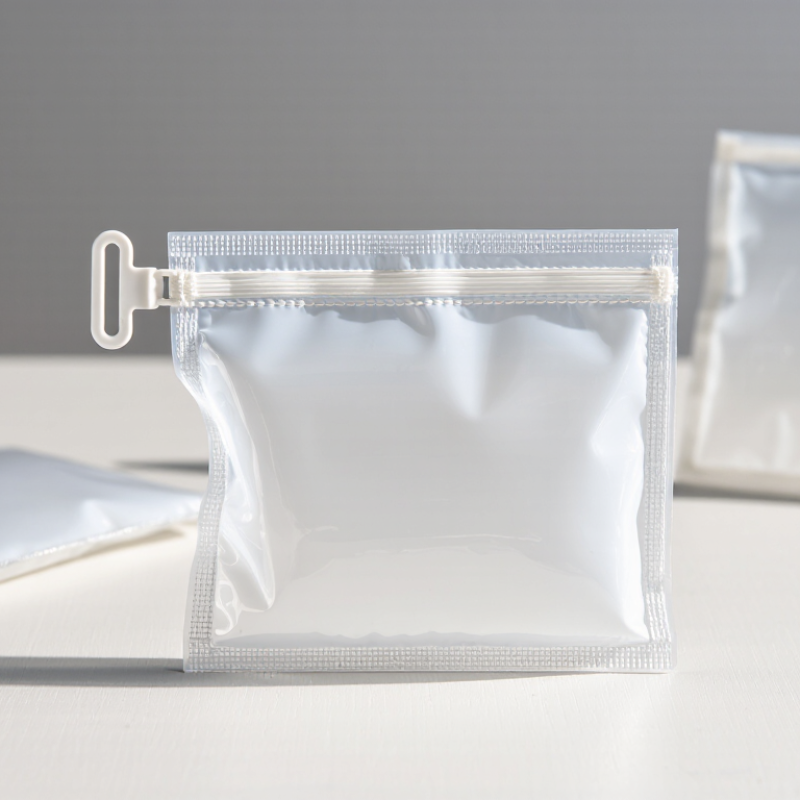
Choosing a Child Resistant Zipper Pouch is a practical packaging decision, not a visual one. Buyers need to assess the closure, material, seal quality, and clarity of opening instructions. A pouch may look secure on a sample table. Real handling can reveal a different story.
Grand View Research’s Child Resistant Packaging Market report estimated the global market at about USD 24.3 billion in 2023 and projected continued growth through 2030. That figure covers multiple packaging formats, not Zipper Pouches alone. It signals broader demand, but it cannot confirm any individual pouch’s performance. Ask suppliers for current test documentation, material specifications, and evidence that the finished package—not only its zipper—has been evaluated. Check whether labels remain legible after folding and whether the pouch withstands ordinary transport.
Details matter. A stiff zipper, a weak seal, or tiny instructions can undermine an otherwise polished design. Child-resistant features should also be considered alongside accessibility for intended adult users. Test samples with realistic handling before placing a large order. Small trials help expose awkward grips and confusing opening steps.
Packaging scientist Dr. Susan Selke is a relevant expert in packaging materials and design. However, I could not verify a direct quotation from her specifically about child-resistant zipper pouches, so I will not invent one. That limitation matters. A reliable buying guide should distinguish published evidence from general advice—and leave room to reconsider an attractive sample when its testing record is incomplete.
A child-resistant zipper pouch is flexible packaging with a zipper-style closure. The design aims to resist opening by young children while remaining manageable for adults. Some closures require two deliberate motions, such as pressing and sliding, rather than one simple pull. That extra step matters. Still, child-resistant does not mean childproof.
In 2026, buyers are weighing safety, shelf space, clear labeling, and material use together. A pouch can fit neatly on a shelf and reduce bulk compared with some rigid containers. Its real performance depends on closure design, seal quality, material layers, and handling. A sample may feel secure yet reveal weak points after repeated use. That detail is easy to overlook.
Buyers should request test documentation and confirm that testing matches the intended product and market. They can also ask how the closure performs after ordinary shipping, temperature changes, and repeated opening. Check whether adults with limited hand strength can use it comfortably. The trade-off deserves attention: added resistance should not create unnecessary difficulty. Clear instructions help, but packaging should never replace safe storage out of children’s reach.
2026 Best Child Resistant Zipper Pouch for Buyers
Choosing a child-resistant zipper pouch means comparing the complete package, not just its film. PET/PE laminates can offer flexibility and a clear product view. Foil-based structures can provide stronger light and moisture barriers, but they conceal contents. Feel the difference. Check whether the pouch stands upright, seals cleanly, and resists punctures during normal handling. A zipper alone does not establish child resistance; the closure and pouch must work together.
ASTM D3475 classifies child-resistant packaging by design and operation. Buyers should ask which classification applies and review test documentation for the exact pouch-and-closure combination. Material choice alone cannot confirm performance. Look for clear opening instructions that adults can follow, then check whether the pouch reliably recloses. Small details matter: a slippery edge or a stiff zipper can frustrate users. And “child-resistant” does not mean childproof.
Tips: Test samples with dry hands and after repeated opening. Ask suppliers about barrier properties, closure durability, and applicable ASTM D3475 documentation. Keep the package out of children’s reach, even when it passes testing. A pouch that feels secure in a quick check may still need closer evaluation.
Compare common pouch constructions and closure formats before requesting samples. Material performance varies by supplier, thickness, seal design, and product; the ranges and descriptions below are general purchasing references, not guaranteed specifications.
| Pouch construction | Typical structure and thickness | Relative barrier characteristics | Common closure format | Potential advantages | Trade-offs and buying checks | ASTM D3475 package-type consideration | Typical purchasing applications |
|---|---|---|---|---|---|---|---|
| PET / PE laminate | Printed or clear polyester laminated to a polyethylene sealing layer; commonly around 70–120 μm total thickness. | Good general moisture and handling protection. Not a high-barrier choice for oxygen- or light-sensitive contents unless the structure includes additional barrier layers. | Reclosable press-to-close zipper or a specially engineered child-resistant zipper; heat-sealed top above the zipper is also common. | Flexible, widely used pouch structure; PE can provide a reliable heat-seal layer when matched to the package design. | Standard zipper profiles are not inherently child-resistant. Confirm seal strength, zipper engagement, and compatibility with the filled product. | A pouch intended to be opened and reclosed is generally considered in the Type I (reclosable) category. Its child-resistant status must be established through applicable testing, not inferred from the laminate or zipper. | General dry goods and products that need a reclosable package with moderate barrier requirements. |
| PET / aluminum foil / PE laminate | Polyester outer layer, continuous aluminum foil barrier, and PE sealant; commonly around 80–150 μm total thickness. | High light, moisture, and oxygen barrier when the foil layer and package seals remain intact. | Reclosable zipper with a foil-laminate pouch body; optional tear notch or heat-sealed tamper-evident top. | Useful when product protection from light and moisture is a priority. | Foil structures are generally not accepted in ordinary curbside recycling streams. Check flex-crack resistance, seal quality, and whether the full package construction can meet the intended opening and reclosure requirements. | Usually Type I (reclosable) when designed for repeated opening. A non-reclosable foil pouch would need to be assessed according to its actual design and use. | Light- or moisture-sensitive products, subject to product-specific compatibility testing. |
| PET / metallized film / PE laminate | Polyester, vacuum-metallized polymer film, and PE sealant; commonly around 70–130 μm total thickness. | Improved light and gas barrier compared with many clear films, but typically not equivalent to a continuous aluminum foil layer. | Reclosable zipper, including a qualified child-resistant zipper design where required. | Provides an opaque or metallic appearance with a barrier layer and flexible pouch format. | Barrier performance depends on metallization quality, lamination, flexing, and seals. Request test data for the finished pouch rather than relying on a material description alone. | Typically Type I (reclosable) for a reusable zipper pouch. Package type does not indicate successful child-resistance testing. | Products needing more light protection than a clear laminate may provide. |
| BOPP / CPP laminate | Biaxially oriented polypropylene laminated to cast polypropylene; commonly around 50–100 μm total thickness. | Good moisture resistance for many dry products; oxygen and aroma barrier is generally limited without additional barrier layers. | Press-to-close zipper or a child-resistant zipper system integrated into the pouch design. | Can offer a lightweight pouch structure and a polypropylene-based material combination. | Do not assume a multilayer pouch is recyclable just because its layers are polypropylene. Confirm local collection acceptance and the finished package’s actual material composition. | A reusable zipper version is generally considered Type I (reclosable); a one-time sealed version may fall under a different package category based on its design. | Dry products where moisture resistance and a lightweight package are priorities. |
| Paper / foil / polymer laminate | Paper outer layer combined with foil or a barrier film and a heat-seal polymer layer; commonly around 80–150 μm total thickness. | Barrier depends on whether foil or another barrier film is included and on the integrity of pouch seals. | Reclosable zipper, often paired with a heat-sealed top seal; the zipper mechanism must be separately evaluated for child resistance. | Paper surface supports a paper-like appearance and can provide a printable exterior. | Paper-faced laminates are composite structures and are not necessarily recyclable through paper collection. Check crease resistance, delamination risk, and seal performance. | Generally Type I (reclosable) when a functional zipper is included. The material facing does not determine the ASTM package type. | Products where a paper-like exterior is desired alongside a barrier layer. |
| Single-use sealed pouch without a reclosable zipper | Structure may use PET/PE, foil laminate, or another heat-sealable film; thickness varies by barrier and durability needs. | Depends on the selected film structure and the integrity of the perimeter and top seals. | Permanent heat seal with tear notch or another opening feature; not designed to be reclosed. | Can provide a sealed, single-opening format without a reusable zipper. | Opening features and package construction still require evaluation for the intended users and product. A tear notch alone does not establish child resistance. | May be considered Type II (non-reclosable) when it is not designed to be reclosed; confirm the applicable classification against the current standard and the finished design. | Single-use or unitized formats where reclosure is not needed. |
| Individually sealed unit pouch | Small sealed pouch made from a compatible heat-sealable film or laminate; construction and thickness depend on the product and sealing process. | Varies by film selection, seal geometry, and package size. | Individual permanent seal; no reclosable zipper. | Each pouch can keep a single portion or unit separate from others. | Unit packaging and child-resistant performance are separate considerations. Evaluate the finished package, including the number of units accessible at one time and the opening method. | May be relevant to Type III (unit packaging) where the design meets the applicable definition. Confirm the correct classification for the specific package. | Products supplied as separate portions or individual units. |

Important: ASTM D3475 is a classification standard for child-resistant packages; a Type I, II, or III description does not by itself mean that a package has passed child-resistance testing. A zipper pouch is not child-resistant solely because it has a zipper. For products subject to U.S. child-resistant packaging rules, confirm the applicable requirements, including testing under 16 CFR 1700.20 where required, with a qualified packaging laboratory and regulatory specialist. Child-resistant packaging is not childproof.
For a 2026 child-resistant zipper pouch, treat “child-resistant” as a testable claim, not a zipper feature. The U.S. Consumer Product Safety Commission’s 16 CFR 1700.20 protocol uses a 50-child panel, with children aged 42–51 months. It measures opening attempts before and after an adult demonstrates the package. That number matters: a few successful demonstrations or an informal in-house check cannot replace the prescribed test.
Ask suppliers for the complete test report, including the tested pouch construction, closure details, and results for both child and adult panels. A change in film thickness, zipper profile, slider, or opening notch may affect performance. Check that the sample matches the production specification. Small differences count. A pouch that feels difficult to open in a buyer’s hand is not proof of compliance. The regulation’s protocol is a stronger reference than vague “tested” language.
Tip: Request the laboratory’s report and confirm the exact model tested. Keep a sealed production sample beside it for comparison. If the closure changes, ask whether retesting is needed. It is easy to overlook that detail.
2026 Best Child Resistant Zipper Pouch for Buyers
A pouch can resist opening by children yet frustrate the adults expected to use it. That is why adult usability deserves measured testing, not a quick desk review. Where the applicable regulation calls for a 100-adult panel, use its prescribed method and eligibility rules. Keep instructions, timing, and evaluator procedures consistent for every participant.
Watch how people handle the pouch. Do they find the zipper track, grip its edges, and understand the opening steps without coaching? Record successful opening and reclosure separately, along with completion times and points of confusion. Small details matter: a slippery surface, stiff zipper, or tiny grip area can slow someone with limited dexterity. No hints. No guesswork.
A strong result depends on the required pass criteria, not a convenient average. Compare the pouch’s performance with the regulation that applies to its intended market; test requirements can differ. Also, an adult panel alone does not establish child resistance. That sounds tidy, but real use is messier: fatigue, damp fingers, and hurried handling may affect usability. Keep those observations in development notes, and avoid changing the design after testing without checking whether retesting is needed.
The adult-use effectiveness test in 16 CFR § 1700.20 specifies a panel of 100 adults. This is a test-protocol benchmark, not a pouch performance result or a product ranking; package-specific usability must be established through testing.
Before buying a child-resistant zipper pouch, request the complete test report, not just a “compliant” claim. The U.S. Consumer Product Safety Commission’s child-resistant packaging protocol measures performance with child and adult test panels. Confirm the report names the exact pouch size, film structure, zipper, and opening instructions you plan to order. A similar-looking sample is not enough. Small details matter.
Check that labels match the product’s intended use and the rules in each sales market. Ask for the applicable standard, test date, laboratory identity, and any limitations on the tested design. The CPSC’s 2022 poisoning-injury estimates recorded about 67,500 emergency-department-treated cases among children under five; this is a reminder that packaging claims need evidence, not guesswork. Request lot-level traceability, material specifications, change-control records, and a signed declaration linking production to the tested design. Paperwork can look tidy. I would still verify that the supplier’s current production sample matches the report, since zipper dimensions or film thickness may change without obvious visual clues. Keep approved artwork and revisions on file, too. A certificate without scope or version details leaves buyers with questions.
Hi! Simply click below and type your query.
Our experts will reply you very soon.