- Ambawadi, Ahmedabad, Gujarat
- View Mobile Number

What Are the 10 Best Open Display Fridges for Buyers?
Choosing an Open Display Fridge involves more than comparing capacity or appearance. Buyers need to consider what they sell, how customers move through the space, and where the unit will sit. A drinks shop may need clear sightlines and easy restocking, while a deli may value adjustable shelves and steady temperature control. Small details matter. Doorless access can encourage browsing, but it may also increase energy use and expose products to room conditions. A suitable model should match the store’s layout, daily traffic, and maintenance capacity.
This guide looks at 10 options through practical buying criteria, including dimensions, usable display area, cooling performance, lighting, noise, and service access. It also considers energy information and manufacturer support, since purchase price alone rarely shows the full cost of ownership. Check each unit’s specifications against your available floor space and the products you plan to display. A compact cabinet might fit neatly, yet hold less than expected once shelves are arranged. That is easy to overlook. Product performance can also vary with ambient temperature, stocking habits, and installation. The “best” choice is therefore not universal; it depends on your shop and priorities. Use the comparisons as a starting point, then confirm details with the supplier before buying. A little uncertainty remains, and that is worth acknowledging.
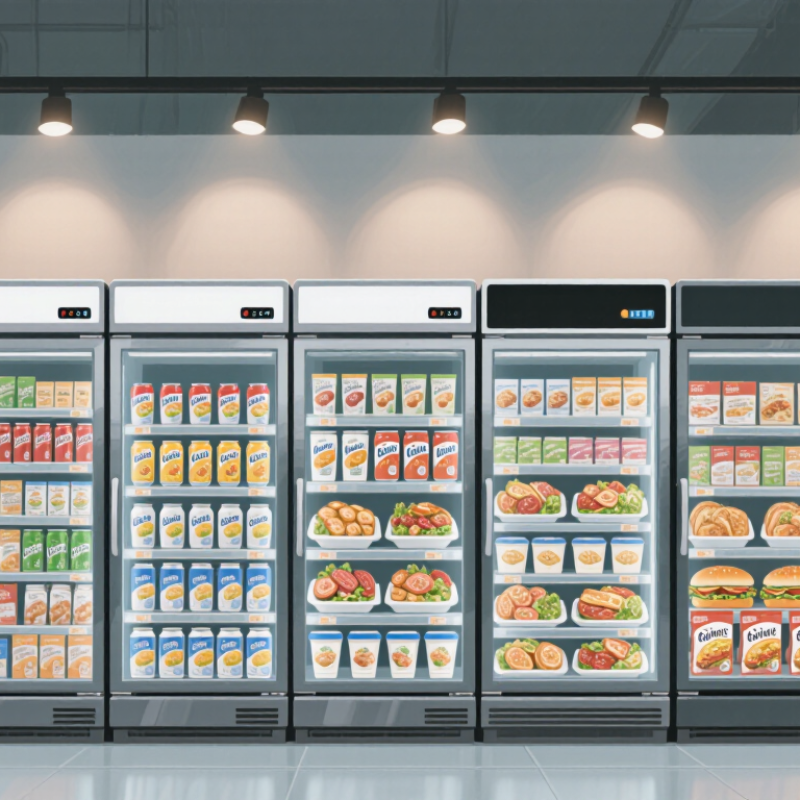
How Open Display Fridges Work and Where They Are Used
An open display fridge keeps products chilled while leaving them visible and easy to reach. A refrigeration system cools an evaporator, while fans guide cold air across the shelves and down the front opening. This moving layer is often called an air curtain. It is not a solid door. Warm room air can still enter, especially when customers block the airflow or staff overfill shelves. That detail matters.
These units are common in supermarkets, convenience shops, cafés, and self-service food areas. They suit frequently selected chilled items, such as bottled drinks, packaged dairy, salads, and ready-to-eat snacks. Store layout matters: placing a case beside a sunny window, oven, or busy entrance can increase its heat load. Keep products within the marked loading line, leave vents clear, and check product temperatures with a suitable thermometer. Looks simple. For safe handling, follow the unit’s instructions and applicable food-safety guidance; appearance alone cannot confirm a product’s temperature.
Open cases offer quick access, but they generally lose more cold air than enclosed cabinets. Night blinds, where fitted, may reduce overnight energy use; they do not replace routine cleaning or temperature checks. A small practical lesson: airflow is easy to underestimate. Even a neat display can cool unevenly if shelves are packed tightly or return grilles are covered. Compare capacity, room conditions, and maintenance needs before choosing a unit.
What Are the 10 Best Open Display Fridges for Buyers? - How Open Display Fridges Work and Where They Are Used
The options below represent common open-display fridge formats, not a ranked list. Dimensions and temperature ranges are typical examples; actual specifications vary by model, installation, ambient conditions, and manufacturer.
| Open fridge format | Typical size (W × D × H) | Typical product temperature | Common uses | How it works / buyer considerations |
|---|---|---|---|---|
| 1. Multideck wall case | 1.25–3.75 m × 0.75–1.0 m × 1.9–2.2 m | About 0–5°C for many chilled foods | Supermarkets; packaged dairy, drinks, produce, and prepared foods | A fan-driven stream of cold air forms an air curtain across the open front. Check shelf layout, airflow, and aisle clearance. |
| 2. Small-format multideck | 0.6–1.25 m × 0.6–0.85 m × 1.5–2.0 m | About 0–5°C for chilled products | Convenience stores; compact food shops; checkout areas | Offers open-front access in a smaller footprint. Compare usable shelf area, electrical requirements, and heat rejection. |
| 3. Low-level grab-and-go case | 0.9–2.5 m × 0.7–0.95 m × 1.0–1.4 m | About 0–5°C, depending on intended food | Cafés, cafeterias, and convenience stores; packaged meals and drinks | A lower profile helps preserve sightlines. Confirm that product height and restocking access suit the assortment. |
| 4. Open-front produce case | 1.25–3.75 m × 0.8–1.1 m × 1.7–2.1 m | Often around 4–8°C; produce needs vary by type | Grocery produce departments; selected fresh fruits and vegetables | Designed for visibility and frequent access. Verify humidity and temperature suitability for each item; not all produce should be held at the same conditions. |
| 5. Open-front deli case | 1.25–3.0 m × 0.8–1.1 m × 1.2–1.6 m | Typically 0–5°C for chilled foods | Delis and food halls; packaged or ready-to-serve chilled items | A compact open display can encourage self-service. Check food-safety requirements and whether the intended products need a more protected service case. |
| 6. Bakery display case | 0.9–2.0 m × 0.65–0.9 m × 1.2–1.6 m | Chilled versions commonly operate around 2–8°C; ambient versions are not refrigerators | Bakeries and cafés; cakes, pastries, and selected desserts | Some cases are refrigerated and others are ambient display units. Confirm the design and required holding temperature before buying. |
| 7. Open beverage cooler | 0.6–1.25 m × 0.65–0.9 m × 1.7–2.1 m | Often about 2–8°C, depending on the product and setup | Convenience stores, cafés, and self-service dining; bottled or canned drinks | Vertical shelves make beverages easy to see and reach. Compare shelf loading, bottle clearance, and energy use in the intended room conditions. |
| 8. Island open display case | 1.2–2.5 m × 1.0–1.8 m × 0.9–1.3 m | Commonly around 0–5°C for chilled products | Supermarket aisles and promotional zones; packaged chilled foods | Access from multiple sides can support browsing. Allow space around the unit and check that its airflow is not obstructed. |
| 9. Semi-vertical open case | 1.0–2.5 m × 0.7–1.0 m × 1.4–1.8 m | About 0–5°C for many chilled foods | Smaller groceries and food-service areas; packaged meals, dairy, or drinks | Combines a lower profile with accessible shelving. Assess visibility, capacity, and the space needed for service and cleaning. |
| 10. Remote-system open display case | Common case widths: 1.25–3.75 m; depth and height vary by format | Set for the product category, commonly 0–5°C for chilled foods | Larger supermarkets and multi-case installations | A separate refrigeration system serves the case, reducing heat and noise at the display. Installation needs refrigerant piping, suitable engineering, and planned maintenance. |
Buyer note: Open displays rely on a controlled air curtain and are sensitive to warm room air, nearby doors, strong drafts, and blocked air intakes or outlets. Confirm food-safety temperature limits, site conditions, energy requirements, drainage, and service access before purchase.
